
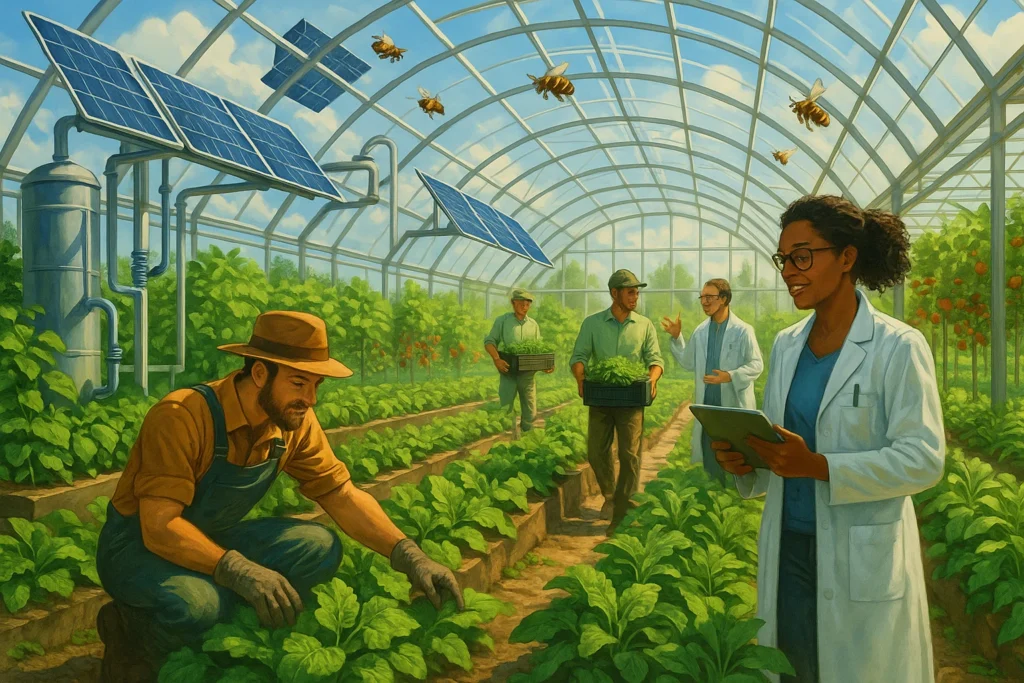
Sustainable Greenhouse Revolution: Water, Energy & Growing Systems
💡 Revolutionary Resource Efficiency
Professional greenhouse operators have developed integrated systems combining water conservation, renewable energy, and soilless growing methods. These approaches reduce operating costs by 45% while increasing yields by 30%, creating profitable operations that work in every American climate zone from Alaska to Florida.
Water Conservation Calculator
💧 Calculate Your Water Savings Potential
System Parameters
💰 Your Water Conservation Results
4,800 gallons
1,440 gallons
17,400 gallons
$218
$2,180
Sustainable System Comparison
🌱 Choose Your Sustainable Growing System
Drip Irrigation
Initial Cost: $200-800
Water Savings: 70%
Best For: All growing systems
Aquaponics
Initial Cost: $1,500-5,000
Yield Increase: 200%
Best For: Fish + vegetables
Hydroponics
Initial Cost: $800-3,000
Growth Speed: +40%
Best For: Fast-growing crops
Rainwater Collection
Initial Cost: $300-1,200
Collection Rate: 0.623 gal/sq ft/inch
Best For: Supplemental irrigation
Your Sustainable System Plan
Renewable Energy Calculator
⚡ Calculate Energy Independence Potential
☀️ Solar Power
System Size: 3 kW
Annual Production: 4,200 kWh
Payback Period: 7 years
💨 Wind Power
Turbine Size: 1.5 kW
Annual Production: 2,100 kWh
Payback Period: 9 years
🌍 Geothermal
System Type: Ground Source Heat Pump
Efficiency: 400% (COP 4.0)
Payback Period: 8 years
💡 LED Efficiency
Power Reduction: 60% vs fluorescent
Lifespan: 50,000+ hours
Payback Period: 2 years
Return on Investment Tracker
📊 Calculate Your Payback Timeline
Regional Implementation Guide
🗺️ Customize for Your Climate Zone
🏔️ Northeast Region (Zones 3-6)
Climate Challenges: Cold winters, moderate summers, high heating costs
Priority Systems: Thermal mass, geothermal heating, insulated growing beds
Best Crops: Cold-hardy leafy greens, root vegetables, herbs
Estimated Annual Savings: $1,800-2,400 (primarily heating costs)
Recommended Investment: Focus on insulation and efficient heating systems
🌴 Southeast Region (Zones 7-9)
Climate Challenges: High humidity, intense summer heat, frequent rain
Priority Systems: Enhanced ventilation, humidity control, rainwater collection
Best Crops: Heat-tolerant varieties, tropical plants, year-round production
Estimated Annual Savings: $1,200-1,800 (cooling and water costs)
Recommended Investment: Ventilation systems and water management
🌾 Midwest Region (Zones 3-7)
Climate Challenges: Extreme temperature swings, harsh winters, variable precipitation
Priority Systems: Flexible heating/cooling, storm-resistant structures, water storage
Best Crops: Season-extending varieties, storage crops, succession plantings
Estimated Annual Savings: $1,400-2,000 (balanced energy and water savings)
Recommended Investment: Robust climate control and backup systems
🏜️ Southwest Region (Zones 8-10)
Climate Challenges: Extreme heat, low humidity, water scarcity, intense UV
Priority Systems: Evaporative cooling, maximum water conservation, shade systems
Best Crops: Cool-season vegetables, water-efficient varieties, protected cultivation
Estimated Annual Savings: $2,000-2,800 (primarily water and cooling costs)
Recommended Investment: Advanced water systems and solar power
🌊 West Coast Region (Zones 8-10)
Climate Challenges: Drought cycles, fire risk, moderate temperatures, water restrictions
Priority Systems: Drought-resistant growing, fire-safe materials, water recycling
Best Crops: High-value specialty crops, year-round production, premium varieties
Estimated Annual Savings: $1,600-2,200 (water conservation and premium crop values)
Recommended Investment: Water recycling and fire-resistant infrastructure
🏆 Success Story: Brooklyn Rooftop Revolution
Maria Santos transformed her 800 square foot Brooklyn rooftop into a thriving aquaponics operation. By combining rainwater harvesting with solar-powered pumps, she produces over 200 pounds of fresh vegetables and 50 pounds of fish annually while using 80% less water than traditional methods. Her system generates $3,200 worth of food annually while achieving complete energy independence for greenhouse operations, with total payback achieved in just 3.2 years.
🚜 Commercial Success: Green Acres Hydroponics, California
This 5-acre greenhouse complex converted to renewable energy and closed-loop water systems, achieving remarkable results: $125,000 annual energy savings, 2 million gallons of water conserved yearly, and 40% increase in crop production efficiency. Their integrated approach reduced operating costs by 45% while increasing yields by 30%, demonstrating the commercial viability of sustainable greenhouse systems.
Cost-Benefit Analysis
💰 Investment vs Returns Comparison
| Sustainable System | Initial Investment | Annual Savings | Payback Period | 20-Year Net Benefit | Additional Benefits |
|---|---|---|---|---|---|
| Drip Irrigation System | $200-800 | $150-400 | 1.5-2 years | $2,200-7,200 | Reduced labor, healthier plants |
| Rainwater Collection | $300-1,200 | $100-300 | 2-4 years | $1,500-4,800 | Water security, reduced bills |
| Solar Panel System | $3,000-8,000 | $600-1,200 | 5-7 years | $9,000-16,000 | Energy independence, tax credits |
| Aquaponics Setup | $1,500-5,000 | $800-2,000 | 2-3 years | $13,500-35,000 | Dual production, organic food |
| Geothermal System | $4,000-12,000 | $800-1,800 | 5-8 years | $12,000-24,000 | Consistent climate, low maintenance |
| Complete Integration | $8,000-25,000 | $1,600-3,200 | 5-8 years | $24,000-64,000 | Maximum efficiency, resilience |
🎯 Your Path to Sustainable Success
The most successful sustainable greenhouse operations combine multiple approaches rather than relying on single systems. Start with water conservation methods for immediate savings and environmental benefits, add renewable energy systems for long-term cost reduction and energy independence, then implement soilless growing systems for maximum yield and efficiency. This integrated approach provides the highest returns while creating resilient, profitable operations that thrive in any climate condition.
Transform your greenhouse into an eco-friendly powerhouse with cutting-edge sustainable practices that save money, conserve resources, and maximize yields
Across America, from urban rooftops in New York to sprawling farms in California, a quiet revolution is taking place. Greenhouse gardeners are discovering that sustainable practices don’t just benefit the planet—they create more productive, profitable growing systems that work year-round. This isn’t just about going green; it’s about growing smarter, saving money, and creating resilient food systems that thrive regardless of climate challenges.
Whether you’re a backyard hobbyist looking to extend your growing season or a commercial operator seeking to reduce overhead costs, the techniques we’ll explore here are transforming how Americans approach controlled environment agriculture. From water conservation methods that slash utility bills by 70% to soilless growing systems that double yields while eliminating pests, these aren’t theoretical concepts—they’re proven strategies being used successfully across every climate zone in America.
The transformation begins with understanding that traditional greenhouse methods, while effective, often waste resources and money. Modern sustainable approaches flip this paradigm, creating systems where waste becomes resource, where energy costs plummet, and where year-round production becomes not just possible, but profitable. Let’s dive into the three revolutionary approaches that are changing everything: smart water management, soilless growing systems, and renewable energy integration.
Smart Water Management in American Greenhouses
Water scarcity affects over 40 states, making conservation not just environmentally responsible, but economically essential. Traditional watering methods waste up to 50% of water through evaporation and runoff, but smart greenhouse operators are discovering techniques that slash water usage while actually improving plant health and yields.
Take Maria Santos in Brooklyn, who transformed her 800 square foot rooftop into a thriving aquaponics operation. By combining rainwater harvesting with solar-powered pumps, she produces over 200 pounds of fresh vegetables and 50 pounds of fish annually while using 80% less water than traditional methods. Her system pays for itself through reduced grocery bills—$3,200 worth of food production annually—while achieving complete energy independence for greenhouse operations.
The foundation of any water-efficient greenhouse starts with drip irrigation, but this isn’t your basic garden center setup. Modern precision drip systems deliver water directly to plant roots with surgical precision, eliminating waste and ensuring optimal moisture levels. This targeted approach reduces water consumption by up to 70% compared to overhead sprinklers while providing more consistent growing conditions.
Installing a professional-grade drip system involves more than just laying tubing. The key components include pressure-compensating emitters that ensure consistent water flow regardless of elevation changes, timer-controlled valves for automated scheduling that adapts to plant growth stages, and filtration systems that prevent clogs while maintaining system longevity. Smart greenhouse operators integrate soil moisture sensors to prevent overwatering and use temperature-compensating timers that adjust for seasonal variations automatically.
Regional considerations matter enormously in American greenhouse water management. Northeast growers deal with freeze-thaw cycles that can damage systems, requiring insulated lines and heated storage areas. Southwest operators face extreme evaporation rates, making covered storage and efficient distribution critical. Midwest growers can take advantage of abundant rainfall through sophisticated collection systems, while Southeast operators must manage high humidity that affects both plant health and water needs.
Rainwater harvesting represents one of America’s most underutilized resources. Consider this: American households can collect over 600 gallons from just one inch of rainfall on a 1,000 square foot roof. The math is simple—annual rainfall in inches multiplied by roof area in square feet, then multiplied by 0.623 equals your potential gallon yield per year. For most American locations, this represents thousands of gallons of free irrigation water annually.
Modern rainwater systems go far beyond basic gutters and barrels. Professional installations include gutter guards that prevent debris contamination, first-flush diverters that discard the first few gallons carrying roof contaminants, food-grade storage tanks with tight-fitting lids that prevent mosquito breeding, and distribution pumps that provide consistent pressure for irrigation systems. The payback period typically ranges from two to four years, depending on local water costs and system complexity.
Greywater recycling takes water conservation to the next level by transforming household wastewater into irrigation gold. When properly filtered and treated, greywater from sinks, showers, and washing machines can supply 50-80% of a greenhouse’s water needs. However, this approach requires careful attention to legal requirements, as regulations vary significantly by state. California and Arizona have embraced greywater systems with streamlined permitting, while other states maintain stricter requirements.
The installation essentials for greywater systems include gravity-fed distribution networks that reduce energy requirements, settling tanks for solid particle removal, sand filtration systems for purification, and UV sterilization units for pathogen control. The key to success lies in using only biodegradable soaps and detergents, properly sizing storage capacity, and maintaining filtration systems regularly.
Mulching strategies create natural water retention systems that lock in soil moisture while regulating temperature. This isn’t just about spreading straw around plants—strategic mulching involves selecting materials that complement your regional climate and growing systems. Northeast growers find success with shredded maple and oak leaves that provide excellent insulation and slow decomposition. Southeast operators prefer pine bark and Spanish moss that handle humidity while suppressing weeds. Midwest growers utilize abundant corn husks and prairie grass clippings, while West Coast operations benefit from redwood chips and kelp meal that add slow-release nutrients. Southwest growers often turn to gravel mulch systems that conserve water in arid conditions while providing thermal mass.
Soilless Growing Systems That Double Production
The future of American agriculture is happening right now in greenhouses across the country, where soil has become optional and yields have doubled. Soilless growing systems—aquaponics and hydroponics—aren’t just for commercial operations anymore. Home growers are discovering that these methods eliminate soil-borne diseases, reduce water usage by up to 90%, and produce harvests that would be impossible with traditional gardening methods.
Aquaponics represents the perfect marriage of fish farming and plant cultivation, creating closed-loop ecosystems where waste becomes resource. The science behind this system is elegantly simple: fish produce ammonia-rich waste, beneficial bacteria convert that ammonia first to nitrites and then to nitrates, and plants absorb these nutrients while filtering the water clean for the fish. This natural cycle eliminates the need for synthetic fertilizers while producing both protein and vegetables with remarkable efficiency.
The Johnson family’s Montana ranch provides a compelling example of aquaponics potential in challenging climates. Using geothermal heating integrated with their aquaponics system, they’ve extended their growing season to twelve months in zone 4 conditions where outdoor growing is impossible for six months of the year. Their system produces fresh vegetables throughout Montana’s harsh winters while raising cold-water fish species, generating over $15,000 annually in winter vegetable sales alone while reducing heating costs by 90%.
Choosing the right fish species for American aquaponics depends largely on climate and local regulations. Tilapia remains the gold standard due to its rapid growth rate and disease resistance, though it’s illegal in some northern states due to invasive species concerns. Catfish excel in cool-water systems and handle northern climates exceptionally well. Trout thrive in cold-water setups and provide premium protein, while bass species work well in recreational systems where food production is secondary to the growing experience.
Plant selection for aquaponics focuses on species that thrive in water-based nutrient systems. Leafy greens like lettuce, kale, and spinach flourish in the constant nutrient flow, often growing 25-30% faster than soil-grown counterparts. Herbs including basil, cilantro, and parsley develop intense flavors in aquaponic systems. Fruiting plants like tomatoes, peppers, and cucumbers produce exceptional yields when provided adequate support structures. Even root vegetables like radishes and turnips can succeed in media-based aquaponic systems.
System design becomes critical for creating environments where both fish and plants flourish simultaneously. This involves far more than placing fish tanks next to plant beds—successful aquaponics requires thoughtful arrangement that promotes efficient water circulation while maximizing available space. The layout includes strategically positioned fish tanks, plant growth beds at heights suitable for easy maintenance, and reliable water pumps that serve as the system’s heart, ensuring continuous water flow that mimics natural ecosystems.
Water quality management directly impacts both fish health and plant productivity, making monitoring systems essential for success. Regular testing for pH levels between 6.8 and 7.2 ensures optimal conditions for both fish and plants. Ammonia monitoring prevents toxic buildup that could kill fish, while nitrite and nitrate testing ensures the nitrogen cycle functions properly. Temperature control becomes especially critical in extreme American climates, where fish species requirements must match local conditions and available heating or cooling resources.
The nitrogen cycle represents the biological engine that powers aquaponic systems. Beneficial bacteria, primarily Nitrosomonas and Nitrobacter species, convert toxic fish waste into plant food through a two-step process. First, Nitrosomonas bacteria convert ammonia to nitrites, then Nitrobacter bacteria convert nitrites to nitrates that plants readily absorb. Understanding and nurturing this bacterial ecosystem requires patience—new systems typically need 4-6 weeks to establish stable bacterial populations—but once established, this biological process provides consistent, organic nutrition for plants while maintaining clean water for fish.
Hydroponics takes a different approach to soilless growing, focusing purely on plant production without the fish component. This simplification allows for more precise nutrient control while eliminating the complexity of managing fish health alongside plant needs. Plants grow 25-30% faster in hydroponic systems with yields increased by up to 40% compared to soil cultivation, making hydroponics especially attractive for commercial operations and serious home growers.
Deep Water Culture (DWC) systems suspend plant roots directly in oxygenated nutrient solutions, creating ideal conditions for rapid growth. These systems excel for leafy greens and herbs, offering low maintenance requirements and cost-effective operation. The key to DWC success lies in maintaining dissolved oxygen levels above 5 parts per million through air pumps and diffusion stones, while keeping nutrient solutions at optimal temperatures between 65-75°F.
Nutrient Film Technique (NFT) systems create thin films of nutrient solution that flow continuously past plant roots, providing both nutrition and oxygenation. These systems work exceptionally well for commercial operations due to their water and nutrient efficiency, though they require more sophisticated engineering to ensure consistent flow rates and prevent system failures.
Ebb and flow systems offer versatility through periodic flooding and draining cycles that work well for various plant sizes and types. These systems provide excellent options for beginners due to their forgiving nature, while offering enough sophistication for expert growers who want to optimize timing and nutrient delivery.
Media-based hydroponic systems grow plants in inert growing media like expanded clay pellets, perlite, or coconut coir. These systems excel for larger fruiting plants that need root stability and support, while providing buffering capacity that makes nutrient management more forgiving than pure water systems.
Nutrient management in hydroponic systems requires precision but follows predictable patterns. High-quality, hydroponic-specific fertilizers provide balanced nutrition that soil-grown plants can’t access directly. Following manufacturer feeding schedules precisely ensures plants receive appropriate nutrition at different growth stages, while weekly monitoring and adjustment of nutrient concentrations prevents deficiencies or toxicities. Maintaining proper nutrient solution temperatures between 65-75°F optimizes nutrient uptake while preventing root diseases.
Green Acres Hydroponics in California’s Central Valley demonstrates commercial-scale hydroponic potential. Their 5-acre greenhouse complex conversion to renewable energy and closed-loop water systems reduced operating costs by 45% while increasing yields by 30%. Annual energy savings of $125,000 combined with 2 million gallons of water conserved yearly and 40% increases in crop production efficiency show the transformative potential of integrated sustainable systems.
Renewable Energy Integration for Energy Independence
America receives enough solar energy in one hour to power the entire country for a year, yet most greenhouse operators still rely entirely on grid electricity and fossil fuels for heating and cooling. Smart operators across the country are discovering that renewable energy integration not only reduces environmental impact but creates dramatic cost savings while improving system reliability.
Solar power leads the renewable energy revolution in American greenhouses, with installations ranging from simple supplemental systems to complete off-grid operations. The key lies in understanding that greenhouse energy needs vary dramatically throughout the day and seasons, making battery storage and system sizing critical for success.
Photovoltaic panel systems convert sunlight directly into electricity that powers everything from circulation pumps to LED grow lights. Modern panels achieve 20-22% efficiency ratings while lasting 25+ years with minimal maintenance. Strategic positioning facing south ensures maximum energy capture, though tracking systems can increase production by 25-35% in areas with sufficient space and budget.
Solar thermal systems harness the sun’s warmth for heating water, providing eco-friendly solutions for maintaining optimal temperatures during cold periods. These systems often prove more cost-effective than photovoltaic panels for heating applications, especially in northern climates where heating represents the largest energy expense. Combining photovoltaic panels for electricity with solar thermal systems for heating creates comprehensive solar energy solutions that significantly reduce greenhouse carbon footprints and operational costs.
Battery storage technology has revolutionized solar applications by storing excess daytime energy for nighttime and cloudy day usage. Lithium iron phosphate batteries offer 10-15 year lifespans with minimal maintenance, while lead-acid options provide lower initial costs for budget-conscious installations. Proper system sizing ensures adequate storage capacity without over-investing in rarely-used capacity.
Wind power provides supplemental energy, especially valuable in America’s windier regions including the Great Plains states, coastal areas, and mountain regions with consistent wind patterns. Small residential wind turbines designed for greenhouse applications operate quietly while generating substantial power during windy periods. Modern vertical axis wind turbines work effectively in turbulent conditions common near buildings and structures.
Geothermal systems utilize the earth’s constant underground temperature of 45-75°F to efficiently heat and cool greenhouses year-round. These systems reduce energy costs by 25-50% while providing consistent climate control that’s impossible with conventional heating and cooling methods. Installation options include horizontal loops for smaller installations, vertical loops where space is limited, pond loops where water sources are available, and open-loop systems in areas with suitable groundwater.
Energy efficiency technologies multiply the effectiveness of renewable energy systems by reducing overall energy requirements. LED grow lights consume 40-60% less energy than traditional lighting while providing optimal light spectrums that can be adjusted for different plant growth stages. Smart LED systems automatically adjust based on natural light levels and plant requirements, maximizing efficiency while minimizing energy waste.
Automated climate control systems use AI-powered monitoring to track temperature, humidity, and CO2 levels while making real-time adjustments that maintain optimal growing conditions with minimal energy consumption. These systems learn from usage patterns and weather forecasts to preemptively adjust conditions, reducing energy usage while improving plant health and yields.
Smart ventilation systems employ variable-speed exhaust fans and automated louvers that respond instantly to temperature and humidity changes. This provides precise climate control while conserving energy by operating equipment only when needed rather than continuously.
The integration of multiple renewable energy systems creates synergistic effects that exceed individual component benefits. Solar panels provide peak power during sunny periods, wind turbines contribute during breezy conditions, and geothermal systems provide baseline heating and cooling regardless of weather. Battery storage smooths out production variations while ensuring consistent power availability.
Regional implementation strategies vary significantly across American climate zones. Southwest installations focus on massive solar potential while managing extreme heat through efficient cooling systems. Northeast operations emphasize heating capacity and battery storage for winter reliability. Pacific Northwest systems account for extended cloudy periods through diverse energy generation methods. Southeast installations balance cooling requirements with high solar potential while managing humidity challenges.
Financial incentives make renewable energy systems increasingly attractive for American greenhouse operators. Federal tax credits currently provide 30% cost reductions for solar installations, with additional state and local incentives varying by location. Net metering programs allow excess energy production to offset grid consumption, creating potential revenue streams from surplus generation. Some utilities offer special agricultural rates that further improve economic returns.
The economics of renewable energy integration show compelling returns across all system sizes. Water conservation systems typically pay for themselves within 2-3 years through reduced utility bills. Solar installations achieve 6-10 year payback periods with current incentives. Hydroponic and aquaponic systems return investments within 3-5 years through increased yields and reduced input costs. Complete integrated systems typically achieve full payback within 5-8 years while providing decades of reduced operating costs and energy independence.
The transformation of American greenhouse gardening through sustainable practices represents more than environmental stewardship—it’s a smart business strategy that reduces costs, increases yields, and builds resilience against climate uncertainty and energy price volatility. Whether motivated by rising food costs, concerns about food safety, or the satisfaction of nurturing plants year-round, these proven techniques work in every American climate zone while providing immediate returns on investment.
From urban rooftops to rural farmsteads, Americans are proving that sustainable greenhouse practices aren’t just possible—they’re profitable, practical, and deeply satisfying. The tools, techniques, and knowledge exist today to transform any American property into a year-round food production system that operates independently of utility companies while providing fresh, healthy food regardless of season or weather conditions.
Your transformation begins with choosing sustainability over convention, efficiency over waste, and innovation over tradition. Every greenhouse that adopts these practices moves America closer to true food security and energy independence, one growing space at a time.