
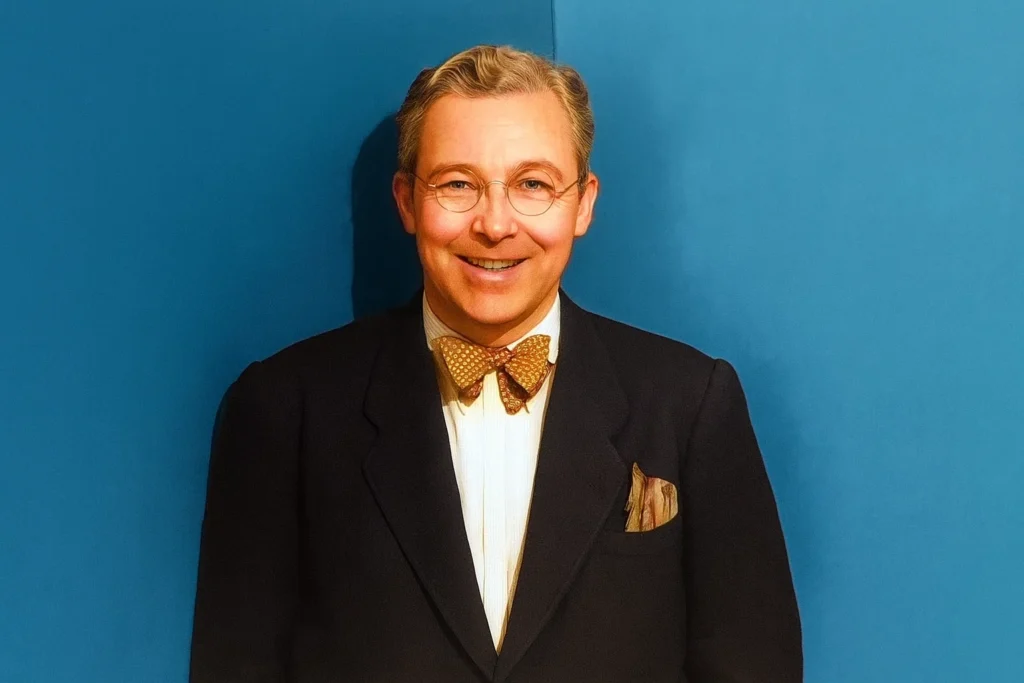
Of all the people I have encountered until now, perhaps one has had the greatest effect on me. Even though months have passed, I still cannot free myself from this effect. Whenever I am alone with myself, Raif Efendi’s innocent face, his gaze somewhat distant from the world yet wishing to smile when encountering another person, comes alive before my eyes.
Yet he was by no means an extraordinary man. In fact, he was quite ordinary, without any particular distinction, one of those people we see by the hundreds every day around us and pass by without a second glance. It was certain that there was nothing in the known and unknown parts of his life to arouse one’s curiosity. When we see such people, we often ask ourselves: “Why do these people live? What do they find in living? What logic, what wisdom commands them to walk the earth and breathe?”
But when thinking this, we look only at their exteriors; we never consider that they too have heads, and within them, whether they wish it or not, brains condemned to work, and as a result, they must have inner worlds of their own. Instead of judging that they do not live spiritually because they do not manifest the expressions of this world outwardly, if we were to wonder about this unknown world with the simplest human curiosity, we might see things we never expected, encounter riches we never anticipated. But for some reason, people prefer to seek things they can predict they will find. Finding a hero willing to descend into a well known to harbor a dragon at its bottom is certainly easier than finding someone brave enough to descend into a well whose bottom holds no one knows what. My getting to know Raif Efendi more closely was also purely by chance.
After being dismissed from my minor position at a bank—I still don’t know why I was dismissed; they simply told me it was for economy, but a week later they hired someone to replace me—I searched for work in Ankara for a long time. The five or ten kuruş I had ensured I got through the summer months without crawling, but the approaching winter necessitated an end to sleeping on sofas in friends’ rooms. I didn’t even have enough money left to renew my restaurant voucher that would expire in a week. When the many entrance exams I had taken, knowing full well they would lead nowhere, indeed led nowhere, I was somehow still upset; when I received rejection letters from the stores I applied to for clerk positions, unbeknownst to my friends, I would wander until midnight in despair. Even at the drinking tables to which I was occasionally invited by a few acquaintances, I could not forget the hopelessness of my situation. Strangely, the more my distress increased and my needs made it impossible for me to get from today to tomorrow, my timidity and shame also increased proportionally. When I ran into some acquaintances on the street whom I had previously approached to find me work and who had not treated me badly at all, I would lower my head and pass quickly; I had even changed toward friends from whom I had freely asked to be fed and from whom I had borrowed money without hesitation. When they asked “How are things?” I would answer with an awkward smile: “Not bad… I’m finding occasional temporary work!” and quickly escape. The more I needed people, the more my need to flee from them increased.
One day, in the late afternoon, I was walking slowly on the deserted road between the station and the Exhibition Hall, trying to create an optimistic atmosphere in my soul by drinking in Ankara’s miraculous autumn. The sun reflecting off the windows of the Community Center and drowning the white marble building in blood-red holes, the smoke—whether mist or dust, impossible to tell—rising above the acacia trees and pine saplings, the workers returning from some construction site, walking silently and slightly hunched in their patched clothes, the asphalt with automobile tire tracks running across it here and there… All of these seemed content with their existence. Everything accepted everything as it was. So there was nothing else left for me to do either. Just at that moment, an automobile passed me quickly. When I turned my head to look, I thought I recognized the face behind the window.
Indeed, after the car went five or ten steps, it stopped, its door opened; Hamdi, one of my school friends, had extended his head and was calling me.
I approached.
“Where are you going?” he asked.
“Nowhere, just strolling!”
“Come, let’s go to my place!”
Without waiting for my answer, he made room for me beside him. According to what he told me on the way, he was returning from touring some factories of the company he worked for:
“I had telegraphed home that I was coming; they must have made preparations. Otherwise I wouldn’t have dared invite you!” he said.
I laughed.
I hadn’t seen Hamdi, whom I used to see frequently, since leaving the bank. I knew he was assistant manager at a company that did machinery and such commission work and also dealt in forestry and lumber, and that he earned quite good money.
The reason I hadn’t approached him during my unemployed period was almost entirely this: I was afraid he would think I had come not to ask him to find me work, but to ask him for financial assistance.
“Are you still at the bank?” he asked.
“No, I left!” I said.
He was surprised:
“Where did you go?”
Reluctantly I answered:
“I’m unemployed!”
He looked me over from head to toe, examined my attire; he must not have regretted inviting me to his home, because he put his hand on my shoulder with a friendly smile:
“Tonight we’ll talk and find a solution, don’t worry!” he said.
He seemed content with his situation and self-confident. So he had now reached the point where he could afford the luxury of helping acquaintances. I envied him.
He lived in a small but charming house. He had a somewhat ugly but likeable wife. They kissed in front of me without any hesitation.
Hamdi left me alone and went to wash up.
Since he hadn’t introduced me to his wife, I stood in the middle of the guest room, not knowing what to do. His wife also stood by the door, discreetly sizing me up. She thought for a while. Probably “Please, have a seat!” crossed her mind.
But then, not finding it necessary, she quietly slipped outside.
I thought about why Hamdi, who was never usually negligent and in fact paid excessive attention to such rules, owing part of his success in life to this attention, had left me stranded like this. One of the essential habits of men who have moved up to important positions is apparently this somewhat conscious absent-mindedness they show toward old friends—who have fallen behind them. Then, to suddenly become humble and paternal enough to address friends they had previously called “you” with the familiar “you,” to cut off the other person mid-sentence and ask something random and meaningless, and to do this quite naturally, even often with a smile full of affection and compassion… I had encountered all of this so much in recent days that it didn’t even occur to me to be angry or offended with Hamdi. I simply thought of getting up and leaving without telling anyone, escaping this awkward situation. But at that moment, a white-aproned, headscarved, elderly village woman brought coffee in patched black stockings, without making any sound. I sat in one of the armchairs with gold-embroidered blue flowers, looked around. On the walls were family and artist photographs; in the corner, on a bookshelf that apparently belonged to the lady, were a few twenty-five kuruş novels and fashion magazines. Several albums arranged under a cigarette table seemed to have been quite roughed up by guests. Not knowing what else to do, I took one of them; before opening it, Hamdi appeared at the door. With one hand he was combing his wet hair, with the other he was buttoning his open-collared white European shirt.
“So, how are you, tell me!” he asked.
“Nothing!… I told you!…”
He seemed pleased to have run into me. Probably he was happy to be able to show the rank he had achieved, or thinking of my situation, he was glad not to be like me. For some reason, when we see that people with whom we’ve walked together in life for a while have met with disaster, have fallen into some distress, we feel relief as if we’ve warded off these troubles from ourselves, and we want to show those poor souls interest and compassion, as if they’ve taken upon themselves troubles that could have come to us. Hamdi seemed to address me with the same feelings:
“Are you writing anything?” he said.
“From time to time… Poetry, stories!”
“Does it do any good at least?”
I laughed again. He said “Oh, drop such things!” and spoke of the successes of practical life, of how things like literature can only be harmful after school benches. He spoke as if advising a small child, never once considering that he could be answered, that he could be debated, and he didn’t hesitate at all to show through his manner that he drew this courage from his success in life. I looked at him admiringly with a smile on my face that I felt was quite foolish, and with this behavior I was giving him even more courage.
“Come see me tomorrow morning,” he was saying. “Let’s see, we’ll think of something. You’re a clever boy, I know; you weren’t very hardworking but that doesn’t matter. Life and necessities teach people many things… Don’t forget… Come early, see me!”
While saying these things, he seemed to have completely forgotten that he too had been among the leading idlers at school. Or perhaps he was speaking brazenly because he was sure I couldn’t throw this in his face here.
He made a movement as if getting up; I immediately straightened up and extended my hand:
“Excuse me!” I said.
“Why, it’s still early… But as you wish!”
I had forgotten that he had invited me to dinner. I remembered it at that moment.
But he seemed to have completely forgotten. I came to the door. While taking my hat:
“My respects to your wife!” I said.
“Of course, of course, you come see me tomorrow! Don’t worry!” he said, patting my back.
When I went outside, it had gotten quite dark and the street lamps were on. I took a deep breath. The air, even though mixed with some dust, seemed extremely clean and refreshing to me. I walked slowly.
The next day, toward noon, I went to Hamdi’s company. Yet when I had left his house last night, I had no such intention. In fact, he hadn’t made any clear promise either. He had seen me off with stock phrases like “Let’s see, we’ll think of something, we’ll do something!” which I was accustomed to hearing from every benefactor I approached. Despite this, I went. Inside me, more than any hope, there was somehow a desire to see myself humiliated. I almost wanted to say to my soul:
“Last night you listened without a word and agreed to let him adopt a patronizing attitude toward you, well then, you must carry this through to the end, you deserve this!”
The janitor first took me to a small room and had me wait. When I entered Hamdi’s presence, I felt that foolish smile from yesterday on my face again and I became even more angry with myself.
Hamdi was busy with a pile of papers spread before him and a crowd of clerks coming in and going out. He indicated a chair with his head and continued with his work. Without daring to shake his hand, I clung to the chair. Now I truly felt a bewilderment as if he were my superior, even my benefactor, and I genuinely found my self, which had been so lowered, worthy of this treatment.
What a great distance had formed between me and my school friend who had picked me up on the road in his automobile yesterday evening in just a little over twelve hours! How ridiculous, how external, how empty were the factors regulating relations between people, and especially how little connection they had with real humanity…
Since yesterday evening, neither Hamdi nor I had actually changed; we were what we were; despite this, certain things we had learned about each other, certain small and trivial things, had taken us in separate directions… The truly strange part of the matter was that we both accepted this change as it was and found it natural. My anger was not at Hamdi, nor at myself, but simply at being here.
In a moment when the room emptied, my friend raised his head:
“I found you a job!” he said. Then, fixing those bold and meaningful eyes on my face, he added: “That is, I invented a job. It’s not tiring work. You’ll follow our business at certain banks and especially at our own bank… Almost like a liaison officer between the company and the banks… In your free time you sit inside and attend to your own business… Write as much poetry as you want… I spoke with the manager, we’ll make your appointment… But we can’t give you much for now: Forty or fifty lira… It will increase later, naturally. Come now!… Good luck!”
Without getting up from his seat, he extended his hand. I approached and thanked him. On his face was a sincere satisfaction at having done me a good deed. I thought that he wasn’t really a bad person at all, that he was only doing what his position required and that this might indeed be truly necessary. But when I went outside, I paused for a while in the corridor and hesitated considerably between going to the room he had described to me and leaving this place. Then I walked a few steps slowly, head down, and asked the first janitor I encountered for translator Raif Efendi’s room. The man pointed to an indistinct door with his hand and passed by. I stopped again. Why couldn’t I just leave? Could I not sacrifice a forty lira salary? Or did I shrink from acting shamefully toward Hamdi? No! The unemployment lasting for months, not knowing where I would go, where I would look for work if I left here… And a cowardice I had now completely fallen prey to… These were what kept me in that dim corridor and led me to wait for the other janitor who would pass by.
Finally I opened a random door and saw Raif Efendi inside. I didn’t know him beforehand. Despite this, I immediately sensed that this man I saw bent over his desk could be no one else. Afterward I thought about where this conviction came from. Hamdi had told me: “I had a desk put in the room of our German translator Raif Efendi for you; he’s a quiet, godfearing man, he doesn’t harm anyone.” Then, in these times when everyone was called bay and bayan, he still spoke of him as efendi. Probably because the image these descriptions created in my mind resembled the gray-haired, bespectacled man with an overgrown beard I saw there, I had entered without any hesitation and asked the gentleman who raised his head and looked at me with absent eyes:
“You are Raif Efendi, aren’t you?”
The person across from me looked me over for a while. Then in a soft and almost fearful voice:
“Yes, it’s me! You must be the clerk who’s come to join us. They just prepared your desk. Please, welcome!” he said.
I moved to the chair and sat down. I began to watch the faint ink stains and lines on the desk. As is customary when sitting face to face with a stranger, I wanted to examine my roommate secretly, to form first—and naturally wrong—opinions about him with furtive glances. But I saw that he felt none of this desire and had bent his head back to his work, occupied as if I were not in the room.
This situation continued until noon. I had now fixed my eyes brazenly on the person across from me. The top of his closely cut hair was beginning to go bald. From under his small ears, many wrinkles extended toward his neck. He moved his long, thin-fingered hands among the papers before him and translated without difficulty. From time to time he would raise his eyes as if thinking of a word he couldn’t find, and when our gazes met, a movement resembling a smile would occur on his face. While he appeared quite old from the side and from above, his countenance had an expression astonishingly innocent and childlike, especially in these moments of smiling. His yellow mustache, trimmed at the bottom, strengthened this expression even more.
At lunchtime, as I went to eat, I saw that he didn’t move from his place, that he opened one of the drawers of his desk and took out bread wrapped in paper and a small lunch container.
“Bon appétit!” I said as I left the room.
Although we sat face to face in the same room for days, we spoke hardly anything. I had become acquainted with many of the clerks in other departments, and in the late afternoons we had even begun going out together to play backgammon at a coffeehouse. According to what I learned from them, Raif Efendi was one of the establishment’s oldest employees. Even before this company was founded, he had been a translator at the bank we are now connected to; no one remembered when he came there. It was said that he had a rather large family and could barely get by on the salary he received. Meanwhile, when I asked why the company, which distributed money generously to this person and that, didn’t increase his salary despite his seniority, the young clerks said laughing: “Because he’s a fool. It’s even doubtful whether he knows any language properly!” Yet I later learned that he knew German very well and that the translations he made were quite accurate and beautiful. He easily translated letters about the specifications of ash and fir timber to come through Yugoslavia’s Susak port or about the operating methods and spare parts of sleeper-boring machines; the manager sent the specifications and contracts he translated from Turkish to German to their destinations without any hesitation. I had seen him read books absent-mindedly in his free time, taking them from the desk drawer without removing them outside, and one day I had asked: “What’s that, Raif Bey?” He had blushed as if I had caught him doing something wrong and stammered: “Nothing… A German novel!” and immediately closed the drawer. Despite this, no one at the company believed he could know a foreign language. Perhaps they were right, because there was nothing in his manner and behavior of someone who knows languages. No one had ever heard a foreign word slip from his mouth or heard him mention knowing a language at any time; foreign newspapers and magazines had never been seen in his hand or pocket. In short, there was nothing about him resembling those people who cry out with their entire being: “We know French!” His not demanding a salary increase based on his knowledge, his not seeking other, better-paying jobs, also strengthened this opinion about him.
He came exactly on time in the mornings, ate his lunch in his room, and after doing his small shopping in the evenings, went home immediately. He refused to come to the coffeehouse despite my inviting him several times. “They’ll be waiting at home!” he said. A happy family man, I thought, eager to rejoin his wife and children as soon as possible. I later saw that it wasn’t like that at all, but I’ll speak of these things further on. This constancy and diligence of his didn’t prevent him from being scorned at the office. If our Hamdi found a small typing error in Raif Efendi’s translations, he would immediately call the poor man, sometimes even coming to our room to scold him. It was quite easy to understand why my friend, who was always more cautious toward other clerks and feared getting a bad response from these young men who each relied on some kind of favor, harassed Raif Efendi, whom he knew would never dare to respond to him, so much, why he turned beet red and shouted loud enough for the whole building to hear over a translation that was a few hours late: What intoxicates people more sweetly than testing their power and authority over one of their own kind? Especially if the opportunity to do this shows itself only toward certain specific people, due to various subtle calculations.
Raif Efendi would occasionally fall ill and couldn’t come to the office. These were very often insignificant colds. But a case of pleurisy he said he had had years ago had made him overly cautious. At the slightest cold he would immediately shut himself in his home; when he went out he wore layers of wool undershirts; when he was at the office he never let windows be opened, and in the late afternoons he wouldn’t leave without wrapping scarves around his neck and ears and raising the collar of his thick but somewhat worn overcoat well up. Even when ill, he never neglected his work. Papers to be translated were sent to his home by an attendant and retrieved a few hours later. Despite this, there was something in the manager’s and our Hamdi’s treatment of Raif Efendi that wanted to say: “Look, we’re not throwing you out despite your whiny, sickly condition!” They didn’t hesitate to throw this in his face constantly, and after every absence of a few days, at each return, they would greet the poor fellow with barbed get-well wishes: “So? Please God it’s over now, isn’t it?”
Nevertheless, I too had begun to tire of Raif Efendi. I wasn’t at the company much. With a briefcase in hand, I would go around to banks and government offices whose orders we had accepted; from time to time I would go to my desk to arrange these documents and give explanations to the manager or assistant manager. Despite this, I had become convinced that this man sitting at the desk across from me, so motionless as to make one doubt he was alive, translating or reading his “German novel” in the drawer, was a truly meaningless and boring creature. I thought that a person with anything in his soul couldn’t resist the desire to express these things; I supposed that inside such a silent and indifferent person was a life not very different from that of plants: He came here like a machine, did his work, read certain books out of a habit I couldn’t understand, and in the evenings did his shopping and returned home. Probably, in all these days and even years that resembled each other exactly, times of illness were the only variation. According to what friends told, he had always lived like this. No one had ever seen him excited in any way. He always responded to his superiors’ most inappropriate, most unjust accusations with the same calm and expressionless gaze; when giving his translations to the typist and receiving them, he always made requests and thanks with the same meaningless smile.
One day again, Hamdi had come to our room for a translation that was late solely because the typists didn’t give importance to Raif Efendi, and had shouted in a rather harsh voice:
“How much longer will we wait? I told you I have urgent business, I’m going to leave. You still haven’t brought the translation of the letter from the Hungarian company!”
The other quickly rose from his chair:
“I finished it, sir! The ladies just couldn’t type it. They were given other work!” he said.
“Didn’t I tell you this work was more urgent than all the others?”
“Yes sir, I told them too!”
Hamdi shouted even louder:
“Instead of answering me back, do the work assigned to you!”
And he went out, slamming the door.
Raif Efendi also went out after him to plead with the typists again.
I thought about Hamdi, who during this entire meaningless scene hadn’t even found it necessary to glance at me. At this moment, the German translator who reentered came to his place and bent his head forward. On his face was that unshakable calm that aroused wonder, even anger. He took a pencil in his hand and began to scribble on paper. He wasn’t writing; he was drawing various lines.
But this action wasn’t a nervous man unconsciously occupying himself with something. In fact, I seemed to see a self-assured smile appearing at the corner of his lips, just below his yellow mustache. His hand moved slowly over the paper and every so often he would stop, squint his eyes, and look ahead. I understood from that faint smile spreading across his face that he was pleased with what he saw.
Finally he put the pencil aside and looked for a long time at what he had scribbled. I was looking at him without taking my eyes off him. This time I was astonished when I saw a completely new expression appear on his face: He almost looked as if he were pitying someone. I couldn’t stay in my place from curiosity. Just as I was about to get up, he straightened, went again to the typists’ room. I immediately jumped up, reached the opposite desk in one step, and took the paper Raif Efendi had drawn something on. When I glanced at it, I froze from amazement.
On the paper the size of a palm, I was seeing Hamdi.
Within five or ten simple but extraordinarily skillful lines, he was there with his entire identity. I don’t think others would find the same resemblance; in fact, if examined part by part, perhaps none of it resembled him, but for someone who had just seen him shouting at the top of his voice in the middle of the room, there was no possibility of mistake. This mouth, open in an oblong shape with animal rage and indescribable vulgarity; these eyes like lines resembling someone drowning in helplessness though wanting to pierce what they looked at; this nose whose wings were exaggeratedly widened to the cheeks and thus gave the face an even more savage expression… Yes, this was the portrait of Hamdi who had stood here a few minutes ago, or rather of his soul. But this wasn’t the real reason for my astonishment: Since I had entered the company, that is, for months, I had been passing all kinds of contradictory judgments about Hamdi. Sometimes I tried to excuse him, very often I despised him. I confused his actual personality with the personality his current position gave him, then wanted to separate them and got completely stuck. The Hamdi that Raif Efendi had presented with a few lines was the person I had wanted to see for a long time but could never see. Despite all the primitive and savage expression of his face, there was something pitiable about it. The partnership of cruelty and wretchedness has never been shown so clearly anywhere. It was as if I was truly getting to know my friend of ten years for the first time today.
At the same time, this picture had suddenly explained Raif Efendi to me as well. Now I understood his unshakable calm, his strange timidity in relations with people very well. Could there be any possibility for a person who knew his surroundings this well, who saw so keenly and clearly into the interior of the person across from him, to become excited and angry at anyone? What else could such a man do but stand like stone before someone struggling in all his smallness before him? All our sorrows, our disappointments, our rages are due to the incomprehensible, unexpected aspects of the events we face. Is it possible to shake a person who is prepared for everything and knows what can come from whom?
Raif Efendi had taken on an intriguing quality for me once again. Despite the light that had just emerged, I sensed there were many contradictions about him in my mind. The accuracy in the lines of the drawing I held in my hand showed this had not come from an amateur’s hand. The person who made this must have occupied himself with drawing for many years. Here was not only an eye that truly saw what it looked at, but also a skill that knew how to capture what it saw in all its subtleties.
The door opened. I wanted to quickly put what was in my hand on the desk, but I was too late. To Raif Efendi, who was approaching me with the translations of the letter from the Hungarian company, I said apologetically:
“It’s a very beautiful drawing…”
I had thought he would be surprised, that he would fear I would reveal his secret. It wasn’t like that at all. With his usual distant and absent smile, he took the paper from my hand:
“Years ago, I occupied myself with drawing for a while!…” he said. “From time to time, out of hand habit, I scribble some things… As you see, meaningless things… Just boredom…”
He crumpled the drawing in his palm and threw it in the wastebasket.
“The typing ladies typed it in great haste!” he murmured. “There are surely mistakes, but if I try to read it I’ll anger Hamdi Bey even more… He’s right too… Let me just take it and give it to him…”
He went back outside. I followed him with my eyes. “He’s right too, he’s right too!” I muttered.
After this, Raif Efendi’s every state, even his truly meaningless and insignificant actions, began to intrigue me. I tried to take advantage of every opportunity to talk with him, to learn something about his true identity. He appeared not to notice this excessive familiarity of mine. He maintained his attitude toward me—polite, but always leaving a gap between us. No matter how much our friendship advanced outwardly, inwardly he always remained closed to me. In fact, when I saw his family up close, his situation within this family, my curiosity about him increased completely. Every step I took to approach him confronted me with many new mysteries.
I went to his house for the first time during one of his usual illnesses. Hamdi wanted to send a paper to be translated by tomorrow via the janitor:
“Give it to me, I’ll visit him too,” I said.
“Fine… See what’s wrong with him. This time it’s gone on too long!”
Indeed, this time his illness had lasted somewhat long. He hadn’t come to the company for a week. One of the janitors described his house in the Ismetpaşa neighborhood. It was the middle of winter. I began walking in the streets that darkened early. I passed through narrow neighborhoods with broken sidewalks nothing like Ankara’s asphalt-paved roads. There were slopes and descents one after another. At the end of a long road, almost where the city ended, I turned left and entered the coffeehouse on the corner to ask about the house: A two-story, yellow-painted building standing alone among plots piled with stones and sand. I knew Raif Efendi lived on the ground floor. I rang the bell. A girl about twelve years old opened the door. When I asked for her father, she wrinkled her face and pursed her lips with an affected manner:
“Come in!” she said.
The inside of the house was not at all as I had imagined. In the hall, which was apparently used as a dining room, there was a large folding table, and in the corner a sideboard filled with crystal sets. A beautiful Sivas carpet lay on the floor, and food smells were coming from the kitchen on the side. The girl first took me to the guest room. The furnishings here were also nice, even expensive. Red velvet armchairs, low walnut cigarette tables, and in one corner a huge radio filled the room. Everywhere, on the tables and on the backs of the sofas, hung finely worked, cream-colored lace, and a ship-shaped “Creed” plaque.
The little girl brought coffee a few minutes later. For some reason, her face always had that spoiled expression wanting to belittle me, to mock me. As she took the cup from my hand:
“My father is unwell, sir, he can’t get out of bed, please come inside!” she said. While saying this, she seemed to want to indicate with her eyebrows and eyes that I wasn’t worthy of this polite treatment at all.
When I entered the room where Raif Efendi was lying, I was completely astonished. This was a small room nothing like the other parts of the house, almost like a boarding school dormitory or a hospital ward, with a row of white beds lined up side by side. Raif Efendi was lying in one of these beds, in a half-sitting position under white covers, trying to greet me from behind his glasses. I looked for a chair to sit on. The two chairs in the room were also covered with wool cardigans, women’s stockings, several silk dresses taken off and thrown from the back.
In one corner, in a cheaply painted cherry-colored wardrobe whose door stood half-open, were randomly hung dresses, suits, and below them knotted bundles. A disorder that would astonish a person reigned in the room. On the nightstand at Raif Efendi’s bedside, on a tin tray, stood a dirty soup bowl apparently left over from lunch, a small pitcher with its mouth open, and beside them, many medicines in bottles or tubes.
The sick man said:
“Sit there, why don’t you!” indicating the foot of the bed.
I perched there. On the back of the person across from me was a woman’s knitted wool cardigan, patched and variegated, with holes at the elbows. He had leaned his head against the white iron bars of the bed. His clothes were hanging one on top of the other at the foot of the bed, on my side.
The host, sensing I was surveying the room:
“I sleep here with the children… They turn the room upside down… The house is small anyway, we can’t fit…” he said.
“Are there many of you?”
“Well, quite a few! I have one grown daughter; she goes to high school. And the one you saw… Then my sister-in-law and her husband, two brothers-in-law… We all live together. My sister-in-law also has children… Two… The housing problem in Ankara is well known. There’s no possibility of moving out separately…”
At this time, the bell kept ringing outside, and from the noise and shouted conversations, it was understood that one of the family members had come home. At one point the room door opened. A woman in her forties entered, her short hair falling over her ears and face, plumpish. She bent to Raif Efendi’s ear and said something.
The other, without answering her, indicated me:
“From the office…” he introduced. “My wife.”
Then turning to his wife: “Take it from my jacket pocket!” he said.
The woman this time complained without bending to his ear or anything:
“My God, I didn’t come for money, who will go get it… You couldn’t get up either!”
“Send Nurten. It’s three steps away!”
“How can I send a child as tall as a leg to the grocer at this hour of night? In this cold, and she’s a girl… Even if I tell her to go, will she listen to me?”
Raif Efendi thought and thought; then, as if he had finally found a solution, shaking his head:
“She’ll go, she’ll go!” he said and looked ahead.
After the woman left, turning to me:
“Even buying bread is a problem in our house… When I get sick, they can’t find anyone to send!” he said.
As if it were very much my business, I asked:
“Are your brothers-in-law young?”
He looked at my face; didn’t answer. In fact, the expression on his face left the impression he hadn’t heard my question at all. But a few minutes later:
“No, they’re not small!” he said. “Both of them go to work. They’re civil servants like us. My brother-in-law is at the Ministry of Economy, he got them jobs. They didn’t study, they don’t even have a middle school certificate!” Then, suddenly cutting off his words, he asked:
“Did you bring something for translation?”
“Yes… It’s needed by tomorrow. They’ll send the janitor in the morning!”
He took the papers, set them beside him.
“I was also curious about your illness.”
“Thank you… It’s lasted rather long. I don’t dare get up!”
There was a strange curiosity in his gaze. It was as if he was investigating whether my interest was genuine. I was ready to do many things to convince him, but the eyes in which I saw for the first time any expression of excitement in any form quickly returned to their old expressionlessness and that usual completely empty smile.
I sighed and got up. He suddenly straightened and took my hand:
“Thank you for your visit, my boy!” he said.
There was warmth in his voice. He seemed to have sensed what was going through me.
Indeed, after today a closeness formed between Raif Efendi and me. I can’t really say that his treatment of me changed. I wouldn’t even think of claiming that he became intimate with me, that he opened his heart to me. He remained the same closed, silent person. True, on some evenings we would leave the office together and walk to his house, and sometimes we would even enter together and drink coffee in the guest room with the red furniture.
But during these times we either wouldn’t talk at all or we would speak of inconsequential things, Ankara’s expensiveness, the broken sidewalks in the Ismetpaşa neighborhood. It was rare for him to say anything about his house, his wife and children. From time to time he would say: “Our girl got a bad grade in mathematics again!” then immediately change the subject. I too hesitated to ask anything about this. The family members I had encountered on the evening of my first visit to him had not left a very good impression on me.
As I left the patient’s side and passed through the hall, the two young men and the girl of fifteen or sixteen I saw lined up around the big table in the middle had snuggled together and, not waiting for me to turn my back, began whispering and laughing. I knew there was nothing laughable about me. But these people, like every hollow person of that age, were among those who considered laughing in the face of the first person they met a kind of mark of superiority. Even little Nurten was struggling to conform to her sister and uncles. Later, every time I went to this house, I saw the same thing. I too was still young, I hadn’t yet turned twenty-five, but this strange habit I saw in some young people—this curiosity to consider a person they didn’t know, saw for the first time, as something very odd—aroused my astonishment. I noticed that Raif Efendi’s situation wasn’t very pleasant either and that he stood in the midst of this crowd like something extra and unnecessary.
Later, as I came and went to this house, I became friends with all these children. They weren’t bad people at all. They were just empty, completely empty creatures. All the improprieties they committed came from this. In the face of the yawning emptiness inside them, they could only satisfy themselves and become aware of their personalities by despising and insulting various other people, by laughing at them. I would pay attention to their conversations. Vedat and Cihat, the two most junior clerks at the Ministry of Economy, had nothing to do but gossip about their office colleagues, and Raif Efendi’s elder daughter Necla about her school friends, laughing uproariously at certain dress and behavior oddities they themselves possessed identically, seeing and mocking them only in others:
“What was that outfit Mualla wore at the wedding, my God? Tee-hee-hee!”
“If you’d seen how the girl snubbed our Orhan… Ha-ha-ha!”
Raif Efendi’s sister-in-law Ferhunde Hanım was in no condition to think of anything other than dealing with her two children aged three and four and, as soon as she found the opportunity to leave them with her sister, hastily putting on a silk dress and painting herself to go out. I only saw her a few times, struggling to arrange her painted and waved hair under her tulle hat in the mirror on the sideboard. Although still quite young, still in her thirties, countless wrinkles covered the corners of her eyes and mouth. Her bead-blue eyes couldn’t rest on anything for more than a second and reflected a causeless boredom to which she had been condemned since birth. She was angry at her children, whose heads and clothes were always unkempt, faces and hands always dirty, and complexions always pale, like two punishments inflicted by a cursed enemy she couldn’t understand, and when getting dressed up to go out didn’t know how to keep them away so they wouldn’t touch her with their dirty hands.
Ferhunde Hanım’s husband, Nurettin Bey, one of the Ministry of Economy’s department heads, was another version of our Hamdi.
He was a man of thirty or thirty-two, who carefully combed his chestnut wavy hair back and puffed it up like barber apprentices, and after even saying “How are you?” would lightly shake his head while pressing his lips together as if he had dispensed great wisdom. When speaking, he would look steadily into a person’s face, and during this time a smile would play in his eyes saying: “Hey, are your words even worth anything? What do you know anyway?”
After finishing an industrial school, he had for some reason been sent to Italy to study tanning, but there he had only learned a bit of language and, more importantly, how to adopt the manners of an important man. Nevertheless, he had important qualities for succeeding in life: First, he considered himself, with great confidence, worthy of very high positions, and by putting forth all sorts of opinions in every field whether he knew about it or not, by despising everyone without exception, he convinced those around him of his value. (I think this affliction of contempt in the household passed to them from this brother-in-law they so admired.) Then he paid great attention to his attire, shaved every day, had his worn trousers pressed tightly under his supervision, and could devote a Saturday to going from shop to shop to find the most elegant shoes, the most fashionable socks. In fact, according to what I learned later, the salary he received was barely enough for his and his wife’s clothing, and since there was no benefit from the thirty-five liras each that fell to the two brothers-in-law, all the household expenses were loaded onto our poor Raif Efendi’s meager wage. Despite this, everyone in the house had their say except the poor old man. Raif Efendi’s wife Mihriye Hanım, who had aged before reaching forty and combined sagging flesh with a strange obesity, her breasts hanging down to her belly, spent all her day cooking in the kitchen, mending piles of children’s socks in her free time, and looking after her younger sister’s rowdy “little rascals,” yet still couldn’t please the household. No one asked how the house ran; they only created new unpleasantness by not liking the food, by curling their lips and noses at something, because they considered themselves worthy of a much higher life.
When Nurettin Bey said:
“What kind of thing is this, for God’s sake?” he almost seemed to want to say: “Where are the hundreds of liras I give going, for God’s sake?” The brothers-in-law, who wore seven-lira scarves around their necks, didn’t hesitate at all to make their sister Mihriye get up from the table and send her to the kitchen, saying “I don’t like this food, fry me an egg…” or “I’m not full, fry me some sausage!” and then, when eleven kuruş were needed to buy bread on some evening, they couldn’t bear to give it from their pockets, waking Raif Efendi from the sleep he had fallen into lying sick in his room; as if this weren’t enough, they were angry at why he still wasn’t well and why he didn’t go to the grocer himself.
The order in the hall and guest room, in contrast to the wretchedness in the parts of the house invisible to guests, was to some extent Necla’s work. But the others too had found it appropriate to put this kind of mask on their home’s face toward the friends they were in contact with. For this reason, they had made installment payments to furniture stores for years, had endured considerable hardship, even participating themselves. But now the red velvet sets made guests nod their heads in admiration, and the twelve-lamp radio could drown the whole neighborhood in noise. The gold-embossed crystal drinking set arranged in the glass-fronted sideboard never embarrassed Nurettin Bey before the friends he frequently brought to drink rakı together.
Although it was Raif Efendi who carried all these burdens, his absence and presence in the house seemed equal. From the youngest to the oldest, everyone appeared not to notice him. They spoke with him about nothing but daily needs and money matters; very often they preferred to settle even these through Mihriye Hanım. As if a lifeless machine were sent out in the morning with various orders and returned in the late afternoon with arms full. Nurettin Bey, who five years ago, when he wanted to marry Ferhunde Hanım, wouldn’t leave Raif Bey alone, played all sorts of roles to appear pleasant to him, and after the engagement didn’t forget to bring something to please his future brother-in-law on every visit to the house, now seemed tired of living in the same house with such a meaningless person. They were angry at why he didn’t earn more money, why he didn’t ensure a more luxurious life, but at the same time they were certain he was a nothing, insignificant and worthless zero. Even Necla, who seemed like a rather sensible person, and Nurten, who still attended primary school, had probably, under the influence of their uncle-in-law, aunt, and uncles, conformed to the general atmosphere toward their father. In the love they showed him was a haste as if getting through forced labor; in their concern for his illness was an affectation like the false compassion shown to a pauper. Only his wife, Mihriye Hanım, who seemed to have become somewhat stupefied by work and livelihood worries that hadn’t lightened for a second in years, occupied herself with her husband as much as she could, striving so he wouldn’t be looked down upon, wouldn’t be scorned by his own children.
When there was a guest at dinner, to avoid letting her siblings or Nurettin Bey order aloud “Let brother-in-law go get it!” she would pull her husband into the bedroom and say in a voice trying to be sweet: “Come on, get eight eggs and a bottle of rakı from the grocer. Let’s not make them get up from the table!” but she no longer thought, perhaps didn’t even notice, why she and her husband didn’t sit at these tables, and when they happened to do so once in forty years, why they were met with uncomfortable glances as if they had committed a disrespect toward the others.
Raif Efendi also had a strange tenderness toward his wife. He seemed to truly pity this woman who for months hadn’t found time to put anything on her back but a kitchen dress even once. From time to time he would ask:
“How are you, my dear, did you get very tired today?” and sometimes, sitting her across from him, he would talk about the children’s passing grades, the expenses of the approaching holiday.
But there were no signs showing he was connected by even the smallest spiritual tie to the other family members. Sometimes he would fix his eyes on his elder daughter, seeming to expect something from her, warm, sweet things. But these moments would pass quickly, and his child’s meaningless coquettishness, inappropriate laughter would make the gap between them suddenly reveal itself.
I thought a great deal about Raif Efendi’s states. It was impossible for such a man—what kind of man, I didn’t know either, but I was certain he wasn’t as he appeared—yes, impossible for such a man to willingly flee from the people closest to him. The whole problem was that those around him didn’t know him, and he wasn’t the type of man to make any attempt to make himself known. After this, there was no possibility of breaking the ice between them, of removing this terrible strangeness these people felt toward each other. Because people know how difficult it is to know each other, rather than attempting this laborious work, they prefer to wander randomly like blind people and become aware of each other’s existence only when they collide.
Only, as I said, Raif Efendi seemed to expect something from his elder daughter, from Necla. In the movements of her face, in moving her mouth and hands imitating her painted aunt, and drawing all her spiritual strength from her uncle’s pretentiousness, this girl, despite all these thick outer shells, had signs that would make one suppose something from a real person remained inside. In her scolding of her sister Nurten, who tried to bring her insolence toward her father to the degree of insult, genuine resentment was sometimes sensed; when Raif Efendi was spoken of with great contempt at the table or in the room, she would sometimes slam the door and leave. But these states were merely the attempts that the humanity hidden and remaining inside made from time to time to breathe, and the false personality the environment had created through years of patient work was strong enough not to allow the rebellion of her true identity.
But, perhaps with the impatience my youth gave me, I was angry at Raif Efendi’s almost frightening silence. Whether at the company or at home, he not only tolerated people spiritually completely alien to him not counting him as a human being, he almost found a kind of correctness in it. True, I knew that people not understood by their surroundings, about whom wrong judgments were always made, in time began to feel a pride and bitter pleasure in this loneliness, but I could never imagine they would find the surrounding’s action justified.
On many occasions, I had noticed he wasn’t a man with deadened feelings. On the contrary, he was very sensitive, extremely perceptive and attentive. Nothing escaped his eyes that seemed to look only ahead. One day he had heard his daughters arguing in low voices outside: “You make it!” about the coffee to be brought to me, hadn’t made a sound, but ten days later, on my second visit to their house, he immediately called outside:
“Don’t make coffee, he doesn’t drink it!”
This action he took to avoid seeing a repeat of this incident that weighed on him, his having made me privy to himself, caused me to become even more attached to him.