
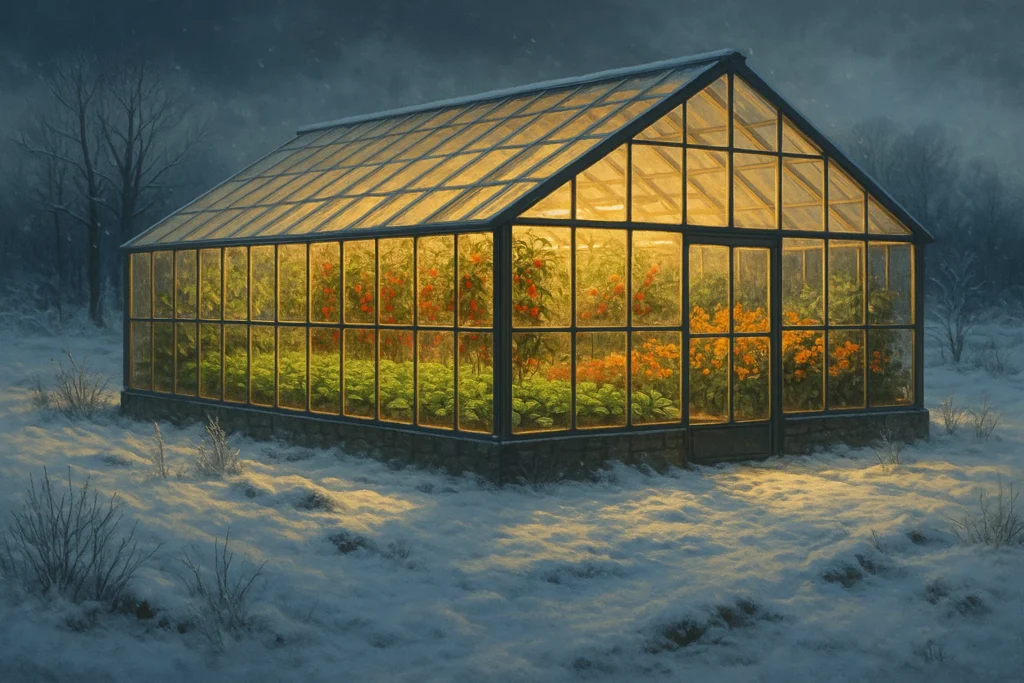
Greenhouse Season Extension: Year-Round Growing Mastery
🌱 Transform Winter into Your Most Productive Season
Professional greenhouse operators across American climate zones have developed proven systems that maintain productive harvests regardless of external weather conditions. Learn the strategic planning, environmental management, and crop selection techniques that extend natural growing seasons into profitable year-round production systems.
Interactive Season Extension Planner
📅 Plan Your Year-Round Growing Schedule
Succession Planting Calculator
⏰ Calculate Continuous Harvest Schedule
Planting Parameters
📋 Your Succession Schedule
- Continuous harvests every 14 days
- Maximum space utilization
- Consistent market supply
- Reduced harvest overwhelm
Winter Crop Selection Guide
❄️ Choose Cold-Hardy Varieties for Extended Season
Kale
Cold Tolerance: Down to 10°F
Harvest Time: 55-75 days
Best Feature: Flavor improves with cold
Spinach
Cold Tolerance: Down to 15°F
Harvest Time: 30-45 days
Best Feature: Fast growth in cool weather
Carrots
Cold Tolerance: Down to 20°F
Harvest Time: 60-80 days
Best Feature: Develops sweetness in cold
Winter Lettuce
Cold Tolerance: Down to 25°F
Harvest Time: 45-65 days
Best Feature: Dense, sweet heads
Radishes
Cold Tolerance: Down to 18°F
Harvest Time: 25-35 days
Best Feature: Quick space turnover
Cold Herbs
Cold Tolerance: Down to 28°F
Harvest Time: 30-50 days
Best Feature: High market value
Your Winter Growing Plan
Frost Protection Calculator
🛡️ Calculate Protection Requirements
🔥 Thermal Mass
Method: Water barrels, stone walls
Cost: $50-200
Duration: All night
🧥 Frost Cloth
Method: Protective fabric covers
Cost: $30-100
Duration: As needed
🏠 Cold Frames
Method: Mini greenhouse enclosures
Cost: $100-300
Duration: Season-long
🔧 Active Heating
Method: Space heaters, heat mats
Cost: $100-500
Duration: Precise control
Temperature Management System
🌡️ Monitor and Optimize Growing Conditions
Seasonal Care Timeline
📋 Year-Round Greenhouse Management Tasks
Winter Tasks (Dec-Feb)
- Monitor heating systems and energy usage
- Harvest cold-hardy crops regularly
- Plan spring succession plantings
- Maintain thermal mass systems
- Check for frost damage and pest issues
Spring Tasks (Mar-May)
- Begin succession planting schedules
- Transition from heating to cooling preparation
- Clean and maintain ventilation systems
- Start warm-season crop transplants
- Adjust watering frequency for increased growth
Summer Tasks (Jun-Aug)
- Maximize ventilation and cooling systems
- Harvest and process peak production
- Plant fall and winter crop successions
- Monitor for heat stress and pest increases
- Maintain consistent irrigation schedules
Fall Tasks (Sep-Nov)
- Prepare heating systems for winter
- Plant cold-hardy varieties for winter harvest
- Install frost protection materials
- Reduce watering frequency gradually
- Clean and organize greenhouse for winter
| Season Extension Method | Temperature Benefit | Installation Cost | Operating Cost | Best Application | Maintenance Level |
|---|---|---|---|---|---|
| Thermal Mass (Water) | +3 to 8°F | $50-200 | None | Gradual temperature buffering | Minimal |
| Double Layer Plastic | +8 to 12°F | $200-500 | $20-50/year | Overall greenhouse insulation | Low |
| Row Covers/Frost Cloth | +4 to 10°F | $30-150 | None | Individual plant protection | Seasonal |
| Cold Frames | +10 to 15°F | $100-400 | None | Dedicated growing areas | Low |
| Electric Space Heaters | +15 to 30°F | $100-300 | $200-800/season | Emergency protection | Medium |
| Propane Heaters | +20 to 40°F | $150-500 | $300-1200/season | Continuous winter growing | High |
🎯 Professional Season Extension Strategy
The most successful year-round greenhouse operations combine multiple season extension techniques rather than relying on single approaches. Start with passive methods like thermal mass and insulation for baseline protection, add frost cloth and row covers for emergency protection, and use active heating only when necessary for extreme conditions. This layered approach provides reliable plant protection while minimizing energy costs and maximizing profitability throughout extended growing seasons.
When winter’s first frost signals the end of outdoor growing seasons across America, most gardeners resign themselves to months of dormancy, imported vegetables, and dreams of spring planting. Yet professional greenhouse operators continue harvesting fresh produce throughout the coldest months, transforming what nature intended as rest periods into seasons of abundant productivity and profitable harvests.
The difference between seasonal growing and year-round production lies not in expensive equipment or complex systems, but in understanding how to extend natural growing seasons through strategic planning, environmental management, and crop selection techniques that work with rather than against seasonal transitions. Across American climate zones from Minnesota’s harsh winters to Florida’s mild cool seasons, successful growers have developed proven systems that maintain productive harvests regardless of external weather conditions.
Through detailed analysis of winter growing strategies, succession planting systems, frost protection methods, and seasonal care adjustments, this comprehensive guide reveals how to transform any greenhouse into a four-season food production system that provides fresh vegetables, herbs, and specialty crops throughout the entire year.
Strategic Winter Growing for Continuous Production
Winter greenhouse growing represents the ultimate test of environmental management skills, requiring growers to maintain productive plant growth during periods of minimal natural light, fluctuating temperatures, and increased pest pressure. Professional winter growing systems focus on crop selection, environmental optimization, and resource management that maximizes productivity while minimizing energy costs.
Cold-hardy crop selection forms the foundation of successful winter growing programs. These varieties have evolved natural adaptations that allow continued growth and development during cooler temperatures and reduced light conditions. Understanding these adaptations allows growers to match crop requirements with available resources for optimal results.
Brassica family crops including kale, collards, Brussels sprouts, and cabbage actually improve in flavor and nutritional content when grown in cool conditions. These plants convert starches to sugars as protective mechanisms against cold damage, creating sweeter, more tender harvests than warm-season production typically provides.
Professional winter brassica production involves selecting varieties specifically bred for cold tolerance and controlled environment growing. Modern breeding programs have developed compact varieties that maximize production in limited space while maintaining excellent cold hardiness and extended harvest potential.
Spinach represents one of the most productive winter greenhouse crops, capable of continuous harvest production throughout coldest months. This crop tolerates near-freezing temperatures while maintaining rapid growth rates under proper light and nutrition management.
Advanced spinach production techniques include succession planting every 2-3 weeks to maintain continuous harvests, with each planting requiring 30-45 days from seed to first harvest. Professional growers often maintain 6-8 different planting stages simultaneously for consistent production.
Root vegetables including carrots, turnips, and radishes develop enhanced sweetness during cool-season growing while requiring minimal heating costs. These crops can withstand temporary temperature drops that would damage warm-season vegetables, making them excellent choices for unheated or minimally heated growing spaces.
Winter root vegetable production benefits from extended growing periods that allow full flavor development. Professional timing involves seeding in late summer for winter harvests, taking advantage of warm soil temperatures for germination while allowing cool-season maturation.
Asian greens including bok choy, mizuna, and tatsoi provide rapid-growth options for winter production systems. These crops often mature in 30-40 days while tolerating cool temperatures and low light conditions better than traditional European vegetables.
Professional Asian green production involves understanding specific variety requirements and optimal harvest timing. Many varieties can be harvested at multiple stages from microgreen to full maturity, providing flexibility in production planning and market timing.
Herbs including cilantro, parsley, and chives maintain production throughout winter months while commanding premium prices during seasons when outdoor production remains impossible. These high-value crops justify greenhouse space and energy costs through superior market returns.
Winter herb production requires understanding each species’ specific light and temperature requirements. Cilantro thrives in cool conditions but requires adequate light for rapid growth, while parsley tolerates lower light levels but needs consistent soil moisture.
Lettuce and salad green production continues throughout winter with proper variety selection and environmental management. Butterhead and romaine types generally perform better than leaf lettuce in cool conditions, while specialty varieties can command premium prices.
Professional winter lettuce production involves coordinated succession planting with harvest timing adjusted for slower growth rates during shortest days. Head lettuce may require 60-90 days for maturity compared to 45-60 days during peak growing seasons.
Microgreen production provides year-round income opportunities with minimal space and energy requirements. These specialty crops grow rapidly under artificial lighting while commanding premium prices in restaurants and specialty markets.
Advanced microgreen systems can produce multiple crops weekly using vertical growing systems and LED lighting. Professional operations often maintain 20+ different microgreen varieties to meet diverse market demands throughout winter months.
Professional Frost Protection and Environmental Buffering
Frost protection in greenhouse environments involves multiple strategies that work together to maintain temperatures above critical damage thresholds while minimizing energy costs. Professional approaches focus on thermal mass, insulation systems, and emergency protection methods that provide reliable plant protection during extreme weather events.
Thermal mass systems store solar energy during warm periods and release heat gradually during cool nights, moderating temperature swings that can stress plants and reduce productivity. These passive systems require minimal energy input while providing significant temperature buffering throughout winter months.
Water-based thermal mass provides the highest heat capacity per dollar invested, with 55-gallon drums or IBC totes storing substantial thermal energy. Professional installations position thermal mass to maximize solar collection during day while providing heat distribution during night hours.
Advanced thermal mass systems integrate water circulation that distributes stored heat throughout growing areas. Simple pump systems can circulate warm water from solar-heated reservoirs through pipes positioned near plants, providing localized heating during critical periods.
Stone and masonry thermal mass offers permanent installation options that integrate with greenhouse design while providing long-term temperature moderation. Rock walls, concrete floors, and masonry growing beds absorb and release heat over extended periods.
Professional masonry thermal mass involves calculating thermal capacity requirements based on greenhouse volume and expected temperature variations. Properly designed systems can reduce heating costs by 40-60% while improving temperature stability.
Insulation systems reduce heat loss during cold periods while maintaining light transmission necessary for plant growth. Modern greenhouse insulation combines permanent installations with removable seasonal systems that optimize energy efficiency.
Double-layer plastic film systems create dead air spaces that significantly improve insulation values compared to single-layer coverings. Professional installations use inflation fans to maintain proper air pressure while ensuring uniform insulation throughout the structure.
Thermal screens provide automated insulation that deploys during cold periods while retracting during sunny days to maximize solar gain. These systems can improve energy efficiency by 50-70% while maintaining optimal growing conditions.
Advanced thermal screen systems integrate with environmental controls that automatically deploy based on temperature, light levels, and time of day. Professional installations include multiple screen layers for different temperature ranges and light management requirements.
Bubble wrap insulation offers cost-effective thermal improvement for existing greenhouse structures. This material can improve insulation values by 40-50% while maintaining adequate light transmission for most crops.
Professional bubble wrap installation involves proper attachment methods that create effective seals while allowing seasonal removal. Special horticultural bubble wrap provides better light transmission and longer service life compared to packaging materials.
Row covers and frost cloth provide localized plant protection that can prevent damage during sudden temperature drops. These materials trap radiant heat from soil and plants while allowing air circulation that prevents overheating.
Professional frost cloth systems use different weight materials for various protection levels. Light-weight fabrics provide 2-4°F protection with minimal light reduction, while heavier materials can provide 8-10°F protection for emergency situations.
Emergency heating systems provide backup protection during extreme weather events that exceed passive protection capacity. These systems must be reliable, efficient, and safe for greenhouse environments while providing adequate heating capacity.
Propane and electric space heaters offer portable emergency heating that can prevent crop losses during unusual cold snaps. Professional emergency systems include automatic temperature controls and safety shut-offs that prevent overheating or dangerous conditions.
Advanced emergency heating integrates with environmental monitoring systems that activate heating automatically when temperatures approach critical levels. These systems provide insurance against equipment failures or extreme weather that exceeds normal protection capacity.
Succession Planting Systems for Continuous Harvests
Succession planting represents the cornerstone of professional year-round production systems, ensuring continuous harvests while maximizing greenhouse space utilization and labor efficiency. Successful succession systems require understanding crop timing, space management, and market coordination that provides steady income throughout growing seasons.
Understanding crop maturation cycles enables precise timing calculations that maintain continuous harvests without gaps or overwhelming surpluses. Professional growers develop detailed timing charts that account for seasonal growth variations and market demands.
Quick-maturing crops including lettuce, spinach, and radishes can support succession intervals of 1-3 weeks depending on season and market requirements. These crops provide rapid turnover that maximizes space utilization while ensuring fresh product availability.
Professional quick-crop succession involves staggered seeding schedules that account for seasonal growth variations. Winter plantings may require 50-100% longer maturation periods compared to spring production, requiring adjusted succession timing.
Medium-duration crops including Asian greens and herbs typically support succession intervals of 2-4 weeks. These crops offer balance between rapid turnover and substantial harvests that justify space allocation and labor investment.
Advanced medium-crop succession systems coordinate multiple varieties with different maturation periods, creating complex planting schedules that maintain continuous harvests while providing product diversity for market demands.
Longer-season crops including brassicas and root vegetables may support succession plantings every 4-8 weeks depending on available space and market timing. These crops provide substantial harvests but require careful planning to avoid storage and processing bottlenecks.
Professional long-season succession involves coordinating planting timing with expected harvest periods and market demand cycles. Holiday timing and seasonal price variations often influence optimal succession schedules for these crops.
Space management for succession systems requires careful planning that maximizes growing area utilization while providing adequate access for planting, maintenance, and harvesting activities. Professional layouts consider crop requirements, equipment access, and workflow optimization.
Vertical growing systems can multiply succession planting capacity by utilizing overhead space for appropriate crops. Leafy greens and herbs adapt well to vertical systems while root vegetables require traditional ground-level growing.
Advanced vertical succession systems use modular growing components that can be easily reconfigured for different crops and growing seasons. Professional installations often integrate multiple growing levels with independent irrigation and lighting systems.
Mobile growing systems allow flexible space utilization that can adapt to changing succession requirements and seasonal variations. Rolling benches and movable container systems provide maximum flexibility for dynamic production schedules.
Professional mobile systems integrate with automated seeding and transplanting equipment that reduces labor requirements while maintaining consistent planting schedules. These systems often include environmental controls that optimize growing conditions for different succession stages.
Seed starting coordination ensures transplant availability matches succession planting schedules while accounting for germination variations and seasonal growth differences. Professional operations maintain detailed seeding calendars that coordinate with field planting requirements.
Advanced seed starting systems use controlled environment germination chambers that provide consistent results regardless of seasonal variations. These systems can guarantee transplant availability while optimizing greenhouse space allocation.
Market timing coordination matches succession harvests with demand cycles and price variations that maximize profitability while ensuring product movement. Professional growers develop marketing relationships that provide steady outlets for continuous production.
Commercial market relationships often require consistent supply commitments that demand reliable succession systems. Professional growers maintain detailed production records that demonstrate supply reliability while meeting quality standards.
Direct-to-consumer markets allow flexible timing that can accommodate succession variations while potentially providing premium prices for fresh, local products. Farmers markets and CSA programs often prefer steady supplies over large periodic harvests.
Advanced direct marketing includes value-added processing that extends shelf life and increases profitability. Professional operations often combine fresh sales with processed products that utilize succession surpluses.
Seasonal Care Adaptations for Optimal Plant Health
Adapting plant care routines to seasonal variations ensures optimal growth and productivity while preventing stress-related problems that can reduce yields and quality. Professional seasonal management involves understanding how changing environmental conditions affect plant physiology and adjusting care practices accordingly.
Watering management requires seasonal adjustments that account for changing evaporation rates, plant growth patterns, and environmental conditions. Professional irrigation systems adapt automatically to seasonal variations while maintaining optimal soil moisture for different growth stages.
Summer watering strategies focus on cooling effects and rapid moisture replacement that prevents heat stress during peak temperature periods. Professional systems often include misting or fogging that provides evaporative cooling while maintaining adequate humidity.
Advanced summer irrigation systems use soil moisture sensors that trigger irrigation based on actual plant needs rather than scheduled timing. These systems prevent overwatering while ensuring adequate moisture during high-demand periods.
Winter watering requires reduced frequency and careful timing that prevents root problems associated with cold, wet conditions. Professional winter irrigation focuses on maintaining adequate moisture without creating conditions that promote fungal diseases.
Advanced winter irrigation systems include soil temperature monitoring that adjusts irrigation timing based on soil conditions rather than air temperature. Warm soil irrigation can continue plant growth even when air temperatures drop significantly.
Fertilization programs must adapt to seasonal growth patterns and changing nutrient uptake rates. Professional nutrition management uses seasonal formulations that match plant requirements while preventing nutrient imbalances.
Spring fertilization programs emphasize nitrogen and growth-promoting nutrients that support rapid vegetative development and root establishment. Professional spring programs often include soil testing that guides specific nutrient applications.
Advanced spring nutrition includes slow-release formulations that provide consistent nutrients throughout rapid growth periods while preventing fertilizer burn or nutrient leaching during heavy irrigation.
Summer fertilization focuses on balanced nutrition that supports continuous growth while preventing excessive vegetative growth that reduces flowering and fruit production. Professional summer programs often reduce nitrogen while maintaining phosphorus and potassium levels.
Advanced summer nutrition includes foliar feeding programs that provide rapid nutrient uptake during high-stress periods when root uptake may be limited by heat or moisture stress.
Fall fertilization prepares plants for winter survival while avoiding excessive growth that reduces cold hardiness. Professional fall programs often emphasize potassium and other nutrients that improve cold tolerance.
Advanced fall nutrition includes gradual reduction in fertilization rates that allows plants to naturally prepare for dormancy while maintaining adequate nutrition for continued production.
Winter fertilization maintains minimal nutrition levels that support slow growth without promoting susceptibility to cold damage. Professional winter programs often use diluted applications that provide essential nutrients without excessive growth stimulation.
Advanced winter nutrition systems integrate with environmental monitoring that adjusts fertilization based on actual growth rates and environmental conditions rather than calendar dates.
Light management seasonal adaptations ensure adequate photosynthesis while preventing heat stress or energy waste. Professional lighting systems integrate natural and artificial light sources that optimize plant growth throughout seasonal variations.
Summer light management focuses on preventing excessive heat while maintaining adequate intensity for growth. Professional systems often include shading and cooling that reduces heat stress while preserving light quality.
Advanced summer lighting includes dynamic controls that adjust intensity and duration based on actual weather conditions and plant requirements rather than fixed schedules.
Winter light supplementation becomes critical for maintaining growth during periods of reduced natural light. Professional systems use high-efficiency LED lighting that provides optimal spectrum while minimizing energy costs.
Advanced winter lighting systems include automatic controls that adjust intensity and duration based on natural light levels, providing supplementation only when needed while maintaining consistent daily light integral requirements.
Temperature management seasonal strategies maintain optimal growing conditions while minimizing energy costs through seasonal adaptations. Professional systems integrate heating, cooling, and ventilation that responds to seasonal challenges.
Professional seasonal temperature management uses predictive controls that anticipate weather changes and adjust environmental systems before plants experience stress. These systems often integrate weather forecasting with environmental controls.
Advanced temperature management includes thermal curtains, heat recovery systems, and thermal mass integration that reduces energy consumption while maintaining optimal growing conditions throughout seasonal transitions.
The most successful greenhouse operations develop comprehensive seasonal management protocols that coordinate all aspects of plant care while adapting to local climate patterns and specific crop requirements. These integrated systems provide consistent production quality while optimizing resource utilization and profitability.