Best Wood Types for Outdoor Pergolas: Durability, Cost & Lifespan Comparison
When it comes to building or buying a pergola, choosing the right wood is essential. The type of wood you select affects not only the strength and longevity of your structure but also its overall appearance and maintenance requirements. A well-chosen wood can withstand harsh weather conditions, resist insect damage, and retain its beauty for decades. On the other hand, using the wrong type of wood may lead to warping, cracking, or rapid decay, which can turn your pergola into a maintenance headache.
Outdoor pergolas are exposed to sunlight, rain, wind, and temperature fluctuations, so durability and weather resistance are key factors. In addition, some woods naturally repel insects and fungi, while others require protective treatments to ensure long-term performance. Cost, aesthetics, and ease of installation are also important considerations when deciding which wood to use.
Choosing the perfect wood for your pergola involves more than just picking a beautiful type of timber. Here are the main factors to consider:
- Durability and Weather Resistance
- Opt for woods that naturally resist water, rot, and insect damage, such as teak, iroko, or cedar.
- If using softer woods like pine, make sure it is pressure-treated or properly sealed for outdoor use.
- Maintenance Requirements
- Low-maintenance woods like teak and iroko require minimal upkeep.
- Woods like pine or oak may need periodic varnishing or oiling to maintain their appearance and longevity.
- Cost vs. Longevity
- Premium woods (teak, iroko) are more expensive upfront but last decades.
- Budget-friendly options (treated pine) are cheaper but may require more maintenance and replacement over time.
- Aesthetic Appeal
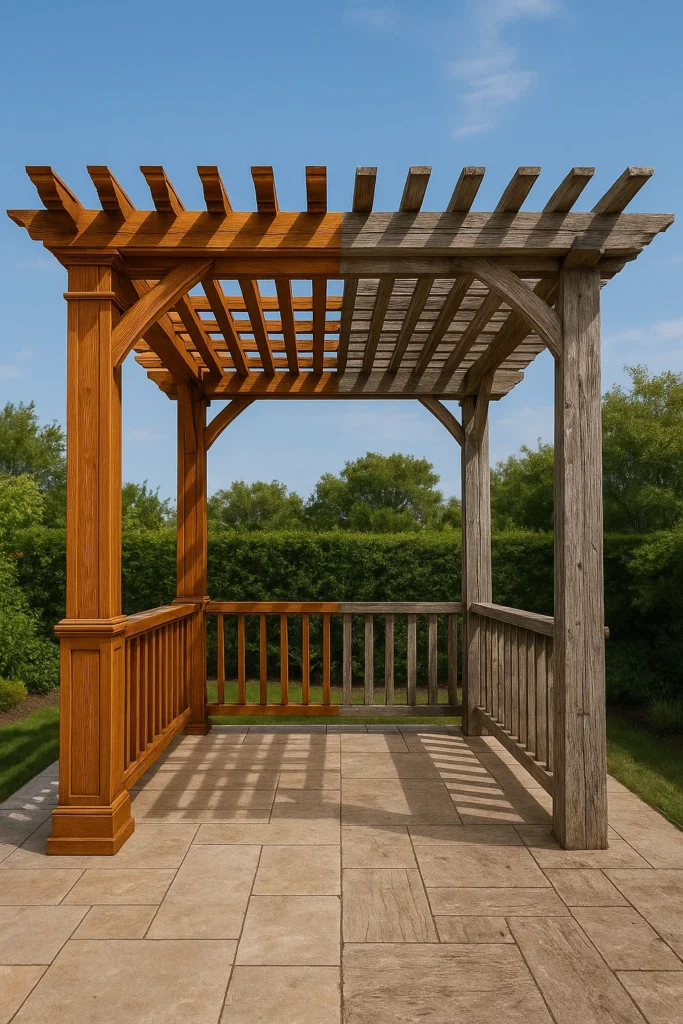
- Consider color, grain, and texture. Cedar offers warm reddish tones, oak gives a classic look, while teak ages beautifully into a silver-gray patina.
- Ease of Construction
- Softer woods are easier to cut and shape, which can reduce construction costs.
- Hardwoods like oak may require more effort but provide superior structural strength.
- Protective Treatments
- Regardless of wood type, applying a weather-resistant finish, stain, or outdoor oil helps extend the life of your pergola.
| Wood Type | Durability | Maintenance | Lifespan | Cost | Notes |
|---|---|---|---|---|---|
| Teak | Extremely high | Low | 50+ years | High | Naturally resistant to water, insects, and decay. Premium choice for long-lasting pergolas. |
| Iroko | Very high | Low | 40-50 years | High | Durable and weather-resistant; ideal for high-quality structures. |
| Cedar | High | Moderate | 25-30 years | Medium | Naturally resistant to decay and insects; reddish tones add warmth and charm. |
| Oak | High | Moderate | 30-40 years | Medium-High | Very strong and long-lasting; heavier and harder to work with. |
| Pine (treated) | Moderate | High (requires protective finish) | 15-25 years | Low-Medium | Affordable but needs regular protective treatments to prevent decay and insect damage. |
Choosing the right wood is the foundation of a strong, beautiful, and durable pergola. By evaluating durability, maintenance needs, cost, aesthetics, and construction requirements, you can select the perfect wood to ensure your pergola remains a stunning feature of your outdoor space for many years.
Pergolas come in a variety of styles and materials, each offering unique benefits for your outdoor space. Wooden pergolas are a classic choice, providing a natural and warm aesthetic, often crafted from cedar, redwood, or pressure-treated pine, though they require regular maintenance to prevent rot and insect damage.
Metal pergolas, made from aluminum, steel, or wrought iron, are highly durable and low-maintenance, making them ideal for modern designs. For those seeking convenience, vinyl pergolas offer weather resistance and minimal upkeep, though they may not be as sturdy in extreme conditions. Some pergolas feature retractable roofs or shades, allowing flexibility to enjoy sun or shelter from rain as needed. Finally, pergolas can be either attached to a house or freestanding in the garden, giving you options depending on your space and functional needs.