
If only you knew, my dear Efruz, how peacefully I have been living here for forty days. No noise, no sound, no friends, no enemies! No commotion! No fatigue! And gone is that nervous fever we call ‘ambition’—the thing that destroys us, yellows our complexions and lips, causes our thick hair to fall and turn gray prematurely! Such peace… As if it were the paradise of non-existence!
Every morning I wake from my dreamless, uninterrupted sleep to the sound of the white rooster perched in the tall tree beside my window, flapping its wings with a “Clap! Clap!” I listen to its sharp, pure, joyful crowing. My entire day passes by the stream that flows like molten crystal. Ah, this crystalline flow… As if seeping from a hidden paradise just behind those round trees, flowing toward the emerald shores of distant fairy lands shrouded in mist, lands whose location is unknown… It reflects from my eyes into the very depths of my soul. Now, wherever I look all day long—at the trees, at the ground, at the clouds in the sky, at the walls along the road—everything flows before my eyes like a crystal stream. From my heart, broken by the hands of friends in the city, all sorrows seep away, and they all flow from my eyes, mingling with the image of this landscape; becoming clear with blue lights, pink glows, and nameless colors.
Just yesterday morning I was again by the stream. I was in such deep comfort, such deep silence, that if I paid a bit more attention, I could even hear my heartbeat.
A voice from behind: “Hey! Guest of Ahmet Ağa!” it shouted. I turned. Before my eyes, the apparition of a gendarme flowed and blurred: “They brought you a letter, here, take it…” “For me? There must be a mistake,” I said, getting up; because no one in Istanbul knew where I was. Not even my wife! I took the letter from the gendarme’s hand and looked. It was indeed for me… I opened it. Had I not seen your signature, I would have torn it up immediately. I had sworn that for as long as I stayed in this village, I would not read a single word, nor write a single letter. But how could I not read your letter, dear Efruz?
After the gendarme left, I sat back down by the stream. I began to read your letter. The more I read, the more that clear flow that had been seeping from my soul to my eyes for forty days stopped. It darkened. My heart, which I thought had been emptied, filled again with sorrow and heaviness. If only the coincidence you described had not revealed my whereabouts to you… Should these poisons, these complaints be poured before a poor wretch who has fled to a village for a few days of rest in his life? Should these laments be shouted into the ears of one who has just begun to find solace listening only to nature’s melodies? Prepare yourself, my dear Efruz, as punishment for this impropriety, I am now going to give you quite a rough handling:
I understand that you are going through another crisis. What are these curses you hurl at great men, at venerable masters? What kind of personality is this? What wretched gossip is this? Don’t I always tell you, “Don’t attach importance to individuals!”? It’s not worth engaging with again. Individuals are like the waves of a sea. What matters is the sea—that is, society… Waves, meaning individuals, are transient forms that come and go. Does anyone with a bit of philosophical insight care whether waves are sometimes large, sometimes turbulent? You say that those far beneath you in science, art, manners, knowledge, and education have attained high positions. But this is quite natural! Because they have something you lack: Merit…
In the face of merit, neither your science, nor your art, nor your manners, nor your knowledge is worth anything, nor your education, nor your capability… I’m sure that as you read this, you’re shaking your head and thinking to yourself: “What, I have no merit?” Get angry with me if you like, Efruz. To leave you in no doubt, I will say it freely:
“You have no merit!”
Will you say, “How do you know?” Wait, let me prove it to you. When we were in middle school, we had a logic teacher. He used to say:
“Science means definition, my children; do you want to know whether someone who tells you something truly knows that ‘thing he speaks of’? Have him define the terms he uses and measure their accuracy. At that moment you will understand his knowledge or his ignorance.”
I have applied this old method I learned as a child to you many times in Istanbul. You could not define for me—even incorrectly—any of the terms you use like a refrain in every sentence: “civilization, individual, society, history, analysis.” In fact, I’ll never forget, once you said:
“What poetry is can never be defined.” Do you remember? But ‘merit’ is not such a scientific(!) term. It is almost like gold. Whoever possesses it knows and defines what it is as clearly as the sun.
For example, if you ask a banker, “What is a lira?” he will certainly say, “It is a round, yellow metal.” Anyone who cannot give this definition is either an animal or a savage. Now, my dear Efruz, since—look, how well I know—you are still shaking your head and thinking to yourself:
“What, I have no merit?” Tell me then. What is merit?
Tell me, tell me, tell me!
Tell me, tell me!
Tell me!
Look there, my dear Efruz; you are silent, you cannot give any answer. Because you certainly cannot define something you do not know, something whose existence you do not feel within yourself. Don’t worry, this time I will not show the generosity of defining what merit is and “giving you knowledge by ear.” I will only convince you that you have no merit.
The opposite of merit is ‘incapacity,’ that is, ‘weakness.’ Whoever has weakness is a schemer, an aggressor. He is rebellious, ostentatious, individualistic. In a word, he is dissatisfied. Like Don Quixote, he challenges windmills. Ah, now, wait…
Don’t play on words… Don’t say:
“The opposite of ‘incapacity’ is ‘strength.'”
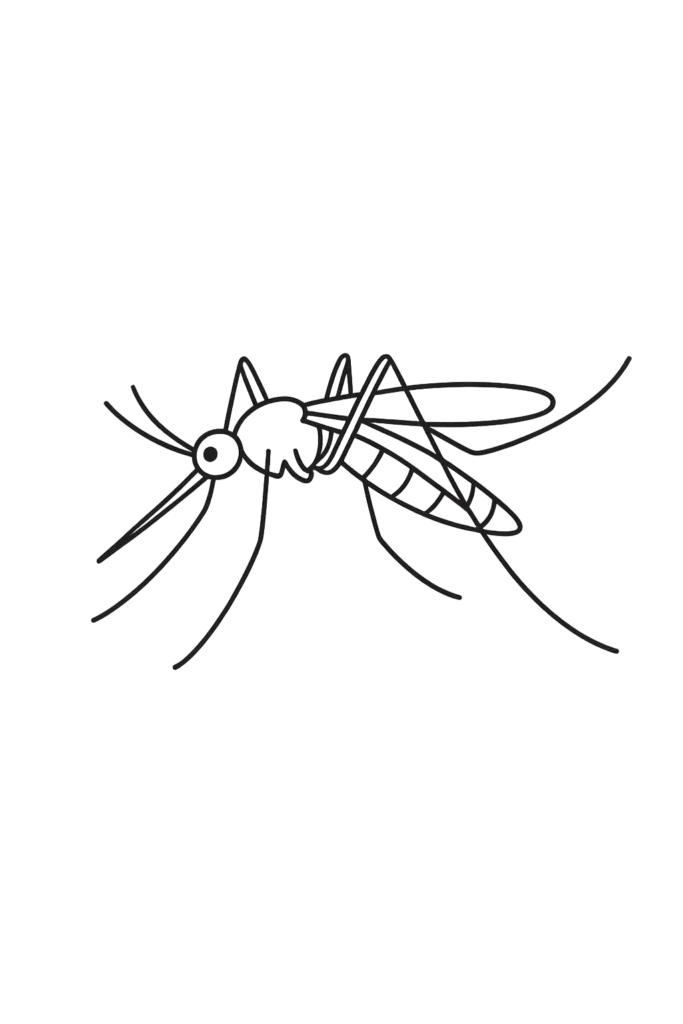
No! Strength is the opposite of ‘frailty.’ Merit is something loftier, higher than strength. If strength is the body, then merit is the spirit. Do you understand, my dear Efruz? I perceive that you have no merit from your weakness. And I perceive your weakness from your scheming. Because scheming is a clear manifestation of weakness. If you like, let me teach you this truth with a little story rather than proving it to you; on some evenings, the old men who gather in the arbor of the house where I am staying tell such tales that… This place is truly a “University for the Ear,” that is, a school without books! Exactly the “knowledge without books” you desire, you know, that knowledge acquired solely through taste and interest, exists here. Last evening they told “The Wind and the Mosquito.” Now let me write this story for you so you can see what a terrible schemer incapacity is. See it, and understand it if you wish.
The heroic wind, the invisible, intangible spirit of power, was one day going about distributing the beautiful scents it had gathered from the fields, flowers, pines, and forests, blowing sweetly. The mosquito, who placed great importance on his famous needle with which he stings and bothers everyone, saw him; without regard to his size or stature, he laughed “Puff… Puff…” The heroic wind thought, “Perhaps it’s not meant for me,” paid no attention, and continued on his way. But the mosquito began to laugh more, to mock, even to curse after him. The wind, with that great composure peculiar to men of merit, slowly turned back and came before the mosquito.
Without getting angry, he asked: “Are you laughing at me?” “Yes, at you.” “Are you mocking me?” “Yes, you.” “Are you cursing me?” “Yes, you.”
The powerful wind was first astonished, then pitied that this helpless mosquito had become so insolent. They began to talk like this:
“What audacity! Have you gone mad? If I blow just once, you’ll be torn apart, dashed somewhere, and die instantly!” “Me?” “You…” “I laugh at your mind! Once I start flying and face you, you won’t be able to stay around here, you’ll flee far away.” “Me?” “Yes, you…” “You’re going to make me flee with that tiny body of yours?” “Don’t you like my body? Well, you have no body at all…” “I am the wind. My body is invisible. When I blow with speed, when I become a storm, a gale, a hurricane, the strongest, heaviest things crumble before me. I mix oceans together, change the courses of rivers, move mountains from their places, and lay down virgin forests on the ground as if mowing grass.” “Puff, puff, puff… You can’t scare me. If I make you angry, I’ll do such things, I’ll do such things that…” the mosquito spoke such impossible words, hurled such curses that… it cannot be told. At that moment, the humble wind, still without getting angry, wanted to teach him a small lesson, blew a bit harder, and naturally swept the mosquito before him: “Whoosh, whooosh…”
By chance they were passing in front of a roof. The mosquito, fearing for his life, jumped onto this roof, hid between two beams, and again began mocking the wind: “Puff, puff, puff…” The wind got angry and blew harder. “Whooooosh, whooooooosh…”
Even harder: “Whooooosh, whooooosh…” Then even harder: “Whoooooo, ooooooo…”
But he could not dislodge the mosquito who had hidden well between the beams. In fury, he became a storm. Then a hurricane, a gale, finally a typhoon. He began to shake the roof! The mosquito, who had already stopped laughing, instead of begging forgiveness for the rudeness he had committed out of fear, said: “Ill-mannered wind! What are you becoming? Are you going to tear down this poor man’s roof because of me?”
You understand, don’t you… The wind won’t be able to tear it down, yet supposedly the mosquito will uproot and throw away the huge roof with those thin little legs of his! The moral of the story: The incapable is always a charlatan… There, dear Efruz, is your spiritual situation! The only thing to be done for you is first to learn what merit is, then to try to possess it. Complaint and cursing are useless things. A poet tells people: “Do not cry out like frogs!” What a precious treasure this advice is for those who understand. Listen, be quiet. At least leave me in peace by my little crystal stream while I remain in this village. For the soul that feels itself slowly rising before the beautiful and magnificent greatness of powerful nature sees the struggles of incapacity and pettiness as so ugly, so trivial that…