You know, my namesake, even though these villagers complained about us, saying we stole chickens and kids, they still loved us. They collected nearly a kile of wheat among themselves and gave it to Atmaca. And the miller added two jugs of yogurt to it. Encouraged by this warm reception, we pitched our tents among the olive trees a little further away.
Things were going well. The women had no trouble selling the baskets they wove from fresh willow branches in the nearby villages. Our musicians were being invited to weddings even from villages half a day’s journey away.
Atmaca was naturally at the forefront…
You’ve never encountered anyone like this Atmaca.
First of all, he was an imposing young man: Dark skin, jet-black hair cascading wildly over his face, and deep eyes…
Then his nose… A long, pointed nose with a slightly downward-curved tip…
That’s why we called him Atmaca [Hawk]…
His head stood upright on his broad shoulders like that of an Arabian steed, and no Arabian was more agile than he…
In all the camps, his courage, his beauty, his music were spoken of.
He didn’t play like other Gypsies, my namesake: First of all, he knew how to read music. He had attended and finished city school; then he was soulful… You’d think that when he played the clarinet, he was giving the melody not from his lungs, but directly from his heart.
At night he would withdraw alone to the foot of a tree. We would come out in front of the tents and lie face down, pressing our chins to the ground, listening to him.
He had no lovers. Neither the rosy-cheeked beauties in the Turkmen villages we passed through, nor the thin-lipped Gypsy girls could hold his gaze upon them for more than a moment…
Yet when he played music, we had seen a moisture appear in those large eyes—as if trying to extinguish the sparks there—and a few small droplets wanting to roll down his dark cheeks—drying immediately as if they’d met with fire.
He didn’t talk much, and when he did speak, he revealed nothing of what was inside him. What did he feel, what did he think? What tied him to this world? None of us knew. Was he playing so mournfully, so deeply, because he loved someone, or because he couldn’t love anyone at all?
From time to time he would disappear for long periods; it was said he wandered in other camps, descended into cities, and entered the assemblies of great lords.
The gentlemen in the town treated him as an equal, but he would steal sheep from the flocks with us, play music with us at weddings.
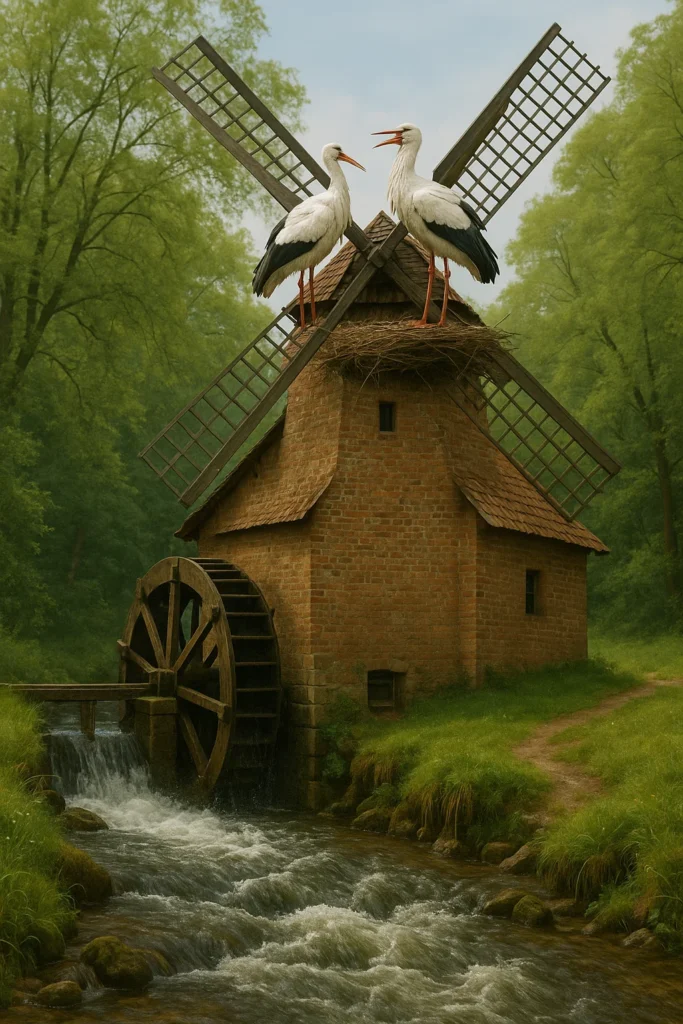
Almost every evening we would gather in the square in front of the mill to make music. Since we weren’t stealing anything for the time being, the miller was also content. He and his daughter would spread a mat under the great plane tree, sit cross-legged and listen to us.
The miller’s daughter was a true village beauty.
She had a round face, thick lips, and finely braided hair reaching down to her hips.
But her face was always pale. She had a blank stare at the things around her, as if she had no connection with them, and a reluctant smile that seemed to spill from the corners of her lips.
This poor girl was disabled, my namesake; as a child, she had caught her right arm in one of the mill’s wheels.
Now in its place, an empty sleeve attached to her waist swung back and forth.
And this separated her from other people.
Can you imagine what it means for a beautiful girl not to have an arm? She couldn’t mix with the young girls who bathed naked at the upper part of the stream. She was always obliged to cover her body and the defect on it…
She couldn’t join the girls who gathered at each other’s houses at night to have fun, because she could neither play the tambourine nor hold wooden spoons between her fingers to dance…
Clearly, all her childhood had passed in endless longing; clearly, she had watched her peers who climbed olive branches like squirrels, wrestled with each other on top of and underneath one another, played water-splashing games with boys in front of the mill, leaning against a wall with longing eyes.
Now she seemed to have gotten used to all this. She knew she didn’t have the right to do many things that other people did, and she wanted nothing.
She would sit for hours on the stone bench beside the mill’s door, looking at the chickens scratching in the square or at the rustling leaves of the huge plane tree with half-closed eyes in such a way that it would make you tearful.
At night she would come with her father, kneel and sit beside him, watching us…
To cut a long story short, my namesake, our proud and merciless Atmaca fell for this disabled daughter of the miller.
The wild bird who didn’t deign to look at peacocks and pheasants became the prey of a crested lark with a broken wing.
Alas, I realized the matter too late. By the time I understood, the flames had reached the eaves… Otherwise, I would have gathered the camp long ago and moved elsewhere…
Atmaca wasn’t talking to anyone, wasn’t going to weddings, was playing alone under the olives. But at night, under the plane tree, he would get thoroughly passionate, fix his eyes on the girl, and blow, blow on his clarinet…
And we would feel ourselves trembling, wanting to scream, to speak, or to throw ourselves on the ground and weep…
In his playing, there was the cry and wail of fire worshippers howling around a pile of flames, or of waves crashing against a sinking ship.
Atmaca’s wings had fallen, my namesake. He was growing paler and paler. On the days when the miller went down to the village, when I saw him sitting on the stone bench by the door with the girl, running his nails on the hard rock on either side as if wanting to tear them apart, I understood this wouldn’t end well…
One night I called him, we went to the lower part of the stream, and sat among the poplar saplings.
Nothing could be heard except the waters hurrying over the pebbles and a frog’s voice from the distance.
Atmaca was looking ahead, not asking why I had called him, what I would say.
I put my hand on his shoulder, he raised his eyes to me:
“You’re in love!…” I said.
“That’s right…” he said.
“What will you do?..”
As if to find the answer to this question, he turned his eyes upward, to the starry sky; he looked for a long time, then suddenly:
“You are our camp leader,” he said, “you’ve traveled more places than I have, you have more experience, your mind and wisdom are above all Gypsies. I must confide in you…”
Without lowering his eyes, as if telling it to the stars, he began to speak:
“I love her, and I haven’t thought at all about what I’ll do. You know how my loving would be… I, who didn’t turn my head to mansion ladies who set their servants running after me; noblemen who ruled over seven villages came to me begging: ‘My daughter has taken to her bed for you, I’ll forget you’re a Gypsy and embrace you like a son, just come, come and save our girl!’ and still I went on my way without answering; now I’m in love with this girl who has no arm.
I can’t take her, I can’t elope with her… Yet she loves me too. She told me this the other day, crying. ‘Come,’ I said, ‘let’s run away together.’ She laughed bitterly, ‘My lord,’ she said, ‘I’m deficient compared to you, are you giving me charity?..’ I told her how much I loved her: ‘You’re giving me your heart in place of your arm,’ I said, ‘is a fair heart worth less than an arm?’
“Her tears flowed again: ‘It’s not possible,’ she said, ‘think that every time I appear before you, I’ll be ashamed of you, my head will be down, do you want to humiliate me like this? Leave me, knowing what I am, let me stay with my old father, and don’t come around here anymore. You made me dream mad dreams by making me forget my disability, I’ll never be able to forget you until the end of my life, but don’t try to convince me of things that can’t be, if you really love me, leave here immediately!..”
Here Atmaca took a breath and lowered his eyes to the ground:
“I’m thinking, if we unite, this will truly be torment for both of us. We’ll feel an incomprehensible, suffocating air circulating between us. If she can’t open up to me, can’t be coy with me, can’t embrace me as she feels from within, if her eyes always seem to say: ‘Why did you waste your youth for me, isn’t it a pity for you?’ what will I do? She’ll take offense at my every word, every gesture; if I get angry, it hurts her, if I show love, it seems to pain her, when we embrace she feels a ache where her missing arm should be, and these things will go on and on…
Don’t ask me what I’ll do, where this state will lead me, I have no strength left, no mind, no thought, only love. A love that strikes down like a Mauser bullet… Your Atmaca is no longer in a state to move his wings!..”
He fell silent. The last words had spilled from his mouth with such a pitiful manner that I didn’t attempt to ask anything more or even to console him; in this state, what words could be said to him, and would he even hear what was said?
I took his arm and led him to the tent.
Things were going from bad to worse, my namesake, Atmaca’s condition frightened me. But there was nothing to be done. For now, I decided to let things take their course and went to bed. All night I saw Atmaca waiting impatiently under the great plane tree with his arms spread wide, and the miller’s daughter running toward him with a broad joy on the corners of her lips and an unprecedented pinkness on her pale cheeks. But just as they were about to throw themselves into each other’s arms, a strange object of indefinite shape would come between them, spinning round and round like a wheel, growing larger and larger, separating them.
Days passed one after another like white cloud puffs driven by a strong wind. And we sensed that at the end of these, a storm would surely break. Everyone seemed afraid of something terrible. A heavy stillness had seized the entire camp.
The old and experienced Gypsy women were reciting the charms they knew, calling all the good and evil spirits to the aid of poor Atmaca. As he passed by with his increasingly sunken cheeks, his confused eyes that didn’t seem to know where they were looking, the young men would bow their heads to the ground, the young girls would look after him with their deathly pale faces and trembling lips.
Women, men, young, old—unable to decide anything, we waited. As if a wandering wind was sweeping every thought from our heads, leaving us bewildered and despondent here.
One day Atmaca sidled up to me.
“Tonight I’ll make music at the mill, I’ve spoken with the old man!..” he said.
It was drizzling lightly. It was very likely a heavy summer downpour would come by evening. I told him this too.
“I’ll play inside the mill!” he said.
“The mill operates at night too, in that noise?”
He laughed strangely:
“Don’t worry!” he said, “I’ll make you hear the clarinet even in that noise. My breath hasn’t lost that much strength yet.”
The rain truly increased toward evening. Lightning was striking the oak forest on the opposite hill one after another, large drops were moving the black leaves of the olive trees with strange pattering sounds.
We all crowded into the mill. Two gas lamps swinging in the stable spread a half-light around, and the wheels, the stones, the dusty belts were turning, turning.
The tearing noise they all made together mixed with the broken sobs of the rain on the low ceiling, and the thunder chasing each other completed this terrible harmony.
The miller and his daughter had sat on the bench at the base of the wall. The swinging lamps played strange shadows on the young girl’s face.
A thin voice that drowned out all the noise suddenly rose: Atmaca, who had withdrawn to a dark corner of the mill, had begun to play.
My namesake, I can never forget what I heard that night, even after I die.
Outside, the storm was increasing more and more, and the wind was running its wet whip over the mud-brick walls. The rising waters were overflowing from the wooden troughs, pouring onto the ground with cries.
Inside, the stones were rumbling with endless exuberance; the belts spinning like mad were rattling; the teeth of the interlocking wooden wheels were creaking as if crying. And a mad voice drowning all of these was sometimes pleading, sometimes writhing with fury, after seeming about to fall silent, rising again.
In the twilight, Atmaca’s black and shining eyes looked motionlessly at the young girl, at her enlarged eyes fluttering with a pitiable agitation…
And he was playing such things, my namesake, that the words we use are not sufficient to describe them…
Sometimes it was a morning sun that caressed and warmed… But it would immediately become a desert storm that tore our faces, blinded our eyes, scattered the fires within it like grains of sand, or become a knife piercing our hearts.
After a final, sharp cry, I saw Atmaca stand up. He advanced two or three steps and hurled the clarinet into a corner.
Everyone had straightened up. They were looking at him with sorrowful eyes.
He swept back with his hand the black hair that had completely fallen over his face. With eyes that suddenly seemed to have gone into a hollow, after searching his surroundings, he fixed them on the miller’s daughter, looked for a long time…
I can never forget that moment in my life, my namesake; outside, the storm had increased more and more, the walls were shaking, the tiles above our heads were flying. And the mill was rumbling and turning like a raging animal. And there, in the dim light of the lamp, he stood larger than life, almost like a shadow. His eyes were on the young girl. An unbearable pain had rendered his face unrecognizable. Now blood swelling his dark skin would rush to the corners of his eyes, now even his lips, crushed between his teeth, would turn white as snow. Those lips that seemed to want to say something and were moving, and whose corners were pulled downward as if about to cry.
This gaze lasted only about a moment. Then his eyelids slowly fell and he swayed as if about to collapse to the ground. But he immediately collected himself. Once more he looked around. As if he was waiting for help: Help that would rescue him from these crushing, these tearing pains… Finally, as if something had struck his head, he groaned. Turning backwards, he threw himself toward the other end of the mill, toward the corner where the wheels and belts were spinning madly.
For the space of a breath, we all remained where we were, then ran after him, screaming madly…
Alas, my namesake, it was too late. Atmaca was coming toward us with eyes that had leapt from their place and seemed to say “what’s done is done.”
His right arm was not in its place, and blood was gushing from there like a stream. After a few steps he staggered and collapsed at our feet.
There you have it, my namesake, the story of a Gypsy in love.
In the season when flowers bloom, to sit by distant waters with a body leaning on your arms and smelling as beautiful as flowers, and to kiss, to kiss until you’re tired, is a pleasant thing…
To walk until morning in front of the door of a proud beloved who cruelly turns her head away when she sees you, and in the moonlight, to tearfully tell this to dear friends—between you and me—is still a pleasant thing.
But to be unable to bear carrying something in oneself that doesn’t exist in a beloved body, and to tear it off and throw it away, that, my namesake, that alone is truly loving.
TragicLove #SelfSacrifice #Disability #GypsyLife #RomaniCulture #ClassDifference #PhysicalImpairment #UnrequitedLove #Sacrifice #Identity #SocialStigma #BeautyStandards #Musicianship #Clarinet #TurkishLiterature #ShortStory #LiteraryFiction #Romanticism #Tragedy