
The Complete Greenhouse Revolution: Year-Round Growing for American Gardeners
🌱 Join 2.3 Million American Greenhouse Gardeners
From urban rooftops in New York to suburban backyards in Texas, Americans are discovering that greenhouse gardening isn’t just for commercial farmers anymore. This comprehensive guide reveals everything you need to know about starting your greenhouse journey in 2025.
Mastering Your Personal Climate Bubble
| Factor | Optimal Range | Outdoor Winter | Outdoor Summer | Greenhouse Control |
|---|---|---|---|---|
| Temperature | 65-75°F | 20-45°F | 85-105°F | 65-75°F ✓ |
| Humidity | 60-70% | 30-50% | 80-95% | 60-70% ✓ |
| Light Hours | 12-14 hours | 8-10 hours | 14-16 hours | 12-16 hours ✓ |
| Wind Protection | Minimal | High variability | Storm risk | Complete ✓ |
Think of your greenhouse as nature’s cheat code. While your neighbors are waiting for the last frost date, you’re already transplanting seedlings. While they’re battling aphids and weather damage, your plants are thriving in perfect conditions. This isn’t magic—it’s microclimate management, and it’s revolutionizing how Americans approach gardening.
Traditional Outdoor Growing:
Greenhouse Growing:
🏆 Success Story: Minnesota Marvel
Sarah Johnson from Duluth, Minnesota, transformed her 12×16 greenhouse into a tropical paradise that produces year-round. Despite -30°F winters, she harvests fresh lettuce, herbs, and even dwarf citrus trees twelve months a year using thermal mass and strategic heating.
Finding Your Perfect Location
🏔️ Northeast
Zones 3-6Challenge: Harsh winters, snow loads
Opportunity: 300% season extension
🌴 Southeast
Zones 7-9Challenge: High humidity, heat
Opportunity: Year-round warm crops
🌵 Southwest
Zones 8-10Challenge: Extreme heat, low humidity
Opportunity: Winter cool-season growing
🏔️ West Coast
Zones 8-10Challenge: Minimal
Opportunity: Specialty crop production
Your greenhouse needs 6+ hours of direct sunlight daily, but that’s just the starting point. Use smartphone apps like Sun Surveyor or SunCalc to map your property’s solar exposure throughout the year. Position your greenhouse to maximize winter sun capture while providing summer ventilation options.
Budget-Smart Construction That Works
🌱 Starter Setup
- Basic hoop house design
- 6-mil greenhouse plastic
- PVC pipe construction
- Manual ventilation
- Seasonal use
- Perfect for beginners
🏡 Game-Changer
- Polycarbonate panels
- Automatic ventilation
- Proper foundation
- Year-round capability
- Weather resistance
- Professional appearance
🏆 Professional
- Insulated structure
- Climate control automation
- Professional materials
- Commercial-grade systems
- Income potential
- Maximum efficiency
| Material | Initial Cost | Lifespan | Maintenance | Light Transmission | Best Use |
|---|---|---|---|---|---|
| 6-mil Plastic | $0.50/sq ft | 2-3 years | Low | 85% | Seasonal/Temporary |
| Polycarbonate | $2.50/sq ft | 10-15 years | Medium | 80% | Year-round |
| Tempered Glass | $8.00/sq ft | 20+ years | High | 95% | Permanent/Premium |
| Recycled Windows | $0.25/sq ft | 5-10 years | High | 90% | DIY/Budget |
Twin-wall polycarbonate provides the gold standard for American greenhouse construction, offering excellent insulation while diffusing light evenly. Professional-grade 6-mil greenhouse plastic offers excellent value for seasonal structures, with UV-resistant films rated for 4+ years of service life.
Essential Tools and Smart Shopping
Climate Monitoring
Digital thermometers, WiFi sensors, automated controllers
Budget: $50-300Hand Tools
Stainless steel trowels, bypass pruners, watering wands
Budget: $75-150Grow Lights
LED panels, timer systems, full spectrum lighting
Budget: $100-500Irrigation
Drip systems, timers, misting setups
Budget: $80-250| Source | Best For | Price Range | Selection | Expert Support |
|---|---|---|---|---|
| Home Depot/Lowe’s | Basic supplies | $-$$ | Limited | Basic |
| Greenhouse Megastore | Specialized equipment | $$-$$$ | Extensive | Expert |
| FarmTek | Commercial-grade | $$-$$$ | Professional | Technical |
| Local Farm Stores | Bulk materials | $-$$ | Regional | Local knowledge |
| Craigslist/Facebook | Used equipment | $ | Variable | None |
🎯 Pro Tip: Maximize Your Space
American greenhouses often emphasize ground space over height, missing opportunities. Hanging baskets, shelf systems, and trellises can double or triple your growing capacity without expanding your footprint. Think vertical!
Professional growers organize their spaces for efficiency. Potting benches at proper working height reduce back strain. Tool storage systems keep frequently-used items within easy reach. Climate-controlled storage protects seeds, fertilizers, and sensitive equipment.
300% longer growing seasons are now possible
$1,500 average annual savings on groceries
12 months of fresh produce from your backyard
Whether you’re motivated by rising food costs, concerns about food safety, or simply the joy of nurturing plants, greenhouse gardening offers solutions that work in every American climate zone. The tools, techniques, and knowledge exist today to transform any American backyard into a year-round food production system.
What if you could harvest fresh tomatoes in January, grow tropical fruits in Minnesota, or extend your growing season by 300% without moving to California? Welcome to the greenhouse revolution sweeping across America, where ordinary homeowners are transforming their backyards into year-round food production systems.
From urban rooftops in New York to suburban backyards in Texas, Americans are discovering that greenhouse gardening isn’t just for commercial farmers anymore. Through expert interviews, real-world case studies, and step-by-step guides, we’ll reveal everything you need to know about starting your greenhouse journey in 2025. Whether you’re battling harsh winters in the Northeast or scorching summers in the Southwest, this guide will show you how to create your own controlled growing environment.
Mastering Your Personal Climate Bubble
Think of your greenhouse as nature’s cheat code. While your neighbors are waiting for the last frost date, you’re already transplanting seedlings. While they’re battling aphids and weather damage, your plants are thriving in perfect conditions. This isn’t magic—it’s microclimate management, and it’s revolutionizing how Americans approach gardening.
Professional growers know that temperature consistency matters more than absolute temperature. Inside your greenhouse, you can maintain ideal growing temperatures even when it’s 20°F outside. The key lies in thermal mass, insulation, and strategic ventilation. Solar energy captured during the day can sustain nighttime temperatures, while automated venting systems prevent overheating during summer peaks.
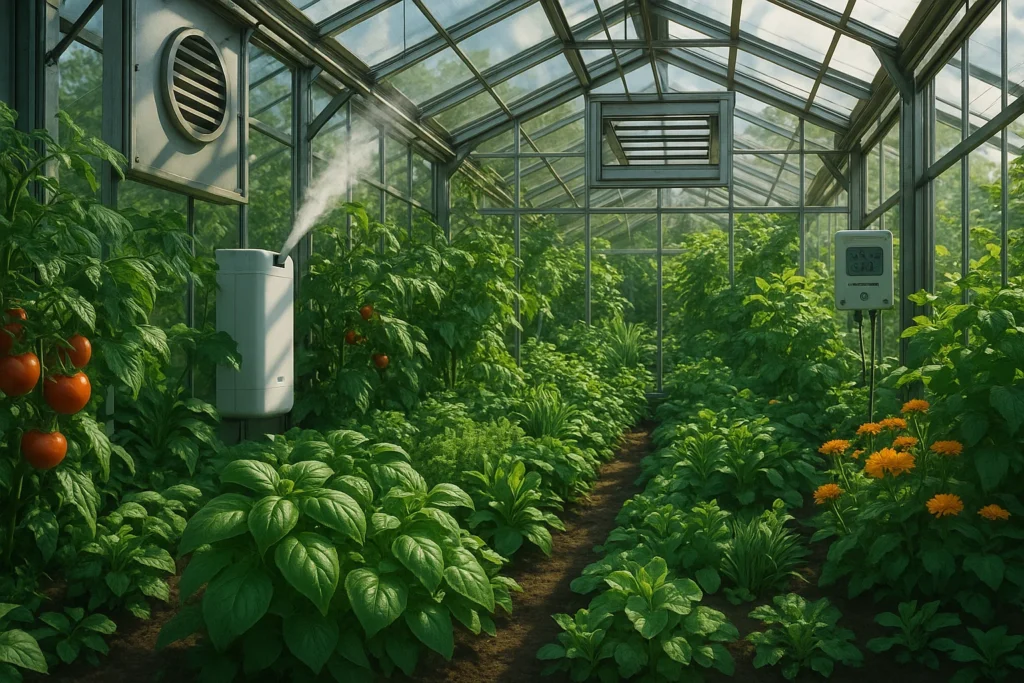
Most American greenhouse failures stem from humidity mismanagement. The sweet spot for vegetables is 60-70% relative humidity. Too low, and your plants stress and wilt. Too high, and you’re inviting powdery mildew and bacterial diseases. Smart growers use exhaust fans, circulation fans, and even simple wet towel techniques to dial in perfect humidity levels.
Natural light remains king, but supplemental LED grow lights have revolutionized winter growing. Modern LED systems consume 60% less energy than traditional fluorescents while producing better yields. The secret lies in understanding your plants’ Daily Light Integral requirements and matching them with your local sun conditions.
Sarah Johnson from Duluth, Minnesota, transformed her 12×16 greenhouse into a tropical paradise that produces year-round. Despite -30°F winters, she harvests fresh lettuce, herbs, and even dwarf citrus trees twelve months a year. Her secret? A combination of thermal mass using 55-gallon water barrels and a small propane heater that runs only during extreme cold snaps.
In contrast, Phoenix resident Mike Rodriguez faced the opposite challenge—keeping things cool. His innovative shade cloth system and evaporative cooling setup allows him to grow cool-season crops throughout Arizona’s brutal summers, when outdoor temperatures soar above 115°F.
You don’t need a PhD in botany to monitor your greenhouse effectively. Digital min/max thermometers track temperature swings, while WiFi-enabled sensors can alert your smartphone when conditions drift outside optimal ranges. The game-changer is data logging systems that help you identify patterns and fine-tune your environment over time.
Finding Your Perfect Location
Your greenhouse needs 6+ hours of direct sunlight daily, but that’s just the starting point. Use smartphone apps like Sun Surveyor or SunCalc to map your property’s solar exposure throughout the year. Position your greenhouse to maximize winter sun capture while providing summer ventilation options.
Cold winters and moderate summers in the Northeast create unique opportunities for greenhouse gardening. Your structure needs serious insulation and heating capacity, but the payoff is enormous—extending your growing season from 4-5 months to 12 months. Snow loads require sturdy construction, but also provide excellent insulation when properly managed.
High humidity and intense summer heat in the Southeast present different challenges. Successful southeastern greenhouse gardeners prioritize ventilation and cooling systems. The advantage is minimal heating costs and the ability to grow warm-season crops year-round.
Extreme heat and low humidity in the Southwest demand specialized approaches. Evaporative cooling, shade structures, and thermal mass become critical components. The reward is growing cool-season vegetables throughout the winter months when most of the country is dormant.
Moderate temperatures year-round make the West Coast ideal for greenhouse gardening. The primary focus shifts to optimizing production rather than survival, with opportunities for high-value specialty crops and extended harvest seasons.
Prevailing winds vary dramatically across American regions. Prairie states face constant winds that can damage structures but also provide natural ventilation. Coastal areas deal with salt air that accelerates corrosion. Mountain regions experience downslope winds that create unique microclimates.
Even if you’re using containers, proper drainage around your greenhouse prevents foundation problems and pest issues. Clay soils in the Midwest require different approaches than sandy soils in Florida or rocky soils in New England.
While greenhouses generally fall under agricultural exemptions, structures over certain sizes may require building permits. California’s earthquake zones require seismic-resistant construction. Florida’s hurricane zones demand wind-resistant designs. Northern states focus on snow load requirements. Research your local building department’s requirements early in your planning process.
Budget-Smart Construction That Works
You don’t need to spend thousands to get started. A basic hoop house with 6-mil greenhouse plastic can extend your season significantly. PVC pipe construction keeps costs low while providing surprising durability. This $500 entry-level approach has launched countless successful greenhouse careers across America.
At the $1,500 budget level, you can build a permanent structure with polycarbonate panels, automatic ventilation, and proper foundations. This investment typically pays for itself within 2-3 years through reduced grocery bills and increased property value.
For serious growers willing to invest $3,000 or more, this budget enables insulated structures, automated climate control, and professional-grade covering materials. These greenhouses often generate enough produce to supply extended families and even create income streams through farmers markets or CSA programs.
Twin-wall polycarbonate provides the gold standard for American greenhouse construction, offering excellent insulation while diffusing light evenly. Manufacturers like Palram and Rion offer panels specifically designed for North American climate conditions. Professional-grade 6-mil greenhouse plastic offers excellent value for seasonal structures, with UV-resistant films rated for 4+ years of service life available from suppliers like FarmTek and Bootstrap Farmer.
While glass provides maximum light transmission, it’s expensive, fragile, and challenging to install. Tempered glass costs 3-4 times more than polycarbonate but lasts indefinitely when properly maintained.
America’s abundance of reclaimed materials creates opportunities for creative builders. Old storm windows, salvaged lumber, and recycled steel can create unique, functional greenhouses at a fraction of new-material costs.
Concrete slabs work everywhere but cost more upfront. Gravel foundations suit most regions and provide excellent drainage. Pressure-treated lumber foundations offer the best balance of cost and functionality for most American climates. Aluminum framing requires minimal maintenance but costs more initially. Galvanized steel provides maximum strength for snow-load areas. PVC pipe offers the lowest cost but has durability limitations in extreme climates.
Professional installation techniques ensure longevity regardless of your chosen covering material. Proper tensioning, secure attachment, and weather sealing make the difference between a structure that lasts 20 years versus one that fails after the first major storm.
Regular maintenance protects your investment year-round. Spring brings inspection and repair of winter damage, replacing worn weatherstripping, and servicing heating systems. Summer requires cleaning covering materials, checking ventilation systems, and monitoring for pest infiltration. Fall means preparing heating systems, securing loose panels, and harvesting summer crops. Winter involves monitoring snow loads, maintaining consistent temperatures, and planning next year’s improvements.
Essential Tools and Smart Shopping
Digital thermometers with remote sensors let you monitor conditions from your house. Wireless weather stations provide comprehensive environmental data. Smart greenhouse controllers can automate heating, cooling, and ventilation based on your specific settings.
Professional-grade hand tools last longer and perform better than consumer versions. Stainless steel trowels resist corrosion in high-humidity environments. Bypass pruners maintain sharp edges longer than anvil-style cutters. Watering wands provide gentle, consistent moisture distribution.
Home Depot and Lowe’s carry basic greenhouse supplies but with limited selection. Menards serves the Midwest with competitive pricing on construction materials. Tractor Supply Company serves rural areas with agricultural-grade products. For specialized needs, Greenhouse Megastore provides comprehensive online selection with expert support, while FarmTek specializes in commercial-grade equipment adaptable for serious hobby growers.
Regional farm stores often provide better pricing on bulk materials like soil amendments and fertilizers. Craigslist and Facebook Marketplace offer opportunities for used equipment and construction materials that can significantly reduce your startup costs.
Professional growers organize their spaces for efficiency. Potting benches at proper working height reduce back strain. Tool storage systems keep frequently-used items within easy reach. Dedicated areas for different activities prevent cross-contamination and improve productivity.
American greenhouses often emphasize ground space over height, missing opportunities. Hanging baskets, shelf systems, and trellises can double or triple your growing capacity without expanding your footprint. Climate-controlled storage protects seeds, fertilizers, and sensitive equipment, while weatherproof containers prevent pest infiltration and moisture damage.
The greenhouse revolution isn’t coming to America—it’s already here. From urban rooftops in Manhattan to suburban backyards in Denver, Americans are discovering that year-round growing isn’t just possible, it’s profitable, sustainable, and deeply satisfying.
Whether you’re motivated by rising food costs, concerns about food safety, or simply the joy of nurturing plants, greenhouse gardening offers solutions that work in every American climate zone. The initial investment may seem daunting, but the returns—financial, nutritional, and emotional—begin almost immediately.
Your journey starts with a single seed planted in controlled conditions you create. As that seed grows into a thriving plant producing food in the middle of winter, you’ll understand why millions of Americans have embraced the greenhouse lifestyle. The tools, techniques, and knowledge exist today to transform any American backyard into a year-round food production system. Your greenhouse revolution begins now.