
The great domed, cool divan was quieter and more shadowy today. The blue, purple, and ultramarine spring lights filtering through its windows were gathering and deepening in the green depths of its tiles. The weary viziers who had knelt on the high silk cushions were staring at the colorful embroidery of the carpet before them, and the fading eyes of the old grand vizier, holding his long white beard with his frail hand, seemed to be contemplating very distant, very dark things, gazing at non-existent points.
“We need a brave man, pashas…” he said. “We did not let the envoy he sent to us, drowning in gold brocade, gold, and diamonds, kiss our sultan’s hand, but only permitted him to kiss his knee. No doubt he will attempt to reciprocate.”
“No doubt.”
“Without doubt.”
“Certainly…”
The grand vizier, understanding that the viziers under the dome agreed with him entirely, expressed his thoughts more clearly.
“In that case, the man who will go as our envoy must be very brave! A man who does not fear death. Who will resist actions that would dishonor the state. Who will not bow to the humiliations he will suffer out of fear of death…”
“Yes!”
“Indeed, indeed.”
“Quite right…”
The grand vizier withdrew his hand from his beard and rested it on his knee. He straightened up. He raised his head. He looked separately at the viziers whose bright crests were trembling.
“Come then… Find a brave man,” he said. “From the treasury officials, from the palace servants, from the divan, I cannot think of such a fearless man. You think about it too.”
The divan, a silent, small brain of the pious, peace-loving, calm sultan’s great state, began to think.
This envoy was to be sent to Ismail Safavi, who seven years later would receive, with fate’s terrible blow named “Yavuz!”, the punishment for all his pride and all his crimes at once! Bayezid the Saint’s nature, who spent his princehood more in books than in riding horses, playing javelin, and using weapons, was extremely gentle. He loved only poetry, wisdom, and mysticism, and detested war and struggle. The viziers considered it their greatest duty not to disturb their beloved sultan’s tranquility. Nevertheless, fighting on the borders continued unabated. Bosnian, Wallachian, Karamanian, Belgrade, Transylvanian, Croatian, and Venetian campaigns followed one another; Modon, Koron, Zonkiyo, and Santamavro were being conquered. It was as if the determination and genius of the Conqueror of Istanbul—who, upon ascending the throne, had his father’s statue destroyed, saying “Its shadow falls on the ground…” trying to earn divine reward—continued to live in the time of his pious successor like an unquenchable flame, an eternal spirit. The more peace was desired, the more troubles arose! Especially the East… it writhed in blood, in fire, in oppression. On the ruins of the collapsing, extinguishing Akkoyunlu dynasty, the vagrant Shah Ismail had established a reign. This rabid shah, who left no tree standing in the places he passed, who had fallen into mad pride for avenging his father and grandfather Cüneyt, was attacking left and right with unimaginable savagery. This cruel shah, who boiled even the partisans who sought refuge with him in large cauldrons at banquets he invited them to, as if cooking them, who drank wine from the skull of the defeated Uzbek sultan he had vanquished, was truly an unparalleled tyrant in the world. The literary, calm, gentle, pious viziers of Bayezid’s divan could not bear to recall his atrocities. This tyrant would one day certainly invade our borders too, and attempt to seize the eastern provinces. Everyone knew this. Last year he had asked for the daughter of Alaüddevle, the ruler of Zülkadriye, in marriage. Alaüddevle did not give his daughter. Ismail became furious at this rejection and humiliation; he passed through the sultan’s land for revenge. He entered the defenseless Zülkadriye territory. He took the fortresses of Diyarbakir and Harput. Alaüddevle’s son and two grandchildren, who had fled to a steep mountain, fell into his hands as prisoners. Shah Ismail had these unfortunates roasted over fire like kebab. He ate their flesh like lamb. Such savagery was newly heard of in the East. The sultan who did not want war did nothing but send an army under Yahya Pasha’s command to Ankara. This shah was as cunning as he was cruel… He was apologizing for crossing into Ottoman territory, sending envoys one after another. At that time, Prince Yavuz, who was the governor of Trabzon, could not be as patient as his father, crossed the Tabriz border, plundered everywhere up to Bayburt and Erzincan, and even captured the shah’s brother Ibrahim. Ismail’s envoy was now also complaining about this invasion, repeating that his last raid on Ottoman land was not against the sultan’s state, but solely against Alaüddevle. And so the divan could not find a suitable envoy to send to this cunning, this cruel, savage upstart. Because this vagrant, who considered himself equal to the Ottoman sovereign, who even established world conquest throughout the East, would no doubt commit many improprieties toward the man who would represent the state; he would probably impale, flay, or kill with unimaginable brutal savagery anyone who responded to his improprieties. The red crested turban to the grand vizier’s right, which had been motionless like a tombstone until now, moved from its place. It slowly turned to the left.
“I know a man perfectly suited for this embassy,” he said. “His father was my companion. But he does not accept state office.”
“Who?”
“Muhsin Çelebi.”
The grand vizier did not know this man. He asked: “Does he live here?”
“Yes.”
“What does he do?”
“He is somewhat wealthy. He spends his time reading. You wouldn’t know him, sir. He never fraternizes with the great. He seeks no favor.”
“Why not?”
“I don’t know, but perhaps because ‘it has decline.'”
“Strange…”
“But he is very brave. He does not deviate from righteousness. He does not fear death. He has gone to war many times. He has sword scars on his face.”
“Won’t he be our envoy?”
“I don’t know.”
“Let us see him once…”
“I don’t know if he’ll come to you when summoned.”
“How can he not come?”
“He just won’t… He owes nothing to the world. Shah and beggar are equal in his eyes.”
“Does he not love his state?”
“I think he does.”
“Then we will summon him not for ourselves, but to serve his state.”
“Try it, sir.”
That evening the grand vizier sent his steward to Muhsin Çelebi’s house in Üsküdar. He wrote that he would speak with him about a matter concerning the state and the nation, and that he must come tomorrow without hesitation.
After the morning prayer, while reading the papers his scribe had left in a small, dim room with heavy Indian fabric curtains in the reception hall of his palace, they informed the grand vizier that Muhsin Çelebi had arrived.
“Bring him here…” he said. In less than two minutes, a mustachioed, large, sturdy, cheerful man entered through the walnut door inlaid with mother-of-pearl. His large eyes sparkled under his thin black eyebrows. The weapon holder at his waist was empty. The grand vizier, accustomed to all his servants’ groveling and prostration, expected for a moment that the man would fall at his hem. He sat bewildered like a small hollow head under the always-kissed heavy gold fringe of the purple cloth-covered divan. The grand vizier could find nothing to say. He was seeing such a man—chest forward, puffed up, head held high—for the first time in his life. Even the dome viziers stood doubled over in his presence. Muhsin Çelebi asked in a very natural voice:
“You summoned me, what will you tell me, sir?”
“Well…”
“Please, sir.”
“Please, my son, sit down…”
Without hesitation, without embarrassment, without shrinking or cowering, Muhsin Çelebi sat on the cushion shown to him with a very natural movement. The grand vizier was still looking at the rolled papers he held in his hands, thinking to himself, “What kind of man is this? Is he mad?” But… no. This çelebi was a very intelligent person! He had wealth enough not to need the worthy or the unworthy. He ran his large dairy and large farm behind the Çamlıca forest, lived honorably, and said “yes” to no one. He looked after the poor, the weak, the strangers, and his table was never without guests. He was pious. But not fanatical. He was one of those who felt love for religion, nation, and sultan in his heart. He understood the greatness and sacredness of his state. His sole ideal was “not to prostrate to anyone but God, not to be a slave to a slave”… His knowledge and perfection were known to everyone. Ibn Kemal, when speaking of him, would say “He teaches me…” He was a poet. But he had never written a single ode in his life. In fact, he didn’t even read such panegyrics… He was past forty. He had never turned onto any of the paths of favor that opened before him. He knew that at the end of these golden-paved, enameled flowered, luminous roads resembling paradise, there was always “a dirty hem of supplication.” Humanity was very high, very great in his eyes. Man was God’s successor on earth. God had wanted to give man His own morality. Man was above all creatures. Servility suited very well the dog that wagged its tail and licked its master’s shoes; but to man… Muhsin Çelebi hated those pathetic ambitious ones who climbed doubled over to the peaks of favor digesting all kinds of degradation, those slaves without self-respect, those defiled prisoners who crawled on the ground like worms. He had even become reclusive to avoid seeing them. Only during wartime did he emerge to command the Gureba Divisions. His free, natural sitting in the presence greatly astonished the grand vizier. But it did not anger him.
“We want to send an envoy to Tabriz. Will you go on our behalf, my son?”
“Me?”
“Yes.”
“What business is that?”
“We cannot find a man like the one we’re looking for…”
“I have never entered state office until now.”
“Why haven’t you?”
Muhsin Çelebi paused a little. He swallowed. He smiled.
“Because I do not bow, I do not kiss hands or hems,” he said. “Whereas the statesmen of our time all reach their positions by bowing, kissing hands and hems, even feet, with a thousand kinds of servility, hypocrisy, and groveling, they always gather around themselves those who repeat these degraded behaviors of their inferiors. Their favorites, their intimates, those they protect, are all false hypocrites, immoral flatterers, dishonorable clowns, shameless sycophants! When they see an honest, upright man with self-respect, who is free and listens to the voice of conscience, they immediately become hostile and try to destroy him. Why was Gedik Ahmet Pasha stabbed, my pasha?”
The grand vizier slowly gritted his teeth. He narrowed his eyes. He crumpled the paper he was holding. He could not become angry. But as when he was angry, a tremor came to his cheeks. Not when he was a vizier, but even when he was still a governor-general, no one among his peers had spoken to him so straightforwardly. He thought again, “Is he mad?” If he wasn’t mad… what insolence was this? Wasn’t such insolence contrary to the “order of the world”? He narrowed his eyes even more. He said to himself, “If I had his head struck off…” He was about to open his mouth to shout to the gatekeepers. Suddenly he heard the deep voice of his conscience—coming from somewhere unknown: “See, you too cannot tolerate free, straight talk like those who rose through servility, hypocrisy, and groveling! You too want not an honest man before you, but a dog licking your feet, a clown doubled over under degradation, a wretch!” He opened his narrowed eyes. He put down the paper he was clutching in his palm. He looked at Muhsin Çelebi again. His high forehead shining with the trace of a wide sword wound in the middle… His red cheeks… His newly shaved white, thick neck… His somewhat large, crooked nose… His thin turban… just like the pictures of old heroes seen in Shahnameh pages. Yes, he was a living hero whom the sword that left its mark on his forehead could not fell. The just grand vizier did not stifle the voice echoing in his conscience’s soul with the darkness of his pride. “This is exactly the man we’re looking for…” he said. Such a fearless man could not tolerate the insult to be done to his state and nation either, and out of fear of death could not say yes to the humiliations he would see. He shook his heavy turban lightly: “We will send you as envoy to Tabriz.”
Muhsin Çelebi asked: “You have so many chancellors, scribes, and scholars in your service. Why don’t you choose from them?”
“Do you know who this wretch called Shah Ismail is?”
“I know.”
“Do you love your state?”
“I do.”
The sovereign grand vizier straightened up. He leaned back.
“Very well then…” he said. “This wretch does not accept the rule ‘an envoy is inviolable.’ He is in a rivalry with us. What he cannot do to us on the battlefield, he wants to do to the envoy we send. He will probably execute him with torture. Because he has no fear of God. However, any insult done to our envoy means insult to our state. We need a man who won’t fear for his head when he sees insult… Who will return this insult to that wretch in kind… If you love your state, you will accept this sacrifice!”
Muhsin Çelebi did not think at all. “I accept, sir, but on one condition…” he said.
“What kind?”
“Since this is a sacrifice, sacrifice is not done for payment. It is done freely. Any sacrifice made to the state for payment, whatever it may be, is in reality nothing but personal gain. I want no salary, no position, no payment. I will perform this service honorably. That is my condition!”
“But my son, how can this be? His envoy was dressed very richly. His horses and servants were perfect. Our envoy’s horses, servants, and clothes must be more magnificent, richer… For these, we will certainly give you several thousand gold coins from the treasury.”
Muhsin Çelebi turned. He looked ahead. Then he raised his head.
“No,” he said. “I won’t take a single coin from the treasury. If necessary, I will arrange the magnificently equipped horses and decorated servants with my own money. In fact…” The grand vizier opened his eyes.
“…In fact, I will wear something heavy on my back that Shah Ismail has never seen in his life.”
“What will you wear?”
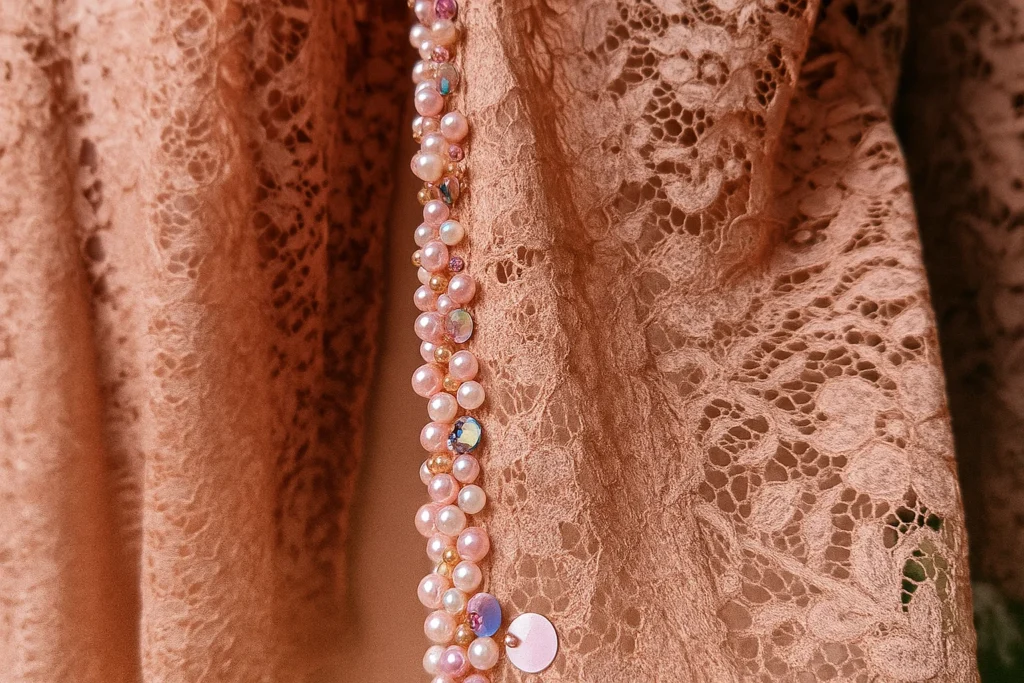
“I will buy the ‘Caftan with Pink Pearls’ from Sırmakeş Taroğlu, whose brocade is from India and thread from Venice…”
“What… Where will you find that much money, my son?”
The grand vizier had a right to be astonished. The fame of this caftan, completed a month ago, embroidered with the rarest pink pearls, was heard by everyone in Istanbul. Whenever viziers and envoys applied to Taroğlu to present it as a gift to the sultan, he increased its price. Muhsin Çelebi explained how he would buy this famous caftan.
“I will mortgage my farm and dairy, my house; I will collect ten thousand gold coins as loans from merchants. I will spend two thousand gold coins on horses and servants. With the remaining eight thousand gold coins, I will buy this caftan.”
The grand vizier did not find this action reasonable: “After you return, this caftan will be of no use to you. It is only an instrument of ostentation. You will lose your property. You will become poor.”
“No. Toroğlu will buy back the caftan I buy for eight thousand gold coins for seven thousand gold coins six months later. With seven thousand gold coins, I will redeem my farm from mortgage. If I cannot pay my remaining debts, let my father’s dairy that he left as a keepsake be sacrificed to the state… One doesn’t always take from the state… One gives a little too!”
As he conversed with Muhsin Çelebi, the grand vizier’s astonishment grew. His heart was relieved. Here was the perfect man to be sent to teach an insolent, upstart ruler his limits. He was smiling, shaking his heavy turban. The divan’s delicate, timid, calculating çelebis loved their lives and property very much. If one of them were sent as envoy, he would think of the favor he would receive rather than his state’s dignity, and would accept every insult deemed appropriate for him. The grand vizier wanted to keep Muhsin Çelebi for dinner too. He could not succeed; when leaving, he escorted him all the way to the landing.
Within six months, Muhsin Çelebi mortgaged his large farm, his dairy, his house, his shops, his garden, his vegetable garden. He collected money from merchants. He arranged his horses and servants. All of these were indeed magnificently unprecedented. On condition of returning it for seven thousand liras on his return, he also bought the famous Caftan with Pink Pearls from Taroğlu. He left his young wife and two small children at a relative’s house. He gave them six months’ living expenses in their hands. Then, putting the sultan’s letter in his bosom, he set out on the road. As he advanced from station to station, the news of this new envoy’s magnificence, his splendor, especially the fame of his pearl caftan, traveled through all of Anatolia to Shah Ismail’s land. One day Muhsin Çelebi entered Tabriz Castle with great pomp. The people of this small capital, enamored of ornament, splendor, color, and decoration, were astonished when they saw the Istanbul envoy’s caftan. The city, the palace, all the assemblies were filled with the story of the caftan. Shah Ismail had heard of “pink pearls” only in fairy tales and had never seen what they looked like. He felt deep hostility in himself toward this wealthy envoy who possessed what he himself had not yet seen. He decided to crush him under humiliation. Before admitting him to his presence, he had his executioners prepared behind his throne. He had the brocade cushions and silk prayer rugs in front of his throne removed. His viziers stood on his right, his warriors on his left.
…Muhsin Çelebi entered through the wide door with somaki arches with free steps. He walked. His head was up as always, his chest was forward as always. He kissed the imperial letter he took from his bosom. He placed it on his head. Then he extended it to the shah who was perched on the golden throne—wrapped in red, green, blue, purple silk heaps, tied with gold brocade, crests, and banners—with the stillness of a strange bird of prey. The shah, whose foot was not kissed, turned pale yellow with rage. The whites of his eyes disappeared. He took the letter. When Muhsin Çelebi withdrew from in front of the throne, he looked around. There was nothing to sit on. He smiled. He said to himself, “They probably want to keep me standing by force, in a position of respect…” He thought for a moment. How should he respond to this insult? He immediately took the Caftan with Pink Pearls off his back. He spread it on the ground in front of the throne. Shah Ismail, his viziers, his commanders were dumbfounded, looking in wonder. Then he sat cross-legged on this precious caftan.
With his resonant voice that echoed through the pointed dome engraved with thin dragon and serpent pictures, and the gilded arches, he shouted, “The great sultan whose letter I gave is from the line of Oghuz Kara Khan. Since the world was created, none of his ancestors have been slaves. All are sultans, all are khans. The envoy of a sultan whose ancestors have been rulers since creation does not stand in council before any foreign sultan. Because there is no sultan in the world as noble as his own sultan. Because…”
As Muhsin Çelebi shouted his speech in crude Turkish, the shah, who did not know Persian, was turning red, yellow, purple, the letter in his hand trembling with excitement that he could not open. The executioners behind his throne had drawn their swords. Muhsin Çelebi shouted and cried out. The courtiers, viziers, executioners, warriors were amazed at their ruler’s patience and tolerance. In fact, some of them began to grumble. When Muhsin Çelebi finished his words, he did not ask for permission or anything, got up, and walked toward the door. Shah Ismail had frozen, turned to stone. The pride that would be broken at Chaldiran had melted today under this single Turk’s fiery gaze. As Muhsin Çelebi was going outside, he said to his courtiers who were frozen in wonder like him, “Give him his caftan.”
One of the warriors ran. He gathered the caftan spread in front of the throne. He caught up with the Turkish envoy: “Please. You’re forgetting your caftan.”
Muhsin Çelebi stopped, laughed. Turning toward the door he had exited, in a loud voice that the shah would hear, he said, “No, I’m not forgetting. I’m leaving it to you. You have no rug or cushion in your palace to seat a great sultan’s envoy… Moreover, a Turk never puts on his back again what he has spread on the ground… Don’t you know this?”
…He returned day and night at full gallop from the roads he had traveled. When he entered Üsküdar, there was not a single coin left in Muhsin Çelebi’s pocket. He said to his decorated servants: “My sons! I give you the horses you rode, their trappings, their equipment, the clothes on your bodies, the jeweled daggers at your waists. Do you forgive me your rights?”
“We do.”
“We do.”
“Like mother’s pure milk.”
Having received his answer, he dismissed them from his presence. He took a deep breath. Without stopping at his house, he ran to the seashore. He jumped into a boat. He went to the grand vizier’s mansion. He said that he had given the letter to the shah, that he had suffered no humiliation, that he had left and returned to Istanbul without waiting for the shah’s permission. The grand vizier was already extremely confident that he would fulfill his duty properly. He asked some things about roads, feudal lords, and tribes. As the çelebi was about to get up and leave, he said, “I want to buy it, my son, is the caftan here?”
“No, I didn’t bring it.”
“Did you sell it in Persia?”
“No, I didn’t sell it.”
“Was it stolen?”
“No.”
“Well, what did you do?”
“Nothing!”
The grand vizier insisted, asked again and again. He could not understand at all what had become of the caftan. Muhsin Çelebi was not small-spirited enough to boast of what he had done. That evening he returned to Üsküdar. The next day, to Sırmakeş Taroğlu who came to buy it back for seven thousand gold coins, he did not tell what he had done with the caftan either. No one in curious Istanbul could learn “how, where, why” the famous caftan with pink pearls was left. The adventure in the Tabriz palace was lost in the darkness of history, became a secret. But the formerly wealthy Muhsin Çelebi could not pay the debts he incurred for this caftan and redeem his farm, his dairy, and his income from mortgage. He sold the horse and jeweled equipment left as a souvenir from the embassy and bought a tiny garden in Kuzguncuk. He cultivated it. He provided bread for his wife and children. Until his death, he sold vegetables in the Üsküdar market. He lived a very poor, very bitter, very deprived life. But “still” he neither bowed to anyone, nor did he vainly seek flattery by boasting about the sacrifice he showed by throwing all his wealth on the ground at once!