
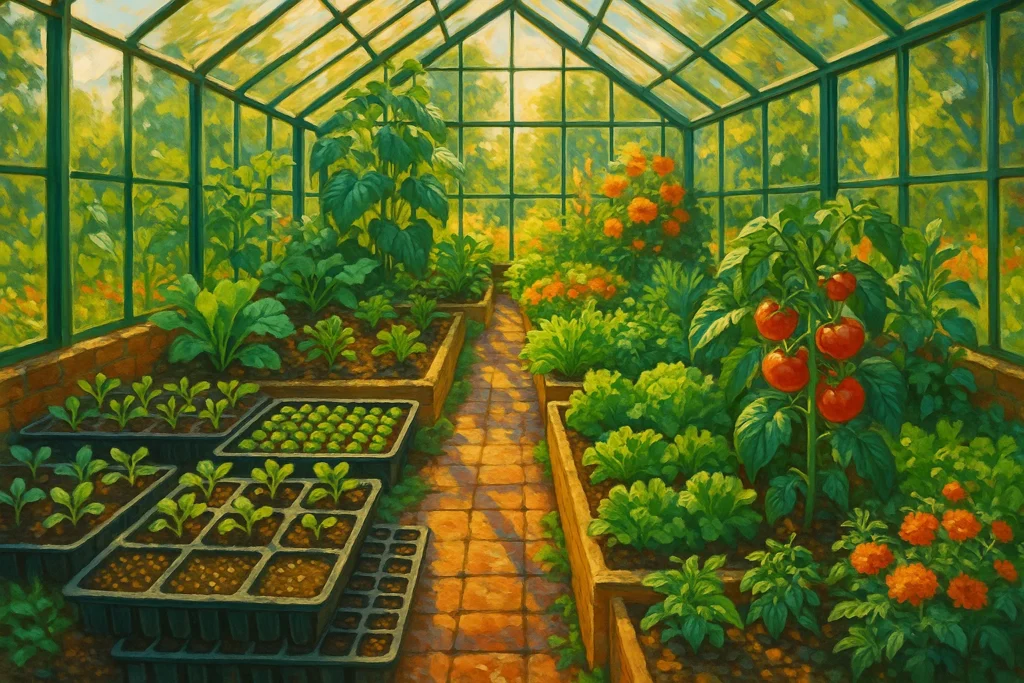
Organic Greenhouse Pest Control: Natural Disease Management for American Growers
🌿 Join the Organic Revolution
Professional organic growers across America are discovering that natural pest management not only protects plants more effectively than synthetic alternatives but also creates sustainable growing systems that improve over time. Learn the integrated approach that transforms greenhouses into balanced ecosystems.
Interactive Pest Identification System
🔍 Identify Common Greenhouse Pests
Aphids
Small, soft-bodied insects clustering on new growth
Whiteflies
Tiny flying insects creating white clouds when disturbed
Spider Mites
Microscopic arachnids causing stippled leaf damage
Thrips
Tiny slender insects creating silvery leaf streaks
Scale Insects
Protected insects appearing as brown/gray bumps
Fungus Gnats
Small flying insects around soil surface
Smart Treatment Optimizer
🎯 Get Personalized Treatment Recommendations
Problem Assessment
🌱 Recommended Treatment Plan
Primary Treatment: Neem Oil Application
Apply 1-2 tablespoons per gallon every 7 days
Secondary Support: Insecticidal Soap
Use between neem applications for quick knockdown
Prevention: Beneficial Insect Release
Introduce ladybugs or lacewings for long-term control
Expected Results: 7-14 days
Follow-up Required: Weekly monitoring
Disease Prevention Checklist
🛡️ Proactive Disease Management System
🧹 Sanitation Protocols
🌬️ Environmental Controls
🔄 Cultural Practices
👀 Early Detection
Beneficial Insect Ecosystem
🦋 Build Your Natural Pest Control Army
Ladybugs
Voracious aphid predators
Cost: $15-30/thousand
Lacewings
Larvae are “aphid lions”
Cost: $20-40/thousand
Predatory Mites
Spider mite specialists
Cost: $25-50/thousand
Parasitic Wasps
Aphid & whitefly parasites
Cost: $30-60/thousand
Treatment Cost Analysis
💰 Compare Organic Treatment Costs & Effectiveness
Neem Oil Treatment
Per 1000 sq ft treatment
Duration: 7-14 days
Applications/Season: 6-12
Total Annual Cost: $36-72
Insecticidal Soap
Per 1000 sq ft treatment
Duration: 3-5 days
Applications/Season: 12-20
Total Annual Cost: $36-60
Beneficial Insects
Initial investment
Duration: Season-long
Releases/Season: 2-3
Total Annual Cost: $100-150
Physical Controls
One-time setup cost
Duration: Permanent
Maintenance: Minimal
Total Annual Cost: $25-40
| Natural Treatment | Target Pests | Application Rate | Effectiveness | Re-treatment Interval | Safety Rating |
|---|---|---|---|---|---|
| Neem Oil | Aphids, Whiteflies, Thrips | 1-2 tbsp/gallon | 85% | 7-14 days | Very Safe |
| Insecticidal Soap | Soft-bodied insects | 2-4 tbsp/gallon | 75% | 3-7 days | Very Safe |
| Diatomaceous Earth | Crawling insects | Light dusting | 70% | After watering | Safe (food grade) |
| Beneficial Nematodes | Soil-dwelling larvae | 50-250 million/acre | 80% | Once per season | Completely Safe |
| Sticky Traps | Flying insects | 1-2 traps/plant | 60% | Replace when full | Non-toxic |
Success Tracking Dashboard
📊 Monitor Your Organic Pest Control Success
Pest Reduction
Plant Health
Beneficial Insects
Treatment Efficiency
📈 Your Organic Growing Success
Eliminated synthetic pesticide use
vs. conventional treatments
Improved flavor and nutrition
Balanced predator-prey ratios
🎯 Master Grower’s Integration Secret
The most successful organic greenhouse operators understand that pest control isn’t about eliminating all pests—it’s about maintaining balanced ecosystems where beneficial organisms keep pest populations below damaging thresholds. Focus on prevention, early intervention, and building long-term beneficial insect populations rather than relying on rescue treatments. This approach creates self-improving systems that get more effective over time.
The moment you discover tiny invaders threatening your greenhouse plants, you realize that successful growing extends far beyond providing optimal temperature, light, and nutrients. A thriving greenhouse ecosystem requires understanding and managing the complex relationships between pests, beneficial organisms, and plant health—without relying on harsh chemicals that can harm both your family and the environment.
Across America, greenhouse growers are discovering that organic pest and disease management not only protects their plants more effectively than synthetic alternatives but also creates sustainable growing systems that improve over time. From identifying the earliest signs of pest infestations to fostering beneficial insect populations that provide natural control, this comprehensive guide reveals the integrated approach that professional organic growers use to maintain healthy, productive greenhouses year-round.
Through detailed pest identification guides, natural treatment protocols, disease prevention strategies, and beneficial ecosystem management, you’ll learn how to transform your greenhouse into a balanced environment where plants thrive while pest populations remain naturally controlled.
Professional Pest Identification and Early Detection Systems
Successful organic pest management begins with accurate identification and early intervention, when pest populations remain small and manageable. Professional greenhouse operators understand that the difference between minor pest pressure and devastating infestations often comes down to recognizing problems within the first few days of establishment.
Aphids represent the most common greenhouse pest across all American growing regions, appearing as small, soft-bodied insects that cluster on new growth, flower buds, and leaf undersides. These prolific reproducers can establish colonies of hundreds within days under optimal greenhouse conditions. Green peach aphids particularly threaten a wide range of vegetables and herbs, while specialized species target specific crops.
The key to early aphid detection lies in recognizing their feeding damage before populations explode. Initial symptoms include slight leaf curling, particularly on tender new growth, and the presence of honeydew—a sticky, sweet secretion that coats leaves and attracts secondary problems including sooty mold fungus.
Professional growers use weekly inspection protocols that focus on high-risk areas including new growth tips, flower clusters, and the junction between stems and leaves where aphids prefer to establish colonies. Hand magnifiers reveal early-stage infestations before visible damage occurs.
Whiteflies present different challenges, appearing as tiny flying insects that create clouds of white when disturbed. These persistent pests particularly favor warm greenhouse conditions and rapidly develop resistance to synthetic pesticides, making organic management approaches particularly valuable.
Adult whiteflies lay eggs on leaf undersides, where they hatch into scale-like nymphs that feed continuously on plant sap. Heavy infestations weaken plants significantly while promoting viral disease transmission that can destroy entire crops.
Early whitefly detection requires checking plants gently to avoid disturbing adults while focusing on egg and nymph stages. Yellow sticky traps provide excellent monitoring tools, capturing adults while indicating population trends and hot spots within greenhouse spaces.
Spider mites represent perhaps the most destructive greenhouse pests, thriving in warm, dry conditions common in heated growing environments. These microscopic arachnids feed by puncturing plant cells and extracting contents, creating stippled damage that initially appears as tiny yellow or bronze spots on leaves.
Advanced spider mite infestations produce fine webbing on leaves and stems, particularly in growing tips and between branching points. By this stage, populations have likely reached thousands per plant, making control significantly more challenging.
Professional detection involves checking leaf undersides with magnifying glasses, looking for tiny moving specks and early stippling damage. Tapping suspected leaves over white paper reveals mites as tiny moving dots, confirming infestations before visible webbing appears.
Thrips create different damage patterns, appearing as tiny slender insects that rasp leaf surfaces and consume cell contents. Their feeding creates silvery streaks and black specks of excrement that distinguish thrip damage from other pest problems.
These fast-moving insects hide in flower petals, leaf folds, and growing tips during daylight hours, making detection challenging without systematic inspection techniques. Blue sticky traps preferentially attract adult thrips, providing monitoring and population reduction simultaneously.
Scale insects present unique challenges because their protective coverings make them difficult to control once established. Hard scales appear as tiny brown or gray bumps on stems and leaves, while soft scales may appear waxy or cottony.
Scale feeding weakens plants gradually over weeks or months, making early detection critical for effective control. These pests often establish on woody stems of perennial herbs or fruit crops, where they can persist between growing seasons.
Regular inspection protocols should include running fingers along stems to detect raised bumps that indicate scale presence. Early interventions prove most effective before protective coverings fully develop.
Fungus gnats, while not directly damaging to plants, indicate overwatering problems and can spread root diseases. Adult gnats appear as small flying insects around growing media, while larvae feed on organic matter and roots in soil.
Professional identification focuses on adult trapping using yellow sticky cards while examining growing media for small white larvae with black heads. Persistent gnat problems usually indicate moisture management issues requiring cultural corrections.
The most successful organic growers develop systematic inspection routines that catch pest problems early while building detailed records that reveal seasonal patterns and hot spots requiring extra attention.
Natural Treatment Protocols That Actually Work
Organic pest control succeeds through understanding pest biology and applying targeted treatments that disrupt pest life cycles while preserving beneficial organisms. Professional organic growers rely on proven natural products and techniques that provide effective control without creating resistance problems or environmental damage.
Neem oil represents one of the most versatile and effective organic pesticides available to American greenhouse growers. Extracted from seeds of the neem tree, this botanical insecticide works through multiple mechanisms including feeding disruption, growth regulation, and direct insecticidal action.
The active compound azadirachtin interferes with insect molting and reproduction, making neem particularly effective against immature pest stages. Regular applications can break pest life cycles by preventing successful development from larvae to reproductive adults.
Professional neem oil applications require proper timing and technique for maximum effectiveness. Treatments should occur during evening hours to prevent leaf burn, with thorough coverage of leaf undersides where most pests concentrate. Water temperature affects oil mixing, with warm water improving emulsification and coverage.
Most effective neem oil formulations contain 70% pure oil with appropriate emulsifiers for greenhouse use. Application rates typically range from 1-2 tablespoons per gallon of water, with weekly treatments during active infestations and bi-weekly maintenance applications during low pest pressure periods.
Insecticidal soaps provide immediate knockdown of soft-bodied pests including aphids, whiteflies, and spider mites. These products work by disrupting pest cell membranes, causing dehydration and death within hours of contact.
Commercial insecticidal soaps offer consistent formulations and guaranteed effectiveness, while homemade soap solutions using pure liquid soap can provide similar results at lower costs. The key lies in selecting appropriate soap bases without additives that might damage plants.
Potassium-based fatty acid soaps provide the most effective pest control while remaining safe for beneficial insects when dry. Application techniques focus on direct contact with target pests, requiring thorough coverage and potential repeat treatments as new pests emerge.
Professional soap applications include surfactants that improve coverage and penetration, increasing effectiveness against protected pest stages. Timing applications during cooler periods prevents leaf burn while ensuring adequate coverage before pests can recover.
Diatomaceous earth offers mechanical pest control through microscopic sharp edges that damage insect cuticles, leading to dehydration and death. This approach works particularly well against crawling pests including thrips, spider mites, and various larvae stages.
Food-grade diatomaceous earth provides safety for greenhouse use around edible crops, while maintaining effectiveness against target pests. Application techniques focus on light dusting of affected areas, with reapplication after watering or high humidity periods.
The most effective DE applications target pest hiding places and movement corridors, creating barriers that pests must cross to reach plants. Ground application around container bases prevents pest migration between plants while foliar dusting protects leaf surfaces.
Physical exclusion methods provide highly effective pest control without any pesticide applications. Row covers, screening materials, and sticky traps create barriers that prevent pest establishment while allowing normal plant growth and air circulation.
Fine mesh screens over ventilation openings prevent most flying pests from entering greenhouse spaces, while row covers protect sensitive crops during vulnerable growth stages. Sticky traps provide both monitoring and control functions, capturing adults before they can reproduce.
Professional physical control systems integrate multiple approaches for comprehensive pest exclusion. Yellow sticky cards attract most flying pests, blue cards specifically target thrips, while pheromone traps can capture specific pest species with precision timing.
Biological controls using beneficial microorganisms offer sustainable pest management that improves over time. Bacillus thuringiensis provides specific control of caterpillar pests without affecting beneficial insects, while beneficial nematodes attack soil-dwelling pest larvae.
Microbial insecticides work slowly but provide long-lasting control as beneficial organisms establish in greenhouse environments. These biological agents often improve with repeated applications as populations build to effective levels.
Advanced biological control programs integrate multiple beneficial species for comprehensive pest management. Predatory mites control spider mites, beneficial nematodes attack soil pests, while bacterial and fungal agents provide additional pest pressure.
Companion planting strategies use aromatic herbs and flowers to repel pests while attracting beneficial insects. Basil, marigolds, and nasturtiums provide natural pest deterrence while supporting beneficial insect populations with nectar and pollen sources.
Professional companion planting designs integrate pest-repelling plants throughout greenhouse spaces, creating natural barriers and refugee areas that support overall ecosystem balance. These living pest control systems improve over time as plant communities establish.
Disease Prevention Through Environmental Management
Disease prevention represents the most cost-effective and reliable approach to managing greenhouse plant health, focusing on creating environmental conditions that favor plants while discouraging pathogen development. Professional growers understand that preventing diseases requires less effort and resources than treating established infections.
Sanitation protocols form the foundation of effective disease prevention, eliminating pathogen sources before they can establish and spread. Professional greenhouse sanitation begins with removing all plant debris, including fallen leaves, dead flowers, and pruning waste that can harbor disease organisms.
Tool sanitation prevents disease transmission between plants and growing areas. Simple solutions of 10% bleach or 70% alcohol effectively kill most plant pathogens when tools are dipped between uses. Professional operations maintain multiple tool sets to avoid cross-contamination during critical periods.
Container and growing surface sanitation eliminates pathogen reservoirs that can reinfect successive crops. Greenhouse benches, walkways, and storage areas should be cleaned regularly with appropriate disinfectants that kill pathogens without leaving harmful residues.
Environmental management creates conditions that favor plant health while discouraging disease development. Most plant pathogens require specific temperature and humidity conditions to infect plants, making environmental control a powerful prevention tool.
Humidity management prevents conditions that favor fungal and bacterial diseases. Most greenhouse diseases require leaf moisture for infection, making moisture management critical for prevention. Proper spacing between plants improves air circulation while reducing humidity levels around plant surfaces.
Ventilation systems that maintain air movement prevent the stagnant conditions where many diseases thrive. Professional ventilation designs ensure air movement reaches all growing areas while preventing temperature and humidity gradients that create disease-favorable microclimates.
Irrigation management eliminates the leaf moisture that many diseases require for infection. Drip irrigation and other soil-applied watering methods keep foliage dry while providing adequate root zone moisture for healthy plant growth.
Professional irrigation timing provides adequate moisture during plant-active periods while allowing surfaces to dry before evening hours when many diseases initiate infections. Morning watering allows leaves to dry quickly while afternoon watering should be avoided in most situations.
Crop rotation breaks disease cycles by removing host plants that pathogens require for survival and reproduction. Many greenhouse diseases are host-specific, making rotation an effective long-term management strategy even in container growing systems.
Professional rotation systems consider plant families and disease susceptibilities, ensuring that related crops don’t follow each other in the same growing areas. Three-year rotation cycles typically provide adequate disease suppression for most greenhouse pathogens.
Soil-borne disease management requires specific techniques that eliminate pathogens from growing media. Soil solarization uses clear plastic coverings to trap solar energy, raising soil temperatures to levels that kill most plant pathogens.
Effective solarization requires 4-6 weeks of warm sunny weather with soil temperatures reaching 140°F or higher. This technique works best in southern regions during summer months but can be effective wherever adequate solar energy is available.
Steam sterilization provides more reliable soil pathogen control but requires specialized equipment for large-scale operations. Small-scale growers can use pressure cookers or steam sterilizers to treat limited quantities of growing media.
Resistant variety selection provides genetic disease resistance that reduces infection rates even under favorable disease conditions. Modern breeding programs have developed resistance to many common greenhouse diseases while maintaining productivity and quality.
Professional variety selection considers local disease pressures and growing conditions, choosing varieties with proven resistance to prevalent diseases. Seed catalogs and extension publications provide resistance ratings for most commercial varieties.
Air circulation management prevents the stagnant conditions where many diseases establish. Professional greenhouse designs include both natural and mechanical ventilation systems that maintain gentle air movement throughout growing areas.
Proper plant spacing allows air circulation around individual plants while preventing the dense canopies where diseases often establish. Professional spacing recommendations consider mature plant sizes and local disease pressures.
Building Sustainable Beneficial Insect Populations
Creating thriving populations of beneficial insects represents the pinnacle of organic greenhouse management, establishing natural pest control systems that improve over time while reducing the need for any treatment applications. Professional organic growers understand that beneficial insect management requires understanding their life cycles, habitat requirements, and ecological relationships.
Predatory insects provide the backbone of biological pest control in greenhouse environments. Lady beetles represent the most recognizable beneficial insects, with adults and larvae consuming hundreds of aphids, scale insects, and other soft-bodied pests throughout their lifecycle.
Native lady beetle species typically provide more effective control than imported varieties because they’re adapted to local climate conditions and prey species. Convergent lady beetles and pink spotted lady beetles excel in greenhouse conditions while seven-spotted lady beetles work well in cooler growing environments.
Professional lady beetle management focuses on providing habitat that supports complete life cycles rather than simply releasing adults. Adult beetles require pollen and nectar sources for reproduction while larvae need adequate pest populations for development.
Lacewings provide voracious predation during larval stages, with single larvae consuming hundreds of aphids, thrips, and other small pests. Adult lacewings feed primarily on nectar and pollen but lay eggs near pest colonies where larvae can find adequate food sources.
Green lacewings adapt well to greenhouse conditions and can establish breeding populations with proper habitat management. Brown lacewings specialize in specific pest species and may provide more targeted control in certain situations.
Professional lacewing management includes providing diverse flowering plants that support adult feeding while maintaining moderate pest populations that support larval development without causing crop damage.
Predatory mites represent specialized biological control agents that target spider mites and thrips. Phytoseiulus persimilis specifically targets two-spotted spider mites and can eliminate infestations under proper environmental conditions.
These beneficial mites require higher humidity levels than their pest counterparts, making environmental management critical for successful establishment. Professional mite release programs include humidity modifications that favor beneficial species over pest species.
Amblyseius species provide broader pest spectrum control, targeting multiple mite species plus thrips and other small pests. These generalist predators establish more easily but may provide less intensive control of specific pest problems.
Parasitic wasps offer highly specific pest control through internal parasitism that kills pests while supporting wasp reproduction. Aphidius species parasitize aphids, while Encarsia species control whiteflies.
Professional parasitic wasp programs require understanding host-parasite relationships and environmental requirements for successful establishment. These programs work best as preventive measures rather than emergency treatments for heavy infestations.
Banker plant systems provide alternative hosts that support beneficial insect reproduction even when pest populations remain low. These systems use specific plant species that host benign insects that can support beneficial insect development.
Habitat creation for beneficial insects requires providing nectar sources, shelter, and alternative prey that support population establishment and growth. Small flowering plants including alyssum, cilantro, and dill provide essential nectar sources for adult beneficial insects.
Professional habitat design integrates beneficial insect needs with crop production requirements, using companion plants that serve dual purposes. Pest-repelling plants often also provide beneficial insect habitat while supporting overall ecosystem diversity.
Shelter requirements for beneficial insects include areas for overwintering, egg-laying, and protection from adverse conditions. Professional greenhouse designs include permanent habitat areas that support beneficial insect populations throughout the year.
Environmental management for beneficial insects focuses on maintaining conditions that favor beneficial species over pest species. Temperature and humidity management can shift competitive balances while pesticide selection ensures that beneficial populations remain protected.
Professional beneficial insect programs avoid broad-spectrum treatments that kill beneficial species along with pest targets. When pesticide treatments become necessary, targeted applications and beneficial-safe products maintain population balances.
Release timing and techniques determine the success of introduced beneficial insects. Professional programs coordinate releases with pest population cycles and environmental conditions that favor beneficial insect establishment.
Monitoring beneficial insect populations provides feedback on program effectiveness while guiding management decisions. Professional monitoring includes both beneficial insect counts and pest population assessments that reveal control effectiveness.
Integrated pest management programs combine beneficial insects with other organic control methods for comprehensive pest management. These programs use beneficial insects as primary control agents while incorporating other methods for problem situations.
Professional IPM programs recognize that beneficial insects work best as preventive measures and long-term control agents rather than emergency treatments. Building these populations takes time but provides sustainable pest control that improves over time.
The most successful greenhouse operators develop beneficial insect programs that create self-sustaining populations requiring minimal intervention while providing reliable pest control throughout growing seasons. These living control systems represent the ultimate goal of organic greenhouse management, where natural processes maintain plant health through ecological balance rather than external inputs.