
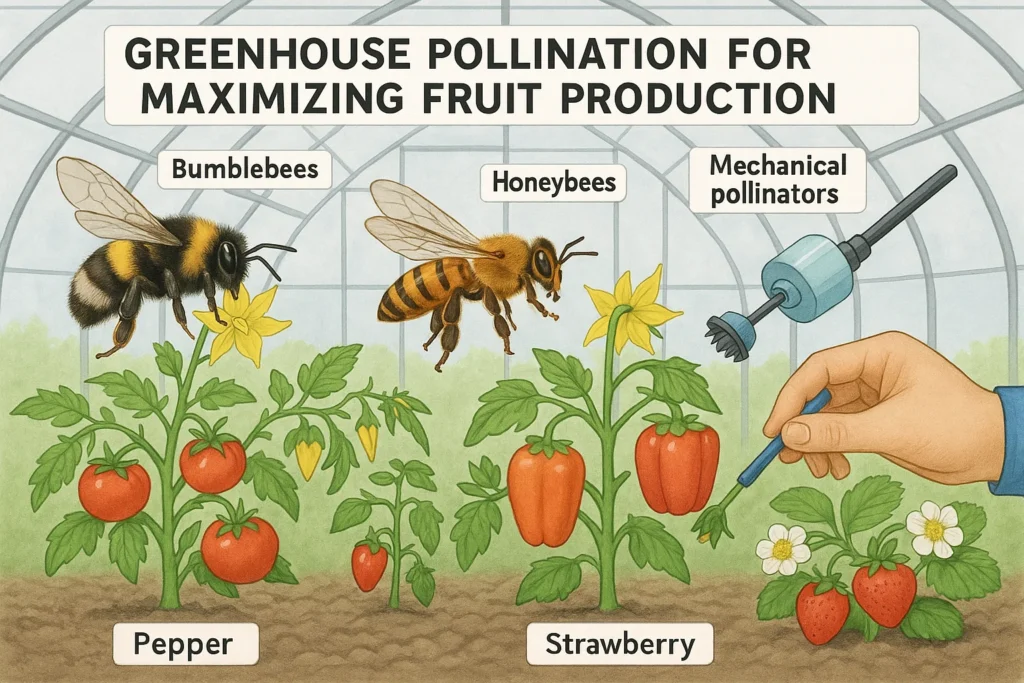
Greenhouse Pollination Mastery: Maximize Fruit Production
Transform Flowering Plants into Abundant Producers
Professional greenhouse operators across America have discovered that mastering pollination techniques represents the difference between disappointing yields and record-breaking harvests. From hand-pollination methods that ensure every blossom becomes fruit to creating pollinator-friendly ecosystems within controlled environments, successful growers understand that pollination management determines ultimate success.
Interactive Pollination Simulator
Practice Manual Pollination Techniques
Soft Brush
Gentle bristles for most flowers
Cotton Swab
Precision control for delicate work
Vibration Tool
Mimics natural bee buzz
Manual Touch
Direct gentle finger work
Selected Tool: None – Choose a tool above
Click on flowers below to practice pollination!
Your Pollination Efficiency
Flowers Pollinated
Fruit Set
Tool Efficiency
Companion Plant Designer
Design Your Pollinator-Friendly Greenhouse
Available Companion Plants
Continuous blue flowers, bee magnet
Orange flowers, pest deterrent
Season-long blooms, beneficial insects
Carpet blooms, tiny beneficials
Large landing platforms
Aromatic, perennial pollinator draw
Your Companion Plant Selection
Select plants from the left to build your pollinator garden
Pollination Compatibility Score
Flowering Timeline Planner
Coordinate Flowering Schedules
Technique Effectiveness Comparison
Compare Pollination Strategies
Manual Pollination
Direct control over every flower
Advantages
- 100% reliability
- Works in any conditions
- Immediate results
- No setup required
Disadvantages
- Labor intensive
- Time consuming
- Requires daily attention
- Potential flower damage
Companion Planting
Natural pollinator attraction system
Advantages
- Self-sustaining system
- Continuous operation
- Ecosystem benefits
- Aesthetic appeal
Disadvantages
- Space requirements
- Setup time
- Variable effectiveness
- Seasonal limitations
Natural Habitat
Wild pollinator conservation approach
Advantages
- Zero maintenance
- Environmental benefits
- Cost-effective long-term
- Diverse pollinator support
Disadvantages
- Weather dependent
- Unpredictable results
- Slow establishment
- Limited control
Pollination Success Calculator
Predict Your Fruit Production
Greenhouse Parameters
Production Forecast
| Crop Type | Pollination Requirement | Best Manual Technique | Companion Plants | Success Rate | Fruit Development Time |
|---|---|---|---|---|---|
| Tomatoes | Self-pollinating | Gentle vibration | Borage, Nasturtium | 90-95% | 45-60 days |
| Peppers | Self-pollinating | Soft brush technique | Marigolds, Alyssum | 85-90% | 60-75 days |
| Cucumbers | Cross-pollination | Male to female transfer | Sunflowers, Borage | 80-85% | 50-65 days |
| Eggplant | Self-compatible | Cotton swab method | Nasturtium, Lavender | 75-80% | 65-80 days |
| Melons | Cross-pollination | Hand transfer required | Borage, Sunflowers | 70-75% | 75-100 days |
Professional Integration Strategy
The most successful greenhouse operators understand that effective pollination management combines multiple approaches rather than relying on single techniques. Start with manual pollination for immediate results, gradually integrate companion plants for sustained pollinator support, and develop natural habitat areas that create self-improving ecosystems. This integrated approach provides reliability while building long-term sustainability that reduces labor requirements and improves overall greenhouse productivity.
Standing before flowering tomato plants in your greenhouse, watching blossoms drop without setting fruit, you quickly realize that controlled growing environments create both opportunities and challenges that outdoor gardens never face. Without natural pollinators like bees and butterflies, even the most perfectly managed greenhouse can fail to produce the abundant harvests that justify the investment in space, equipment, and time.
Professional greenhouse operators across America have discovered that mastering pollination techniques represents the difference between disappointing yields and record-breaking harvests. From hand-pollination methods that ensure every blossom becomes fruit to creating pollinator-friendly ecosystems within controlled environments, successful growers understand that pollination management determines ultimate success more than any other single factor.
Through detailed analysis of manual pollination techniques, companion planting strategies, and natural pollinator attraction methods, this comprehensive guide reveals the systematic approach that transforms flowering plants into abundant fruit producers regardless of external weather conditions or natural pollinator populations.
Understanding Greenhouse Pollination Challenges
Greenhouse environments create unique pollination challenges that require specific solutions different from outdoor growing situations. While controlled environments provide optimal growing conditions for plant development, they simultaneously eliminate the natural pollinators that most fruiting plants require for reproduction.
The absence of wind currents that facilitate natural pollen movement means that even self-pollinating varieties may struggle to achieve adequate pollination rates in still greenhouse air. Many popular greenhouse crops including tomatoes, peppers, cucumbers, and melons evolved with specific pollinator relationships that greenhouse environments disrupt.
Understanding plant reproductive biology becomes essential for greenhouse success. Perfect flowers contain both male and female reproductive parts within single blossoms, while imperfect flowers require separate male and female flowers for reproduction. Monoecious plants produce both male and female flowers on the same plant, while dioecious species require separate male and female plants.
Self-compatible plants can reproduce using their own pollen, though cross-pollination often improves fruit quality and yield. Self-incompatible varieties require pollen from genetically different plants, making pollination management more complex but potentially more rewarding through improved fruit characteristics.
Timing becomes critical in greenhouse pollination management because flowers remain receptive for limited periods, often measured in hours rather than days. Missing optimal pollination windows results in flower drop and lost production opportunities that cannot be recovered until subsequent flowering cycles.
Professional greenhouse operators monitor flower development closely, identifying peak receptivity periods when stigmas appear moist and receptive while anthers release viable pollen. Early morning hours typically provide optimal conditions when overnight humidity maintains pollen viability while cooler temperatures prevent pollen degradation.
Environmental factors significantly impact pollination success rates in greenhouse conditions. Temperature extremes above 85°F or below 60°F can reduce pollen viability and receptivity. Humidity levels affect pollen release and stigma receptivity, with moderate humidity generally favoring successful pollination.
Air circulation influences pollen movement and flower health, but excessive air movement can dry pollen before successful transfer occurs. Professional greenhouse designs balance air movement for plant health while maintaining conditions that support effective pollination.
Light intensity and duration affect flowering patterns and pollen production. Inadequate lighting can reduce flower production and pollen viability, while excessive lighting may accelerate flower development beyond optimal pollination windows.
Nutritional management influences flowering and fruit set rates. Excessive nitrogen promotes vegetative growth at the expense of flowering, while inadequate phosphorus reduces flower development and fruit set. Balanced nutrition programs support consistent flowering and successful fruit development.
The most successful greenhouse operations implement comprehensive pollination management programs that address all factors affecting reproductive success while providing backup systems that ensure adequate fruit set regardless of environmental variations.
Professional Manual Pollination Techniques
Manual pollination provides the most reliable method for ensuring consistent fruit set in greenhouse environments, giving growers complete control over reproductive timing and success rates. Professional hand-pollination techniques require understanding plant biology, proper timing, and appropriate tools for different crop types.
Brush pollination represents the most versatile manual technique, working effectively for most greenhouse crops with accessible flowers. Small, soft-bristled brushes collect pollen from anthers and transfer it to receptive stigmas with minimal flower damage.
Professional brush selection considers flower size and structure. Fine watercolor brushes work well for small flowers like peppers and herbs, while larger brushes handle tomato and eggplant flowers more efficiently. Natural bristles typically collect and release pollen more effectively than synthetic materials.
Brush technique requires gentle contact that collects pollen without damaging delicate flower structures. Light twisting motions help pollen adhere to brush bristles while gentle dabbing transfers pollen to receptive stigmas without excessive pressure that could damage reproductive organs.
Tool sanitation prevents disease transmission between plants and maintains pollen viability. Regular cleaning with alcohol or bleach solutions eliminates pathogens while removing accumulated debris that might interfere with pollen transfer.
Cotton swab pollination offers precision control for individual flowers, particularly valuable for crops requiring careful pollen management. This technique works especially well for cucumbers, melons, and squash where distinguishing between male and female flowers becomes critical.
Professional swab technique involves gentle rolling motions that collect pollen from multiple anthers before transferring to receptive stigmas. The cotton material holds pollen effectively while releasing it readily onto receptor surfaces.
Finger pollination provides direct contact methods for sturdy flowers that can withstand gentle handling. This technique works particularly well for tomato flowers where natural vibration methods supplement direct pollen transfer.
Professional finger techniques use thumb and forefinger to gently grasp flower structures while providing vibration that mimics natural bee pollination. Light tapping or gentle shaking releases pollen while direct contact ensures transfer to receptive surfaces.
Vibration pollination mimics natural buzz pollination that many crops evolved to utilize. Electric toothbrushes, tuning forks, or specialized pollination wands provide controlled vibration that releases pollen from reluctant anthers.
Professional vibration techniques involve brief contact with flower stems or bases rather than direct flower contact that might cause damage. Short vibration bursts of 2-3 seconds typically provide adequate pollen release without over-stimulation.
Timing optimization ensures manual pollination occurs during peak flower receptivity when success rates reach maximum levels. Most greenhouse crops show peak receptivity during early morning hours when overnight humidity maintains optimal stigma conditions.
Professional timing protocols identify optimal pollination windows through systematic flower monitoring. Daily inspections reveal peak flowering periods while environmental monitoring ensures pollination occurs during favorable conditions.
Weather monitoring affects manual pollination timing because extreme temperatures reduce pollen viability and stigma receptivity. Professional operations postpone pollination during temperature extremes while taking advantage of moderate conditions for maximum success.
Pollen storage techniques extend pollination windows by preserving viable pollen for later use when flowers reach peak receptivity. Fresh pollen can be collected during optimal conditions and stored briefly for use during favorable pollination windows.
Professional pollen storage uses small containers or film canisters to maintain pollen viability for several hours. Refrigerated storage extends viability while desiccant materials prevent moisture damage that reduces pollen effectiveness.
Record keeping tracks pollination success rates and identifies optimal techniques for specific crops and conditions. Professional operations maintain detailed records of pollination timing, methods, and results to optimize future efforts.
Systematic record keeping reveals patterns in flowering, pollination success, and fruit development that guide future management decisions. This data-driven approach continuously improves pollination efficiency while maximizing fruit production.
Companion Planting for Enhanced Pollination
Companion planting strategies create living ecosystems within greenhouse environments that attract and support beneficial pollinators while providing backup pollination services for primary crops. Professional greenhouse operators integrate carefully selected companion plants that enhance pollination without competing with main crops for space or resources.
Nectar-rich flowering companions serve as pollinator magnets that draw beneficial insects into greenhouse spaces where they provide pollination services for commercial crops. These plants must flower continuously throughout growing seasons while producing abundant nectar that sustains pollinator populations.
Borage represents an ideal greenhouse companion plant, producing bright blue flowers that bees find irresistible while tolerating controlled environment conditions. This annual herb flowers continuously from seeding to frost, providing consistent nectar sources throughout growing seasons.
Professional borage integration involves interplanting with tomatoes, peppers, and cucumbers where its compact growth habit doesn’t interfere with main crop development. Succession planting every 4-6 weeks ensures continuous flowering that maintains pollinator interest.
Nasturtiums combine pest deterrent properties with pollinator attraction, making them valuable multipurpose companions in greenhouse environments. Their bright orange and yellow flowers attract beneficial insects while their peppery compounds may help deter certain pest species.
Professional nasturtium placement utilizes their trailing growth habit for ground cover applications that don’t compete with vertical growing space. Container growing allows precise placement while preventing unwanted spreading in permanent planting areas.
Marigolds provide season-long flowering that attracts diverse beneficial insects while potentially deterring certain pest species through their aromatic compounds. French marigold varieties typically perform better in greenhouse conditions than larger African types.
Professional marigold integration involves selecting compact varieties that fit between main crops without excessive shading or competition. Regular deadheading maintains continuous flowering while preventing seed production that might create volunteer plants.
Sweet alyssum creates carpet-like flowering displays that attract tiny beneficial insects including parasitic wasps and predatory beetles that provide both pollination and pest control services. This low-growing annual tolerates partial shade and cool conditions.
Professional alyssum use involves seeding directly around container bases or in pathway areas where it provides ground cover while supporting beneficial insect populations. Its fine texture and small flowers complement rather than compete with main crops.
Sunflowers serve as anchor plants that provide large landing platforms for bigger pollinators while their impressive flower heads can be visible from outside greenhouse structures, potentially attracting wild pollinators.
Professional sunflower placement considers their eventual size and shading potential, typically positioning them where they won’t interfere with main crop light requirements. Dwarf varieties work better in limited space situations while maintaining pollinator attraction.
Lavender provides aromatic flowers that attract bees and other beneficial insects while contributing pleasant fragrances to greenhouse environments. This perennial herb tolerates controlled conditions while providing long-term pollinator support.
Professional lavender integration involves container growing that allows mobility and precise placement. Regular pruning maintains compact growth while encouraging continuous flowering throughout growing seasons.
Timing coordination ensures companion plants flower during critical pollination periods for main crops rather than competing for pollinator attention. Strategic planting schedules coordinate peak flowering periods for maximum pollination benefit.
Professional timing involves staggered companion plantings that provide continuous pollinator resources while ensuring peak flowering coincides with main crop pollination requirements. This coordination maximizes pollinator efficiency while supporting consistent fruit set.
Spatial planning integrates companion plants without compromising main crop growing requirements or interfering with greenhouse operations. Professional layouts consider mature plant sizes, light requirements, and access needs for maintenance and harvesting.
Effective spatial integration uses vertical growing techniques, container systems, and strategic placement that maximizes pollinator habitat while maintaining efficient growing operations. These systems must be sustainable and manageable within existing labor constraints.
Succession management maintains continuous companion plant flowering through coordinated replacement and renovation schedules. Professional programs ensure pollinator resources remain available throughout extended growing seasons.
Advanced companion planting systems integrate multiple species that provide diverse pollinator resources while supporting different beneficial insect species. These polyculture approaches create stable ecosystems that improve over time through natural selection and adaptation.
Creating Chemical-Free Pollinator Habitats
Establishing thriving pollinator populations within greenhouse environments requires creating comprehensive habitat systems that support complete life cycles while avoiding chemical inputs that might harm beneficial species. Professional approaches focus on providing essential resources that attract and sustain diverse pollinator communities.
Water provisioning becomes essential in controlled environments where natural moisture sources don’t exist. Pollinators require clean water for drinking and nest construction, but standing water can create pest problems if not properly managed.
Professional water systems use shallow dishes with landing stones or floating cork pieces that allow insects to drink safely without drowning risk. Regular water changes prevent stagnation and mosquito breeding while maintaining fresh resources for beneficial species.
Misting systems can provide supplemental humidity that benefits both plants and pollinators, but timing must avoid disrupting pollination activities during peak flower receptivity periods. Professional systems operate during early morning or late evening hours when pollinator activity remains low.
Advanced water management integrates drip irrigation systems with pollinator watering stations that maintain consistent moisture levels while preventing pest problems. These systems require careful design to balance multiple functions effectively.
Shelter provisioning supports pollinator reproduction and overwintering survival in greenhouse environments. Natural shelters include dense foliage areas, while artificial options include purchased or constructed insect hotels.
Professional shelter designs consider specific pollinator requirements including cavity sizes, materials, and orientation. Mason bee houses, leafcutter bee condos, and beneficial wasp shelters each require different specifications for maximum effectiveness.
Placement strategies position shelters near nectar sources while avoiding areas with excessive moisture or temperature fluctuations. Professional installations include multiple shelter types that support diverse beneficial species with varying habitat requirements.
Maintenance protocols ensure shelter systems remain effective while preventing pest problems. Regular cleaning and replacement of nesting materials maintains habitat quality while monitoring reveals usage patterns and success rates.
Native plant integration connects greenhouse ecosystems with local pollinator populations by providing familiar nectar and pollen sources. Native species typically require less maintenance while supporting local beneficial insect communities more effectively than exotic alternatives.
Professional native plant selection considers regional species that perform well in controlled environments while providing maximum pollinator support. Local extension services and native plant societies provide valuable guidance for species selection.
Container growing allows native plant integration without permanent habitat modifications while providing mobility for optimal placement. Professional container systems consider mature plant sizes and seasonal requirements.
Succession planting with native species extends flowering periods while providing diverse pollinator resources throughout growing seasons. Professional programs coordinate multiple native species for continuous habitat provisioning.
Pesticide elimination removes chemical barriers that prevent pollinator establishment and survival. Professional integrated pest management programs use biological controls, physical barriers, and cultural practices rather than broad-spectrum pesticides.
Alternative pest control methods include beneficial insect releases, trap crops, and mechanical controls that target specific pests without harming pollinators. These approaches often provide more sustainable long-term solutions than chemical alternatives.
Monitoring protocols track pollinator populations and activity levels to assess habitat effectiveness while identifying opportunities for improvement. Professional monitoring includes species identification, population estimates, and behavior observations.
Documentation systems record pollinator activity patterns, species diversity, and habitat usage that guide future management decisions. This data-driven approach enables continuous habitat improvement while maximizing pollination benefits.
Habitat expansion connects greenhouse environments with external pollinator corridors through adjacent plantings and habitat improvements. Professional programs consider landscape-scale pollinator needs while supporting greenhouse production goals.
Community integration involves coordinating with neighboring properties and local conservation groups to create pollinator corridors that benefit entire regions while supporting individual greenhouse operations.
Advanced habitat management creates self-sustaining ecosystems that require minimal intervention while providing maximum pollination services. These systems represent the ultimate goal of professional pollinator management programs.
Year-round management maintains pollinator habitat through seasonal transitions while adapting to changing crop requirements and environmental conditions. Professional programs balance habitat stability with production flexibility.
The most successful pollinator habitat programs create thriving ecosystems that improve over time through natural succession while providing reliable pollination services that justify the investment in habitat development and maintenance.
Mastering greenhouse pollination requires understanding the complex relationships between plants, pollinators, and environmental conditions while developing systematic approaches that ensure consistent fruit production regardless of external factors. Professional growers who invest in comprehensive pollination management create sustainable production systems that provide abundant harvests while supporting beneficial ecosystem development.