
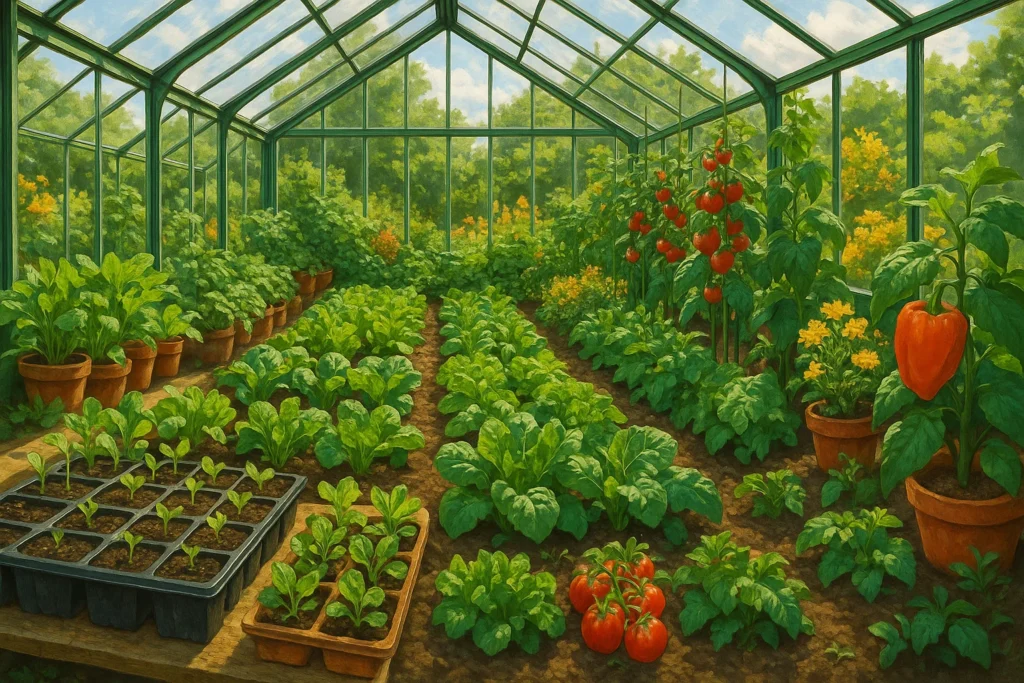
Greenhouse Plant Growing Mastery: From Seed to Harvest Success
Interactive Plant Selection Guide
🌱 Choose Plants by Your Experience Level
Leafy Greens
Lettuce, Spinach, Kale
Culinary Herbs
Basil, Parsley, Cilantro
Quick Root Vegetables
Radishes, Baby Carrots
Light Requirements Optimizer
💡 Optimize Light for Maximum Growth
| Plant Type | Minimum Lux | Optimal Lux | Daily Hours | Spectrum Preference |
|---|---|---|---|---|
| Leafy Greens | 15,000 | 25,000 | 12-14 | Balanced with more blue |
| Herbs | 20,000 | 30,000 | 14-16 | High red for essential oils |
| Fruiting Plants | 35,000 | 50,000 | 14-16 | High red for flowering |
| Microgreens | 10,000 | 20,000 | 12-18 | Blue-heavy for compact growth |
Smart Irrigation Calculator
💧 Calculate Perfect Watering Schedule
Growing Conditions
🎯 Your Optimal Schedule
Interactive Soil Health Tester
🧪 Analyze Your Soil Conditions
📋 Soil Analysis Results
pH Status: Optimal for most vegetables
Nutrient Balance: Good overall balance
Recommendations: Continue current fertilization program
Seasonal Planting Calendar
📅 Year-Round Growing Schedule
🌱 Optimal Growing Seasons
🎯 Master Grower’s Secret
The most successful greenhouse plant growers understand that success comes from matching the right plants to their specific conditions and experience level. Start with forgiving varieties that provide quick results and confidence, then gradually expand to more challenging crops as your skills develop. Every expert was once a beginner who chose the right plants to learn with.
| Growth Factor | Beginner Plants | Intermediate Plants | Advanced Plants | Success Tips |
|---|---|---|---|---|
| Light Requirements | Adaptable greens | High-light fruiting | Precise spectrum needs | Measure and monitor daily |
| Water Management | Forgiving varieties | Consistent moisture | Precise timing | Use moisture meters |
| Nutrition Needs | Low-maintenance | Regular feeding | Customized programs | Test soil monthly |
| Time to Results | 30-45 days | 60-90 days | 90+ days | Track progress weekly |
Standing in an empty greenhouse for the first time, surrounded by endless possibilities and potential, every beginning grower faces the same critical question: which plants will transform this controlled environment into a thriving food production system? The answer determines whether your greenhouse becomes a source of fresh vegetables year-round or an expensive experiment in plant mortality.
Professional greenhouse operators understand that plant selection represents the foundation of success, yet most beginners approach this decision haphazardly, choosing plants based on personal preferences rather than greenhouse suitability, growing requirements, or regional adaptations. This comprehensive guide reveals the systematic approach to plant selection, cultivation techniques, and harvest optimization that separates successful American greenhouse growers from those who struggle with basic plant survival.
Through detailed analysis of beginner-friendly varieties, light management strategies, irrigation systems, soil optimization, and seasonal planning, you’ll discover how to create a productive growing system that delivers fresh produce regardless of your experience level or local climate challenges.
Strategic Plant Selection for Guaranteed Success
The difference between greenhouse gardening success and failure often comes down to choosing the right plants for your specific conditions and experience level. While the temptation exists to fill your greenhouse with exotic varieties or challenging crops, professional growers understand that mastering fundamentals with reliable varieties provides the foundation for long-term success.
Leafy greens represent the ideal starting point for American greenhouse beginners, offering rapid growth cycles, multiple harvests per plant, and tolerance for environmental variations that inevitably occur during the learning process. Spinach thrives in cooler greenhouse conditions, producing tender leaves within 30-45 days of seeding while tolerating temperature fluctuations that might stress other crops.
Lettuce varieties provide exceptional diversity within a single crop category, from butterhead varieties that form compact hearts to loose-leaf types that allow continuous harvest of outer leaves while centers continue producing. Modern greenhouse lettuce varieties have been specifically bred for controlled environments, offering improved disease resistance and consistent growth patterns under artificial lighting.
Kale has emerged as a powerhouse crop for greenhouse production, combining exceptional nutritional density with remarkable hardiness and productivity. Cold-hardy varieties can produce through winter months with minimal heating, while baby kale commands premium prices in farmers markets and restaurant sales.
These leafy greens share several characteristics that make them ideal for beginners: shallow root systems that work well in containers, tolerance for varying light conditions, quick maturity that provides rapid feedback on growing techniques, and continuous harvest potential that maximizes space utilization.
Culinary herbs offer even greater tolerance for growing mistakes while providing high-value crops that justify greenhouse space. Basil varieties adapted for greenhouse production can yield continuously for 4-6 months from single plants, with proper pinching techniques encouraging bushy growth and preventing flowering that reduces leaf quality.
Parsley, both flat-leaf and curly varieties, provides steady production over extended periods while requiring minimal care beyond consistent moisture and occasional fertilization. Italian flat-leaf parsley particularly excels in greenhouse conditions, offering superior flavor and productivity compared to outdoor cultivation.
Cilantro presents unique challenges and opportunities in greenhouse growing. While it tends to bolt quickly under stress, succession planting every 2-3 weeks ensures continuous supply of fresh leaves. Cool-season varieties bred for slower bolting extend harvest windows significantly.
Professional herb production techniques focus on maximizing leaf quality and essential oil content through controlled stress. Slight moisture stress before harvest concentrates flavors, while proper lighting enhances aromatic compounds that determine culinary value.
Root vegetables provide underground rewards that demonstrate proper soil management and container selection. Radishes offer nearly instant gratification with varieties maturing in just 25-30 days, providing excellent feedback on soil conditions and growing techniques. Quick maturation allows multiple succession plantings throughout growing seasons.
Carrots require more patience and precise soil management but reward careful growers with sweet, crisp roots impossible to match through store purchases. Greenhouse carrot production benefits from consistent moisture and controlled temperatures that encourage steady growth without the checks and stresses that create tough, bitter roots.
Container selection becomes critical for root vegetables, with adequate depth preventing stunted development and proper drainage avoiding root rot problems. Professional growers use custom container systems that optimize growing volume while providing easy harvest access.
The key insight from successful greenhouse beginners is that plant selection should prioritize learning over luxury. Mastering fundamental crops builds the skills and confidence needed for more challenging varieties while providing immediate returns on greenhouse investments.
Light Management for Maximum Plant Performance
Light represents the fundamental energy source for all plant growth, yet managing greenhouse lighting effectively requires understanding both plant physiology and practical lighting technologies. Different crops have evolved distinct light requirements based on their natural habitats, and successful greenhouse production depends on matching these requirements with available resources.
Understanding photosynthesis mechanics helps optimize lighting strategies. Plants primarily use red and blue wavelengths for photosynthesis, with red light driving flowering and fruiting while blue light promotes vegetative growth and compact plant structure. This knowledge allows growers to customize lighting spectrums for specific crops and growth stages.
High-light crops including tomatoes, peppers, and cucumbers require intense illumination approaching full summer sun conditions to reach productive potential. These plants evolved in tropical and subtropical regions with abundant solar radiation, demanding 40,000-60,000 lux for optimal photosynthesis rates.
Professional tomato production typically requires supplemental lighting even during summer months to maintain consistent fruit development. Modern LED systems can provide this intensity while consuming 40-60% less energy than traditional high-pressure sodium fixtures.
Medium-light plants including most leafy greens and herbs perform well with 15,000-25,000 lux, making them ideal for greenhouse areas with limited natural light or lower-cost supplemental lighting systems. These crops can thrive under basic LED panel systems or even high-quality fluorescent fixtures.
Lettuce production represents the sweet spot for LED lighting efficiency. Modern lettuce varieties bred for greenhouse production achieve excellent quality with relatively low light requirements, making LED supplementation cost-effective even for hobby growers.
Low-light tolerant plants including certain Asian greens and microgreens can produce acceptable yields with as little as 10,000 lux, though quality and growth rates improve with additional illumination. These crops work well in greenhouse areas with limited direct sun exposure.
Maximizing natural light utilization reduces energy costs while improving plant quality. Reflective materials strategically positioned around growing areas can increase light availability by 15-30% without additional energy consumption. Aluminized mylar provides the highest reflectivity for professional installations, while white paint offers cost-effective light enhancement for budget-conscious growers.
Seasonal light management requires adjusting both duration and intensity based on changing daylight patterns. Winter production typically requires 14-16 hours of combined natural and artificial light to maintain summer growth rates, while spring and fall may need only 2-4 hours of supplementation.
Advanced lighting strategies include photoperiod manipulation to control flowering timing and spectral tuning to enhance specific plant characteristics. These techniques require careful monitoring and adjustment but can significantly improve crop quality and market timing.
Light measurement and monitoring ensures optimal plant performance while avoiding energy waste. Simple light meters provide basic feedback, while professional quantum sensors measure photosynthetically active radiation (PAR) that directly correlates with plant growth potential.
The most successful greenhouse growers develop lighting systems that provide adequate intensity for their chosen crops while minimizing energy costs through efficient fixtures, reflective surfaces, and smart controls that optimize natural and artificial light integration.
Professional Irrigation Systems and Water Management
Water management represents one of the most critical yet commonly misunderstood aspects of greenhouse production. Unlike outdoor gardening where natural rainfall provides irrigation, greenhouse growers must create complete water delivery systems that provide precise moisture control while conserving resources and preventing disease problems.
Understanding plant water requirements begins with recognizing that different species and growth stages have dramatically different needs. Young seedlings require consistent surface moisture to prevent damping-off diseases while establishing root systems, while mature fruiting plants benefit from deeper, less frequent irrigation that encourages extensive root development.
Overwatering causes more greenhouse plant failures than drought conditions, primarily because saturated soils prevent root respiration and create ideal conditions for fungal pathogens. Root rot diseases thrive in waterlogged conditions, quickly spreading through greenhouse environments where plants grow in close proximity.
Professional growers recognize that proper irrigation timing, frequency, and application methods prevent most water-related problems while maximizing plant health and productivity.
Drip irrigation systems provide the most precise water delivery for greenhouse applications, delivering water directly to root zones while keeping foliage dry to prevent foliar diseases. These systems reduce water consumption by 30-50% compared to overhead watering while improving plant health through consistent soil moisture.
Modern drip systems use pressure-compensating emitters that deliver uniform flow rates regardless of elevation changes or system pressure variations. This consistency ensures all plants receive appropriate water volumes without manual adjustments.
Timer-controlled drip systems allow precise irrigation scheduling based on crop requirements and environmental conditions. Multiple daily irrigations with shorter durations often produce better results than single long watering sessions, particularly for container-grown plants with limited soil volume.
Mulching techniques significantly improve water management efficiency by reducing evaporation, moderating soil temperatures, and suppressing weeds that compete for moisture. Organic mulches including straw, wood chips, or shredded leaves provide these benefits while gradually decomposing to improve soil structure.
Inorganic mulches including landscape fabric or plastic sheeting offer longer-lasting moisture conservation with less maintenance but don’t provide soil improvement benefits. Professional growers often combine both approaches, using organic mulches in permanent growing areas and inorganic covers for pathways and non-growing spaces.
Water quality considerations become critical in greenhouse environments where irrigation water contacts plants repeatedly over extended periods. High salt content, pH imbalances, or chemical contamination can accumulate in container soils, eventually reaching toxic levels that damage or kill plants.
Regular water testing identifies potential problems before they affect plant health. Simple pH and electrical conductivity meters provide basic quality assessment, while comprehensive laboratory analysis reveals specific mineral content and potential contaminants.
Rainwater harvesting provides high-quality irrigation water while reducing dependence on municipal supplies. Simple collection systems capture roof runoff in storage tanks, providing soft water ideal for greenhouse irrigation. First-flush diverters prevent contaminated initial runoff from entering storage systems.
Water recycling systems capture and reuse greenhouse drainage, significantly reducing total water consumption while maintaining plant health. These systems require filtration and treatment to remove accumulated salts and prevent pathogen buildup, but can reduce water usage by 70-90% in commercial operations.
Monitoring soil moisture levels prevents both over and under-watering while optimizing irrigation efficiency. Simple moisture meters provide basic feedback, while professional tensiometers measure soil water potential that directly correlates with plant stress levels.
Advanced greenhouse operations use environmental monitoring systems that integrate soil moisture, humidity, temperature, and light data to automatically adjust irrigation schedules based on real-time plant needs. These systems optimize water usage while maintaining ideal growing conditions with minimal labor input.
Soil Optimization and Nutrient Management Systems
Greenhouse soil management differs fundamentally from outdoor gardening because container environments concentrate both nutrients and potential problems in limited soil volumes. Understanding soil science principles and applying them through systematic management practices determines whether greenhouse plants thrive or struggle with deficiencies, toxicities, or structural problems.
Soil texture and structure provide the foundation for all other soil management practices. The ideal greenhouse growing medium balances drainage with moisture retention while providing adequate aeration for root respiration. Heavy clay soils that work well outdoors often create waterlogged conditions in containers, while sandy soils drain too quickly for consistent greenhouse production.
Professional greenhouse media typically combine several components to achieve optimal properties. Peat moss or coconut coir provide moisture retention and organic matter, while perlite or vermiculite improve drainage and aeration. Compost adds nutrients and beneficial microorganisms that support plant health.
Soilless growing media have gained popularity in commercial greenhouse production because they provide consistent properties, reduced disease pressure, and precise nutrient control. These media typically combine peat moss, vermiculite, and perlite in carefully balanced ratios that optimize plant growth while minimizing maintenance.
Container selection significantly impacts soil performance and plant health. Adequate drainage prevents waterlogging while appropriate volume provides sufficient root space for mature plants. Professional growers calculate container volumes based on expected plant sizes and growing seasons, ensuring adequate space without wasting greenhouse area.
Soil pH management becomes critical in greenhouse production because container environments concentrate pH changes over time. Most vegetables perform best with slightly acidic conditions between pH 6.0-6.8, while some crops including blueberries require more acidic conditions.
Regular pH testing using simple meters or test strips identifies problems before they affect plant health. pH adjustments use agricultural lime to raise pH or sulfur to lower pH, with changes made gradually to avoid shocking plant roots.
Nutrient management in greenhouse production requires understanding both plant requirements and soil dynamics. Unlike outdoor gardens where soil microorganisms slowly release nutrients from organic matter, container environments often need supplemental fertilization to maintain adequate nutrition levels.
The NPK system (nitrogen, phosphorus, potassium) provides the framework for understanding primary plant nutrients. Nitrogen supports vegetative growth and chlorophyll production, phosphorus encourages root development and flowering, while potassium improves disease resistance and fruit quality.
Secondary nutrients including calcium, magnesium, and sulfur play important roles in plant health but are needed in smaller quantities. Micronutrients including iron, manganese, and zinc are essential for enzyme function but can become toxic if over-applied.
Organic fertilization approaches use compost, aged manure, and natural mineral sources to provide slow-release nutrition that supports long-term soil health. These materials improve soil structure while providing nutrients, though they may not supply adequate nutrition for intensive greenhouse production.
Synthetic fertilizers provide precise nutrient control and immediate availability but require careful application to avoid over-fertilization problems. Water-soluble fertilizers work well for greenhouse irrigation systems, allowing precise nutrient delivery through existing watering infrastructure.
Soil testing provides essential information for nutrient management decisions. Basic test kits measure pH and primary nutrients, while comprehensive laboratory analysis reveals micronutrient levels, organic matter content, and potential problems including excessive salts or toxic elements.
Professional nutrient management programs combine regular soil testing with plant tissue analysis to optimize fertilization strategies. This approach identifies nutrient deficiencies before they affect plant growth while preventing over-fertilization that wastes money and potentially harms plants.
Compost production on-site provides cost-effective organic matter while recycling greenhouse plant wastes. Simple compost systems can process plant trimmings, root balls, and organic kitchen wastes into valuable soil amendments within 3-4 months.
Advanced nutrient management includes fertigation systems that deliver precise nutrient solutions through drip irrigation systems. These systems provide exact nutrient ratios and concentrations while reducing labor and ensuring consistent plant nutrition.
Seasonal Production Planning and Succession Strategies
Successful greenhouse production requires systematic planning that optimizes space utilization, labor efficiency, and harvest timing while accounting for seasonal variations in light, temperature, and market demand. Professional growers develop detailed production schedules that coordinate planting, cultivation, and harvest activities to maximize greenhouse productivity throughout the year.
Succession planting represents the cornerstone of continuous production systems. Rather than planting entire crops simultaneously, professional growers stagger seeding dates to ensure steady harvest availability while preventing gluts that overwhelm processing and marketing capacity.
Lettuce succession typically involves seeding new plants every 1-2 weeks, with mature plants harvested as replacements reach appropriate size. This system provides consistent fresh salads while making efficient use of growing space and labor resources.
Quick-maturing crops including radishes, arugula, and baby greens can be interplanted between longer-season crops to maximize space utilization. These “catch crops” mature and are harvested before main crops require full growing space, effectively doubling greenhouse productivity.
Regional adaptation of planting schedules accounts for local climate patterns, seasonal light changes, and market preferences. Northern greenhouse operations typically emphasize cool-season crops during winter months when heating costs favor lower-temperature production, while southern operations can maintain warm-season production year-round.
Understanding local frost dates, seasonal temperature patterns, and daylight variations helps optimize greenhouse production schedules. Even controlled environments benefit from working with natural seasonal patterns rather than fighting against them.
Climate data analysis reveals optimal planting windows for different crops based on historical temperature and light patterns. This information guides decisions about crop selection, succession timing, and resource allocation throughout growing seasons.
Seed starting schedules coordinate greenhouse space with outdoor transplant timing for growers who supply both protected and field production. Professional timing ensures transplants reach optimal size when outdoor conditions become suitable for establishment.
Advanced greenhouse operations maintain detailed records of planting dates, germination rates, growth periods, and harvest yields to optimize future production schedules. This data-driven approach identifies the most profitable crops and production timing while minimizing resource waste.
Market timing considerations influence production planning decisions, with premium prices often available for out-of-season crops or specialty varieties. Greenhouse growers can capitalize on these opportunities through careful scheduling and crop selection.
Holiday and seasonal market demand creates opportunities for specialty production including herbs for holiday cooking, flowers for special occasions, or vegetables for specific cultural cuisines. Planning production to coincide with peak demand periods maximizes profitability while providing unique marketing opportunities.
Labor scheduling coordination ensures adequate workforce availability during peak production periods while maintaining efficient resource utilization during slower periods. This planning becomes particularly important for operations that rely on seasonal or part-time labor.
Equipment and infrastructure maintenance schedules coordinate with production planning to minimize disruptions during critical growing periods. Professional operations schedule major maintenance during low-production periods to ensure optimal system performance when needed most.
Production record keeping provides essential data for optimizing future growing seasons while documenting successful techniques and identifying problems. Simple spreadsheets can track planting dates, varieties, yields, and quality metrics that guide future decision-making.
Advanced production planning software integrates environmental data, crop requirements, and market information to optimize greenhouse utilization while maximizing profitability. These systems help commercial operations coordinate complex production schedules while maintaining quality standards.
The most successful greenhouse operations develop flexible production systems that can adapt to changing conditions while maintaining consistent output. This flexibility requires understanding crop requirements, environmental systems, and market dynamics while maintaining detailed records that guide continuous improvement efforts.
Mastering greenhouse plant production requires understanding the complex interactions between plant biology, environmental systems, and production management while developing practical skills through systematic practice. The most successful growers combine scientific understanding with careful observation, creating productive growing systems that provide fresh, high-quality produce regardless of external weather conditions.