
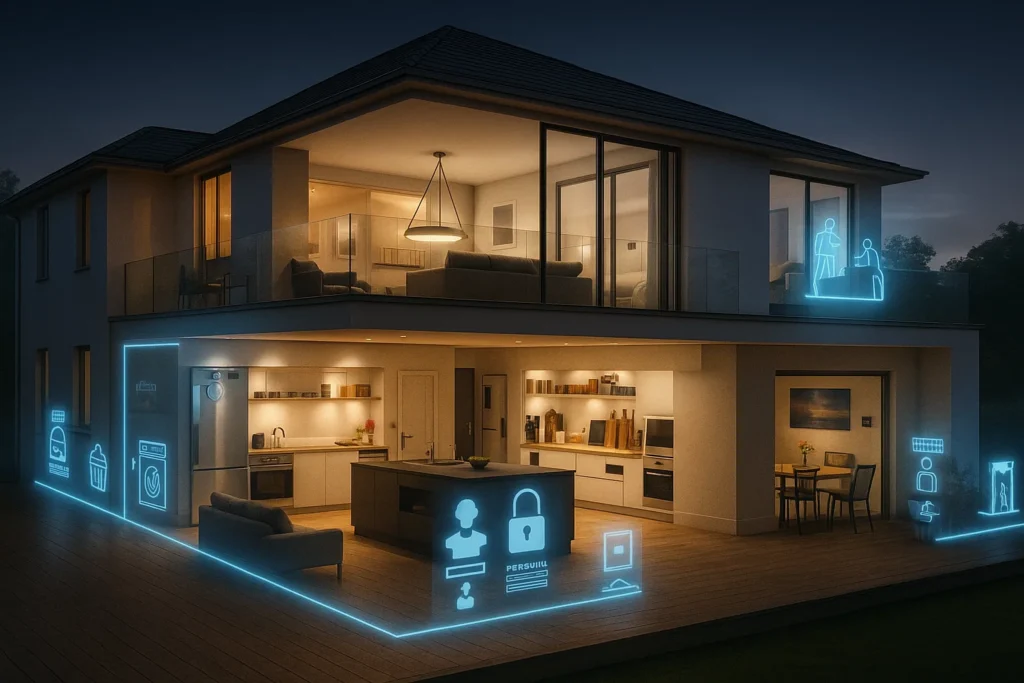
Understanding the Internet of Things in Residential Spaces
The Internet of Things represents a transformative shift in how everyday household items interact with digital networks. Rather than traditional computing interfaces requiring keyboards and monitors, IoT enables direct communication between devices and the internet, allowing automated responses with minimal human interaction. Network technology expert Josh Fruhlinger characterized IoT in 2020 as encompassing all connected electronics beyond conventional computers that exchange data and receive commands through internet connectivity.
Today’s residential environments increasingly feature internet-connected devices ranging from climate control systems to security equipment and household appliances. While IoT technology continues evolving—with ongoing challenges related to network stability, data protection, and privacy considerations—these connected systems are becoming standard features in modern homes.
The designation “smart appliance” typically refers to household equipment controllable through mobile applications, voice commands, or digital displays. This category encompasses everyday items like washing machines, clothes dryers, dishwashing units, and refrigeration systems. Specific appliances will be examined in detail within chapters addressing individual rooms where they commonly appear.
Smart Home Product Categories
Illumination Control Systems
Connected Light Bulbs represent the simplest entry point for smart lighting adoption. These units fit standard light sockets and integrate with smartphone apps and voice-controlled interfaces, making installation straightforward for any homeowner.
Centralized Control Systems provide comprehensive whole-home lighting management through unified keypads linked to a central control hub, replacing traditional switch and dimmer configurations. These systems work best when planned during initial construction or major renovation projects, offering minimalist wall aesthetics by consolidating controls.
Distributed Control Networks maintain familiar switches and dimmers while connecting them through a unified system managed by local control panels. These networks utilize wireless radio frequency technology, making them suitable for both new builds and moderate renovation projects.
Combined Control Approaches merge centralized and distributed methods, allowing certain areas to function via remote keypads while other zones retain physical switches and dimmers. These flexible systems permit post-construction expansion through additional wireless components.
Smart Electrical Outlets install directly into existing wall receptacles, enabling WiFi-based control of connected devices, including voice command functionality. These affordable devices provide excellent versatility due to their portability and ease of repositioning.
Intelligent Wall Controls replace conventional switches and dimmers through hardwired installation. Older residential structures may require electrical system upgrades to accommodate these advanced controls.
Voice-Activated Devices
Audio Assistants and Interactive Displays merge speaker technology with voice recognition capabilities and artificial intelligence assistants that execute commands and respond to queries. These devices serve as control centers for broader smart home ecosystems, managing multiple connected products. Audio quality varies across models but continues improving. Display-enabled versions add touchscreen functionality, presenting video feeds from surveillance cameras, scheduling information, photographs, and meteorological data.
Window Treatment Automation
Motorized Covering Systems allow remote operation of blinds, shades, and drapes through dedicated remotes, wall-mounted controls, or smart technology integration via applications, central hubs, and voice commands. Advanced systems can automatically adjust based on ambient light measurements and programmed schedules.
Security and Monitoring Solutions
Comprehensive Protection Systems encompass numerous devices that safeguard entry points and monitor interior conditions including fire detection, water intrusion, and temperature variations. Available options range from self-installed kits to professional installations, with choices between monitored services (professionally supervised) and self-monitored systems (requiring resident vigilance). Common components include door and window sensors, movement detectors, control panels, surveillance cameras, smoke detection units, glass breakage sensors, and emergency alert buttons—all connecting to a primary control station.
Electronic Lock Systems provide remote and voice-activated lock control, with retrofit models designed to work with existing deadbolt mechanisms.
Video Doorbell Units integrate security cameras within doorbell hardware, transmitting alerts and video to smartphones while supporting bidirectional audio communication.
Surveillance Camera Networks are available as standalone DIY installations or integrated components of larger security frameworks including various sensors and monitoring equipment, with options for both interior and exterior placement.
Climate and Environmental Controls
Automated Sprinkler Controllers manage underground irrigation systems through applications, hubs, or preset schedules. Many advanced models automatically adjust watering patterns based on weather conditions and soil moisture levels.
Intelligent Climate Systems automatically maintain desired temperatures through programmed schedules or remote control via applications and voice-activated devices. These systems incorporate local weather forecasts and user behavior patterns to create comfortable environments autonomously. Important note: compatibility varies across HVAC configurations and existing electrical systems, requiring individual assessment before installation.
System Integration
Central Communication Hubs connect to home networks, coordinating communications among multiple smart devices. These hubs enable simultaneous control of grouped functions for advanced home automation scenarios involving audio systems, lighting arrays, sensors, climate control, and more. While previously essential for system coordination, recent developments in smart speakers and displays have enabled them to perform comparable functions, though with reduced sophistication.
Contactless Technology
Automation technology, sometimes called touchless or contactless control, enables hands-free operation of numerous household features. Motion-detecting illumination and sensor-activated plumbing fixtures exemplify this category. Many smart products described above qualify as contactless since they operate through phone applications or central hubs rather than physical interaction.
Infrastructure Considerations
Despite wireless capabilities, smart devices depend on internet and cable connections entering the residence. Certain equipment performs better with ethernet connections. Strategic placement of electrical outlets enhances functionality—for instance, window-adjacent outlets power motorized window treatments, while ethernet ports near entertainment centers benefit gaming systems and media equipment.
Communication and data cables enter homes through external termination points, connecting to interior distribution panels that route various cables to rooms and outlets throughout the structure.