
Bubble Diagram Methodology in Space Planning: A Comprehensive Guide to Spatial Design
What is Bubble Diagram Methodology in Space Planning?
Bubble diagram methodology represents a fundamental visual planning technique used extensively in architecture, interior design, and urban planning to analyze and organize spatial relationships before developing detailed floor plans. This systematic approach transforms abstract spatial requirements into clear, visual representations that guide design decisions throughout the entire planning process.
Understanding the Core Concept
Definition and Purpose
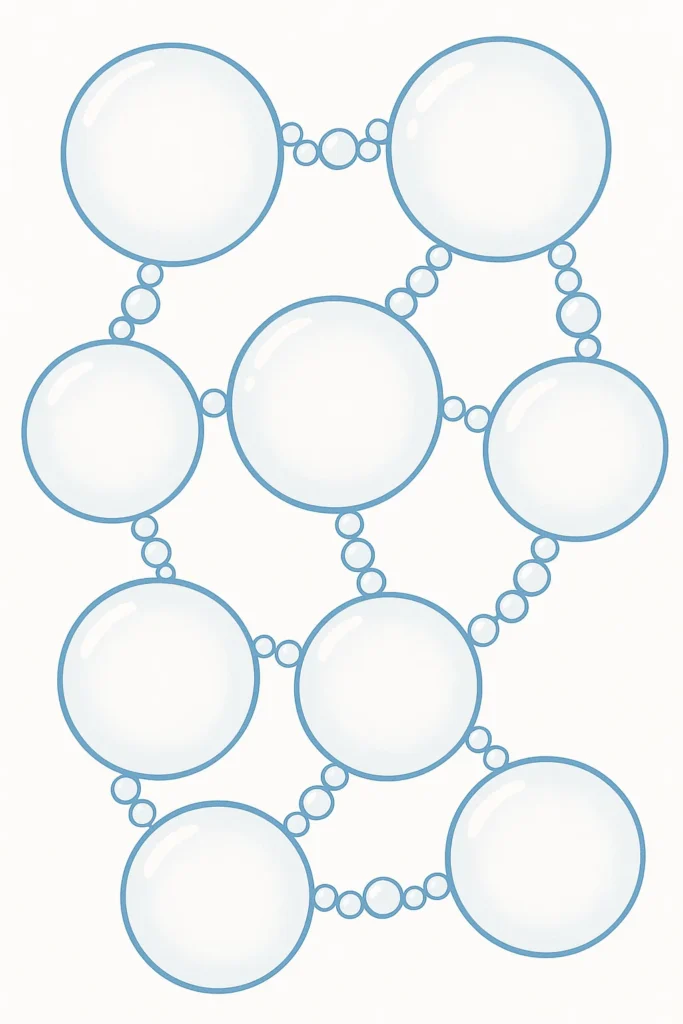
A bubble diagram is a schematic drawing consisting of circles (bubbles) that represent different spaces or functional areas within a building or environment. Each bubble is proportionally sized according to the space’s area requirements and positioned to reflect desired adjacency relationships with other spaces. This methodology serves as a critical bridge between initial programming requirements and final architectural drawings.
The primary purpose of bubble diagrams is to explore spatial relationships without being constrained by exact dimensions, structural limitations, or detailed architectural elements. This freedom allows designers to focus purely on functional requirements, circulation patterns, and user experience considerations during the early conceptual phase.
Historical Context and Development
The bubble diagram methodology emerged from the post-World War II era when architectural programming became more systematic and scientific. Pioneers like Christopher Alexander and his colleagues at the University of California, Berkeley, developed pattern language theories that influenced modern space planning methodologies. The technique gained widespread adoption in the 1960s and 1970s as architects and planners sought more rational, user-centered approaches to design.
Key Components of Bubble Diagram Methodology
1. Spatial Analysis and Programming
Before creating bubble diagrams, designers must conduct thorough spatial analysis including:
- Functional Requirements: Identifying all necessary spaces and their specific purposes
- Area Calculations: Determining square footage or square meters for each space based on user needs and industry standards
- User Behavior Studies: Understanding how people will move through and utilize different spaces
- Operational Requirements: Considering workflow patterns, equipment needs, and service requirements
2. Adjacency Relationship Matrix
The foundation of effective bubble diagrams lies in the adjacency matrix, which categorizes spatial relationships into three primary types:
- Primary Adjacencies: Spaces that must be directly connected for optimal function
- Secondary Adjacencies: Spaces that benefit from proximity but don’t require direct connection
- Undesired Adjacencies: Spaces that should be separated due to noise, privacy, or functional conflicts
3. Visual Coding and Symbolism
Bubble diagrams employ standardized visual coding systems to convey additional information:
- Size Proportionality: Bubble sizes reflect actual space requirements
- Color Coding: Different colors represent various functional zones (public, private, service areas)
- Directional Arrows: Indicate natural light requirements or preferred orientations
- Pattern Overlays: Show special requirements like acoustic privacy or ventilation needs
The Bubble Diagram Process: Step-by-Step Implementation
Phase 1: Data Collection and Analysis
The methodology begins with comprehensive data gathering through client interviews, site analysis, and code research. This phase establishes the complete functional program including space types, quantities, sizes, and special requirements.
Phase 2: Matrix Development
Designers create detailed adjacency matrices that systematically evaluate relationships between all programmed spaces. This analytical tool prevents oversight of important spatial relationships and provides objective criteria for layout decisions.
Phase 3: Bubble Creation and Manipulation
Using physical cut-outs, sticky notes, or digital tools, designers create scaled bubbles representing each space. The iterative process involves:
- Initial placement based on primary adjacencies
- Refinement considering secondary relationships
- Testing multiple configuration options
- Evaluation of circulation efficiency
- Integration of site constraints and opportunities
Phase 4: Translation to Block Diagrams
Once optimal bubble arrangements are achieved, the circular representations are translated into more realistic geometric shapes while maintaining established relationships. This phase begins to consider actual building constraints, structural requirements, and construction feasibility.
Applications Across Different Building Types
Residential Projects
In residential design, bubble diagrams help organize family living patterns, privacy requirements, and daily routines. Common applications include:
- Single-family homes: Balancing public entertaining spaces with private family areas
- Multi-family housing: Optimizing unit layouts while minimizing conflicts between neighbors
- Senior living facilities: Prioritizing accessibility, social interaction, and care delivery efficiency
Commercial and Office Spaces
Corporate environments benefit from bubble diagram analysis to optimize:
- Workflow efficiency: Placing frequently collaborating departments in proximity
- Communication patterns: Facilitating both formal and informal interactions
- Technology infrastructure: Grouping spaces with similar technical requirements
- Future flexibility: Accommodating organizational changes and growth
Healthcare Facilities
Medical environments require sophisticated bubble diagram analysis considering:
- Patient flow patterns: Minimizing travel distances for those with mobility limitations
- Infection control: Separating clean and contaminated areas
- Staff efficiency: Positioning support spaces for optimal care delivery
- Emergency access: Ensuring clear pathways for urgent situations
Educational Institutions
Schools and universities use bubble diagrams to address:
- Age-appropriate groupings: Separating younger children from older students
- Shared resource optimization: Positioning libraries, cafeterias, and gymnasiums for efficient use
- Security considerations: Controlling access points and visibility throughout campuses
- Outdoor learning integration: Connecting classrooms with exterior educational spaces
Benefits and Advantages of Bubble Diagram Methodology
Enhanced Design Quality
Bubble diagrams lead to superior design outcomes by ensuring thorough consideration of functional relationships before committing to specific layouts. This systematic approach reduces the likelihood of overlooking important adjacencies or creating inefficient circulation patterns.
Improved Client Communication
The visual nature of bubble diagrams makes complex spatial concepts accessible to clients who may not understand traditional architectural drawings. This clarity facilitates better communication, reduces misunderstandings, and ensures client needs are accurately captured and addressed.
Cost-Effective Design Process
By identifying optimal spatial relationships early in the design process, bubble diagrams prevent costly revisions during later design phases. The methodology helps avoid expensive structural modifications that might be necessary if spatial conflicts are discovered after detailed design development.
Flexibility and Iteration
The non-committal nature of bubble diagrams encourages experimentation with multiple layout options. Designers can quickly test various configurations, compare alternatives, and refine solutions without significant time investment.
Risk Mitigation
Systematic analysis through bubble diagrams helps identify potential design problems before they become expensive construction issues. This includes circulation bottlenecks, adjacency conflicts, and functional inefficiencies that could impact building performance.
Modern Applications and Digital Evolution
Software Integration
Contemporary practice increasingly utilizes digital tools for bubble diagram creation, including:
- Specialized space planning software: Programs designed specifically for adjacency analysis and bubble diagram generation
- BIM integration: Connecting bubble diagrams with Building Information Modeling workflows
- Parametric design tools: Using algorithmic approaches to generate and test multiple layout options
- Virtual reality applications: Immersive evaluation of spatial relationships and circulation patterns
Data-Driven Design
Modern bubble diagram methodology incorporates:
- Post-occupancy evaluation data: Learning from how people actually use completed spaces
- Movement tracking technology: Understanding circulation patterns through sensor data
- Artificial intelligence: Using machine learning to optimize spatial arrangements based on performance criteria
- Sustainability metrics: Integrating energy efficiency and environmental impact considerations
Professional Standards and Best Practices
Industry Guidelines
Professional organizations provide standards for bubble diagram methodology including:
- Symbol standardization: Consistent visual vocabulary across projects and firms
- Documentation requirements: Proper annotation and presentation of bubble diagrams
- Quality control procedures: Systematic review processes to ensure thoroughness and accuracy
- Client presentation protocols: Effective methods for communicating concepts to stakeholders
Educational Integration
Architecture and interior design programs emphasize bubble diagram methodology as fundamental training, ensuring new professionals understand:
- Analytical thinking: Systematic approach to complex spatial problems
- Visual communication: Effective graphic representation of design concepts
- Iterative design process: Understanding that good design emerges through multiple refinements
- User-centered design: Prioritizing human needs and behaviors in spatial organization
Conclusion: The Strategic Value of Bubble Diagram Methodology
Bubble diagram methodology represents an essential tool in contemporary space planning, offering a systematic approach to organizing complex spatial relationships while maintaining design flexibility and creativity. Its application across diverse building types demonstrates universal principles of human spatial behavior while accommodating specific functional requirements.
The methodology’s enduring relevance lies in its ability to bridge analytical thinking with creative design process, ensuring that functional requirements inform aesthetic decisions rather than constraining them. As buildings become increasingly complex and user expectations continue to evolve, bubble diagram methodology provides a reliable framework for creating environments that truly serve their intended purposes.
For design professionals, mastering bubble diagram methodology is not merely about learning a technical skill—it represents developing a fundamental understanding of how people interact with their built environment and how thoughtful spatial organization can enhance human experience, productivity, and well-being.