
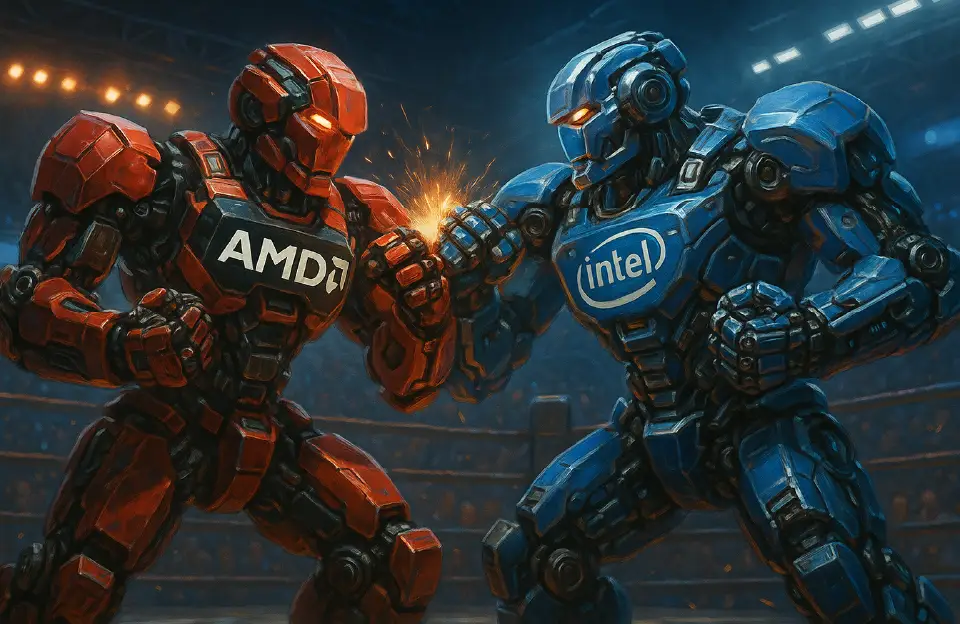
The Ultimate 2025 Guide to Choosing Your Next CPU
When it comes to building or upgrading a gaming PC, choosing the right processor is one of the most important decisions you can make. AMD and Intel both offer powerful options, but each excels in different areas. Understanding these differences can help gamers select the CPU that best fits their needs.
Why AMD Is a Strong Choice for Gamers
AMD’s Ryzen processors have gained a strong reputation among gamers and content creators alike. Thanks to their high core and thread counts, these CPUs handle multitasking exceptionally well. This makes AMD an excellent option for players who want to game, stream, and create content simultaneously. In addition, AMD processors often provide excellent performance in modern multi threaded games at a more affordable price than comparable Intel models. While their single core performance may be slightly lower than Intel’s, AMD CPUs shine when handling demanding workloads and multiple applications at once.
Intel’s Edge in Single Core Gaming Performance
Intel CPUs, particularly the latest Core i5, i7, and i9 models, are known for their impressive single core performance. This can translate to slightly higher frame rates in competitive or older games that rely more heavily on single core processing. Intel processors are also widely compatible with a variety of games and software, and many offer advanced integrated graphics for systems without a dedicated GPU. While Intel tends to be more expensive and sometimes consumes more power, its CPUs deliver stable and fast performance for high FPS gaming.
How to Decide Between AMD and Intel
Gamers should choose based on their specific priorities. If your focus is on competitive esports titles such as Valorant or CS:GO, Intel may provide a slight edge in maximum frame rates. On the other hand, if you plan to stream, edit videos, or run multiple applications while gaming, AMD’s multi core architecture offers better value and performance. Budget conscious gamers may also find AMD a more attractive option because it delivers more cores and threads for the same price, helping future-proof a gaming setup.
Conclusion: Both Brands Have a Place in Gaming PCs
In 2025, both AMD and Intel provide high end gaming performance. The choice ultimately depends on what type of gaming experience you want. AMD offers excellent multitasking and multi threaded game performance, while Intel excels in single core speed and competitive gaming scenarios. By carefully considering your gaming style, software needs, and budget, you can make the best CPU choice for your next gaming PC.
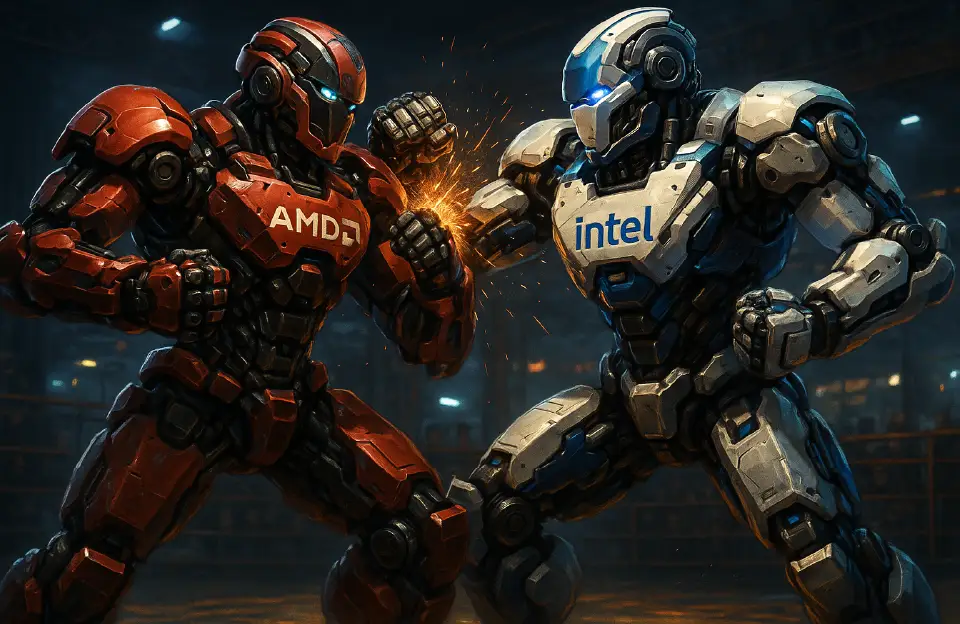
When it comes to building or buying a new computer, one of the most critical decisions you’ll face is choosing the central processing unit, or CPU. For decades, the market has been dominated by two major players: AMD and Intel. Both companies offer a wide range of processors, and the competition between them has led to rapid advancements, benefiting consumers with more powerful and efficient options than ever before. But which one is right for you?
This guide breaks down the key differences between AMD and Intel to help you make an informed decision based on your needs, whether you’re a gamer, a creative professional, or a casual user.
A Brief History: From Domination to Fierce Competition
For years, Intel held a dominant lead in the CPU market. Their “Core” series processors were the go to choice for both performance and reliability. However, this changed dramatically with the introduction of AMD’s Ryzen series. With a new architecture and a focus on multi core performance, AMD not only caught up but, in many cases, surpassed Intel in key areas. This intense competition has forced both companies to innovate at an incredible pace, leading to better value for consumers.
Performance: Who Wins in Gaming and Productivity?
Historically, Intel was considered the king of gaming due to its higher single core performance, which is crucial for many game engines. However, AMD’s recent Ryzen CPUs, particularly their X3D series with 3D V Cache technology, have become a powerhouse for gaming, often outperforming Intel’s best in gaming specific benchmarks.
For productivity tasks like video editing, 3D rendering, and software development, the story is a bit different. These applications often benefit from a high number of cores and threads. AMD has consistently delivered more cores at a lower price point, making their processors a popular choice for content creators and professionals who need strong multi core performance. Intel, with its “Core i9” and “Core Ultra” series, also offers excellent multi threaded performance, but often at a higher cost.
Efficiency and Power Consumption
In the past, Intel was generally seen as the more power efficient option. However, recent generations have seen both companies make significant strides. AMD’s processors, built on a more advanced manufacturing process (often with TSMC), have shown impressive power efficiency, particularly at idle and in moderate workloads. Intel’s latest processors, while incredibly powerful, can sometimes have higher peak power consumption, which can lead to more heat and require more robust cooling solutions.
If you’re building a compact PC or are concerned with energy costs, looking at the thermal design power (TDP) and real world power consumption of a specific CPU model is a crucial step.
Pricing and Value
This is often where AMD shines. Throughout the Ryzen era, AMD has generally offered more cores and threads for your money. This has made them an excellent choice for budget conscious builders and those looking for the best performance per dollar. Intel has responded by adjusting their pricing and offering a wider range of processors, but AMD often maintains an edge in the mid-range and entry level markets.
The Ecosystem: Motherboards and Chipsets
Both AMD and Intel use different sockets for their CPUs, meaning a motherboard designed for an Intel processor won’t work with an AMD one, and vice versa.
- Intel: Uses the LGA (Land Grid Array) socket. Recent generations have used sockets like LGA 1700. Motherboards are based on various chipsets like Z790, B760, and H610, with different features and price points.
- AMD: Uses the PGA (Pin Grid Array) or LGA socket. The current standard is the AM5 socket. Motherboards are based on chipsets like X670, B650, and A620. A key advantage of AMD has often been their commitment to a single socket across multiple CPU generations, which can make future upgrades easier.
Conclusion: Which CPU is Right for You?
The “best” CPU isn’t about which brand wins; it’s about which one fits your specific needs and budget.
- Choose AMD if: You’re a gamer looking for top tier performance at a competitive price, a content creator who needs strong multi core performance for rendering and encoding, or a budget conscious builder seeking the best value.
- Choose Intel if: You want excellent all around performance with a long history of reliability, need a CPU for specialized tasks that benefit from high single core speeds, or find a better deal on a specific model that meets your needs.
The competition between AMD and Intel has created an exciting time for PC enthusiasts. No matter which you choose, you’re getting a powerful and capable processor that will serve you well for years to come.