Advanced Greenhouse Construction: Climate-Smart Building for American Gardeners
🏗️ Professional Construction Secrets Revealed
Learn from successful American greenhouse builders who’ve mastered regional climate challenges, budget-conscious construction, and sustainable building techniques that pay for themselves within 2-3 years.
Regional Climate Adaptations That Actually Work
Pacific Northwest
Challenge: 150+ inches rainfall, 80%+ humidity
Solution: Aggressive ventilation (15-20% of floor area)
Key Feature: Ridge vents every 4 feet
Desert Regions
Challenge: 110°F+ temperatures, <10% humidity
Solution: Double-wall construction + thermal mass
Key Feature: 30-50 gallons water storage per 100 sq ft
Cold Climates
Challenge: -30°F winters, heavy snow loads
Solution: Triple-wall polycarbonate + thermal batteries
Key Feature: Underground heat storage systems
Coastal Areas
Challenge: Salt air corrosion, persistent moisture
Solution: Marine-grade aluminum + dehumidification
Key Feature: Oversized ventilation capacity
💰 Budget-Smart Construction Plans Comparison
| Construction Type | Size | Material Cost | Tool Requirements | Skill Level | Lifespan | Best For |
|---|---|---|---|---|---|---|
| A-Frame Basic | 8×12 ft | $400 | Basic carpentry | Beginner | 5-8 years | First-time builders |
| Repurposed Windows | 10×12 ft | $600 | Moderate carpentry | Intermediate | 10-15 years | Creative builders |
| Post-and-Beam | 12×16 ft | $1,200 | Advanced carpentry | Advanced | 20+ years | Permanent structures |
| Hybrid Construction | 10×14 ft | $800 | Mixed skills | Intermediate | 15-20 years | Value-conscious builders |
🏠 A-Frame Starter
- Pressure-treated lumber frame
- 6-mil greenhouse plastic covering
- Gravel pad foundation
- Manual ventilation
- Perfect for vegetables & herbs
- Weekend construction project
♻️ Window Greenhouse
- Salvaged window construction
- Unique aesthetic appeal
- Superior light transmission
- Weatherproof joint sealing
- 60-70% cost savings vs new
- Sustainable material use
🏗️ Post-and-Beam Pro
- Locally sourced lumber
- Modular construction phases
- Professional-grade durability
- Expandable design
- 20+ year lifespan
- High resale value
Material Selection for Long-Term Value
🔍 Complete Material Analysis & Performance Guide
| Material | Initial Cost/sq ft | Lifespan | Light Transmission | R-Value | Maintenance | Best Climate |
|---|---|---|---|---|---|---|
| Twin-wall Polycarbonate | $3.50 | 15-20 years | 80% | 1.7 | Low | All climates |
| Tempered Glass | $8.00 | 20+ years | 95% | 1.0 | Medium | Moderate climates |
| 6-mil UV Plastic | $0.75 | 3-4 years | 85% | 0.8 | High | Seasonal use |
| Aluminum Frame | $12/linear ft | 25+ years | N/A | N/A | Very Low | Coastal/humid |
| Galvanized Steel | $8/linear ft | 20+ years | N/A | N/A | Low | Heavy snow loads |
🔹 Twin-wall Polycarbonate
Durability: 85/100
Best Feature: Optimal insulation + light transmission
Total Cost of Ownership: $0.23/sq ft/year
🔸 Tempered Glass
Durability: 95/100
Best Feature: Maximum light, premium look
Total Cost of Ownership: $0.40/sq ft/year
🔶 UV-Treated Plastic
Durability: 60/100
Best Feature: Lowest initial cost
Total Cost of Ownership: $0.25/sq ft/year
🪵 Cedar Framework
Durability: 75/100
Best Feature: Natural rot resistance, workable
Total Cost of Ownership: $0.35/sq ft/year
Sustainable Features That Pay for Themselves
💡 Sustainable Technology ROI Calculator
Real-world performance data from successful sustainable greenhouse operators
| Sustainable Feature | Installation Cost | Annual Savings | Payback Period | Additional Benefits |
|---|---|---|---|---|
| Rainwater Harvesting | $400-600 | $300-500 | 1.2-2 years | Drought resilience, reduced runoff |
| Solar Power System | $1,500-3,000 | $400-800 | 2-4 years | Grid independence, backup power |
| Thermal Mass System | $200-500 | $200-400 | 1-2.5 years | Temperature stability, plant health |
| Passive Ventilation | $300-800 | $150-300 | 2-3 years | No energy consumption, automatic |
| Composting Integration | $100-300 | $100-200 | 1-3 years | Soil health, waste reduction |
📋 Climate-Smart Construction Checklist
Click each item as you complete your planning and construction phases:
🚀 Construction Progress Tracker
Complete checklist items above to track your progress!
🎯 Professional Builder’s Secret
The most successful greenhouse builders understand that initial investments in quality materials and sustainable technologies pay dividends through reduced operating costs, improved growing conditions, and enhanced self-sufficiency that becomes more valuable each year. Focus your budget on structural integrity and climate control—everything else can be upgraded over time.
The difference between a greenhouse that thrives for decades and one that fails within two seasons often comes down to three critical decisions: adapting to your local climate, choosing the right construction approach for your budget, and selecting materials that balance durability with cost-effectiveness. Across America, successful greenhouse builders have learned that cookie-cutter solutions rarely work—what succeeds in Arizona’s desert heat fails catastrophically in Minnesota’s frozen winters.
This comprehensive construction guide reveals the strategies, materials, and sustainable techniques that separate amateur greenhouse attempts from professional-grade structures that produce abundant harvests year after year. Through detailed analysis of regional climate challenges, budget-conscious building plans, and real-world case studies from successful American greenhouse builders, you’ll discover how to create a structure perfectly matched to your environment and goals.
Regional Climate Adaptations That Actually Work
American greenhouse builders face dramatically different challenges depending on their location, and successful adaptations often mean the difference between a thriving growing environment and an expensive failure. Understanding these regional variations isn’t just helpful—it’s absolutely essential for long-term success.
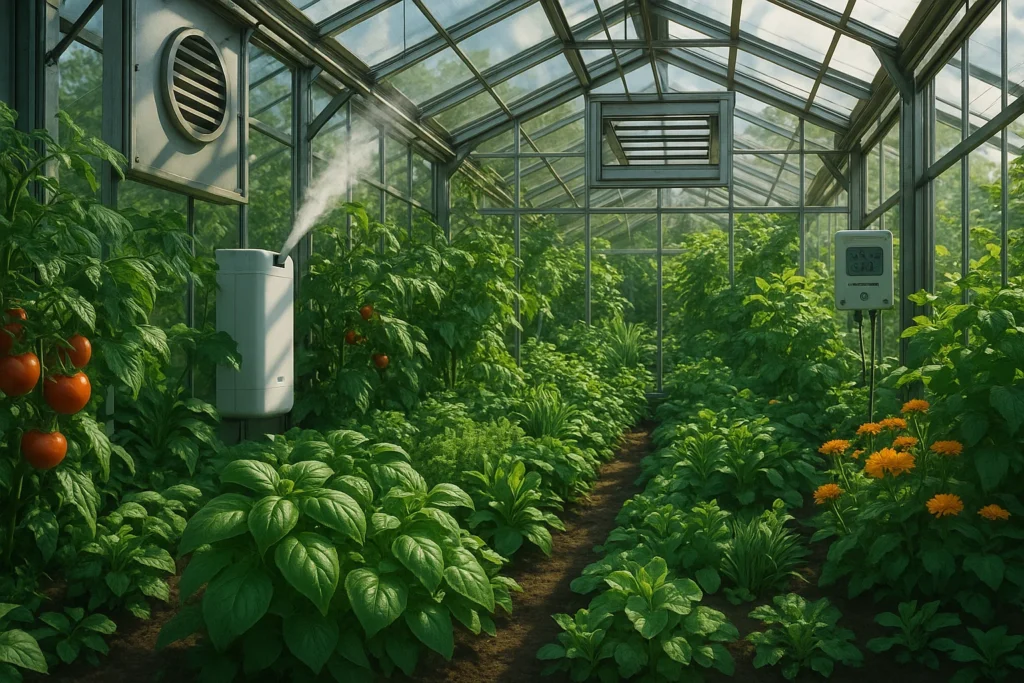
In the Pacific Northwest, where rainfall can exceed 150 inches annually and humidity levels consistently stay above 80%, successful greenhouse builders prioritize aggressive ventilation and moisture management. Portland-based grower Maria Gonzalez learned this lesson the hard way after losing an entire tomato crop to fungal diseases in her first greenhouse. Her solution involved installing ridge vents every four feet along the roof peak, combined with louvre vents at ground level to create powerful convection currents that constantly move air through the structure.
The key insight from Pacific Northwest builders is that ventilation capacity should be calculated at 15-20% of floor area, significantly higher than standard recommendations. This aggressive approach prevents the stagnant, humid conditions that quickly lead to plant diseases and structural deterioration.
Desert regions present the opposite challenge, where summer temperatures regularly exceed 110°F and humidity can drop below 10%. Successful desert greenhouse builders have developed ingenious cooling strategies that work without consuming massive amounts of energy. In Phoenix, commercial grower John Martinez installed a double-wall construction system with reflective barriers between walls, reducing internal temperatures by up to 25°F during peak summer conditions.
Desert builders also rely heavily on thermal mass to moderate temperature swings. Water-filled barrels, concrete blocks, and even partially buried structures help absorb heat during scorching days and release it during surprisingly cool desert nights. The most successful desert greenhouses incorporate at least 30-50 gallons of water storage per 100 square feet of growing space.
Cold climate adaptations focus on maximizing solar gain while minimizing heat loss. In Minnesota, where winter temperatures can plunge to -30°F, successful builders use triple-wall polycarbonate panels on north-facing walls while maintaining double-wall panels on south faces to balance insulation with light transmission. Underground thermal batteries—systems that store summer heat in buried containers of water or phase-change materials—can provide supplemental heating well into winter months.
Coastal regions require special consideration for salt air corrosion and persistent moisture. Aluminum frameworks must be marine-grade to prevent rapid deterioration, while ventilation systems need oversized capacity to handle the constant moisture load from ocean breezes. Successful coastal builders often install dehumidification systems during peak humidity seasons to prevent condensation damage.
The most innovative climate adaptations often come from builders who study local commercial greenhouse operations and adapt their techniques for residential scale. These professionals have already solved the major climate challenges for each region through years of trial and expensive errors.
Budget-Smart Construction Plans That Deliver Results
Building an effective greenhouse on a limited budget requires strategic thinking about where to invest money for maximum impact versus where acceptable shortcuts can save significant costs. The most successful budget builders focus their spending on structural integrity and climate control while finding creative solutions for everything else.
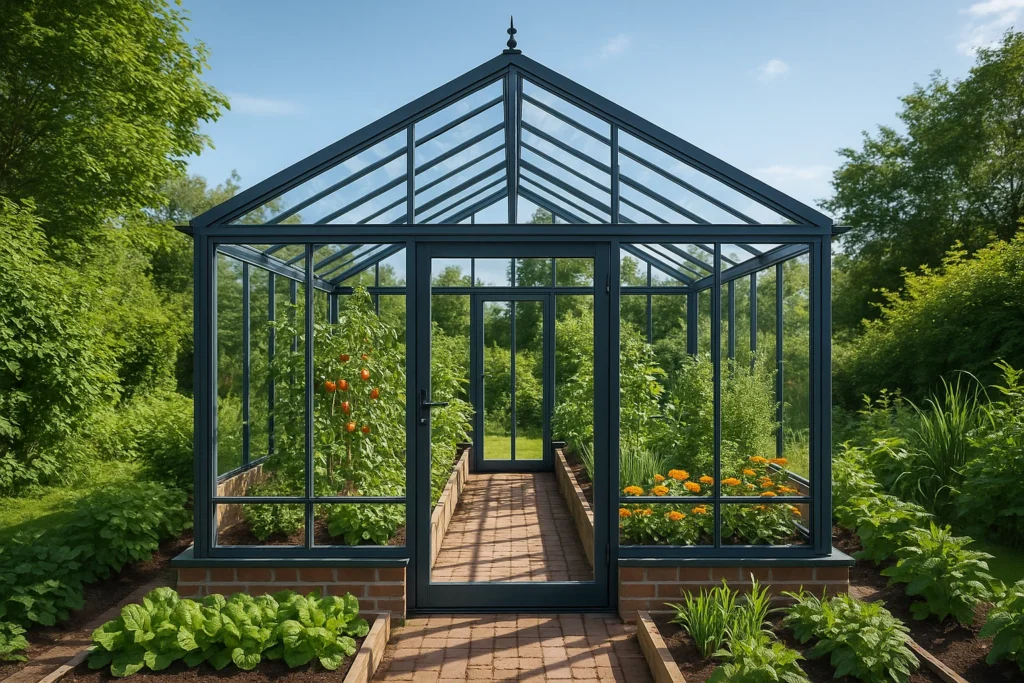
The A-frame design remains the most cost-effective approach for beginners, requiring minimal materials while providing excellent structural strength. A basic 8×12 foot A-frame greenhouse can be constructed for under $400 using pressure-treated lumber for the frame and 6-mil greenhouse plastic for covering. The triangular structure naturally sheds snow loads while providing adequate height for most vegetables and herbs.
Construction begins with two triangular end frames built from 2×4 lumber, with the peak positioned at 8 feet and base width at 12 feet. Horizontal purlins spaced 24 inches apart connect the end frames and provide attachment points for the plastic covering. The foundation can be as simple as pressure-treated 2×8 boards laid on compacted gravel, significantly reducing costs compared to concrete foundations.
For builders willing to invest more time in material sourcing, repurposed window greenhouses offer exceptional value and unique aesthetic appeal. Successful window greenhouse builders scout architectural salvage yards, estate sales, and demolition sites for matching window sets. The key is finding windows with similar dimensions and frame types to minimize custom framing requirements.
A typical window greenhouse using salvaged materials costs 60-70% less than equivalent new construction while often providing superior light transmission compared to plastic coverings. The main challenge involves waterproofing the joints between windows, typically accomplished using exterior-grade caulk and weatherstripping.
Advanced DIY builders often choose post-and-beam construction using locally sourced lumber. This approach requires more carpentry skills but creates structures that can last 20+ years with minimal maintenance. Post-and-beam greenhouses can be built in sections, allowing construction to spread over several months as budget allows.
The critical insight from successful budget builders is that structural integrity should never be compromised to save money. Cheap fasteners, inadequate foundations, or undersized framing members inevitably lead to failures that cost more to repair than proper construction would have cost initially.
Tool acquisition strategies can significantly impact project costs. Many successful builders purchase basic carpentry tools from estate sales or online auctions, focusing on quality brands that retain value. Tool lending libraries, available in many communities, provide access to specialized equipment like circular saws or drill presses without purchase costs.
Material sourcing creativity separates successful budget builders from those who struggle with cost overruns. Craigslist, Facebook Marketplace, and local buying groups often yield excellent deals on construction materials. Commercial construction sites occasionally have surplus materials available at significant discounts, though this requires building relationships with contractors and project managers.
The most cost-effective approach often involves hybrid construction, combining purchased materials for structural elements with reclaimed materials for non-structural components. This strategy maximizes both budget efficiency and project uniqueness.
Material Selection for Long-Term Value
Choosing greenhouse materials requires balancing initial costs against long-term durability, maintenance requirements, and performance characteristics. The most successful American greenhouse builders focus on total cost of ownership rather than just upfront expenses, understanding that cheap materials often become expensive over time.
Polycarbonate panels have emerged as the preferred covering material for most American climates, offering an optimal balance of light transmission, insulation value, and durability. Twin-wall polycarbonate provides R-value of approximately 1.7, compared to single-pane glass at R-1.0, while weighing significantly less and proving much more impact-resistant.
The key specification for American conditions is UV protection rating. Panels without adequate UV protection degrade rapidly, losing light transmission and structural integrity within 2-3 years. Quality polycarbonate panels with 50-micron UV protection layers routinely last 15-20 years, making them cost-effective despite higher initial prices.
For budget-conscious builders, 6-mil greenhouse plastic remains viable for temporary or seasonal structures. The most durable versions incorporate UV inhibitors and can provide 3-4 years of service life. Double-layer inflation systems, using small blowers to maintain air space between plastic layers, significantly improve insulation while reducing material costs compared to rigid panels.
Framework material selection significantly impacts both initial costs and long-term durability. Aluminum framing provides excellent corrosion resistance and requires minimal maintenance, making it ideal for humid climates and coastal areas. However, aluminum’s high thermal conductivity can create condensation problems without proper design consideration.
Galvanized steel framing offers superior strength at lower cost than aluminum, making it preferred for larger structures or areas with heavy snow loads. Modern galvanized coatings provide 20+ years of corrosion protection when properly maintained. Steel’s thermal mass can actually benefit greenhouse environments by moderating temperature swings.
Wood framing remains popular for DIY builders due to its workability and lower tool requirements. Cedar and redwood provide natural rot resistance but command premium prices. Pressure-treated lumber offers good value for most greenhouse applications, though it requires adequate ventilation to prevent chemical off-gassing in enclosed spaces.
PVC pipe framing works well for temporary structures and beginning builders, offering low cost and easy assembly. However, PVC becomes brittle in cold weather and has limited load-bearing capacity. Structures over 100 square feet typically require metal reinforcement for adequate strength.
The most innovative material approaches combine different materials to optimize performance and cost. Many successful builders use metal framing for structural elements while incorporating wood details for aesthetics and ease of modification. This hybrid approach provides the best characteristics of each material type.
Insulation strategies significantly impact both construction costs and operating efficiency. Double-wall polycarbonate provides moderate insulation, while specialized greenhouse insulation systems can achieve R-values of 10 or higher. However, high-insulation materials typically reduce light transmission, requiring careful balance between thermal performance and plant lighting needs.
Foundation materials range from simple gravel pads to full concrete slabs, with costs varying proportionally. The most cost-effective approach for most residential greenhouses involves pressure-treated lumber foundations on compacted gravel bases. This system provides adequate stability while allowing for future modifications or relocation.
Sustainable Features That Pay for Themselves
Integrating sustainable technologies into greenhouse construction has evolved from environmental luxury to economic necessity, with many features providing return on investment within 2-3 years while significantly improving growing conditions and reducing operating costs.
Rainwater harvesting represents the most accessible sustainable upgrade for most American greenhouse builders. A basic system consisting of gutters, downspouts, and storage tanks can capture 600 gallons of water from each inch of rainfall on a 1,000 square foot roof. In regions receiving 30+ inches of annual precipitation, this can provide most or all irrigation water requirements.
The key to successful rainwater harvesting lies in first-flush diverters that discard the initial rainfall carrying roof contaminants, and adequate storage capacity to bridge dry periods. Food-grade storage tanks cost $1-2 per gallon capacity, while the collection system typically adds $200-400 to construction costs. Annual water savings often exceed $300-500, providing rapid payback.
Solar energy integration has become increasingly viable as equipment costs continue declining while efficiency improves. A basic solar system capable of powering LED grow lights, ventilation fans, and monitoring equipment costs $1,500-3,000 for most residential greenhouses. With federal tax credits and state incentives, net costs often drop to $1,000-2,000.
The most successful solar installations focus on DC-powered equipment that eliminates inverter losses and complexity. Modern DC fans, LED lights, and control systems operate directly from solar panels with battery storage, providing reliable operation even during grid outages.
Thermal mass implementation provides passive temperature regulation that reduces both heating and cooling costs while improving growing conditions. The most effective systems incorporate 30-50 pounds of thermal mass per square foot of growing area, typically implemented using water storage, masonry, or phase-change materials.
Water-based thermal mass offers the highest heat capacity per dollar, with 55-gallon drums or IBC totes providing excellent storage density. Positioning thermal mass along north walls maximizes solar heat absorption while providing wind protection. During summer, thermal mass moderates peak temperatures by absorbing excess heat during the day and releasing it during cooler nights.
Passive ventilation systems reduce energy consumption while providing more consistent airflow than electric fans. Ridge vents combined with side louvers create natural convection currents that automatically respond to temperature changes. Properly designed passive systems can handle most ventilation requirements without any energy consumption.
The most advanced passive systems incorporate temperature-activated vent openers that automatically adjust opening size based on internal temperatures. These mechanical systems require no electrical power while providing responsive climate control throughout the growing season.
Composting integration transforms greenhouse waste into valuable soil amendments while reducing disposal costs and improving soil health. Simple compost bins incorporated into greenhouse design can process plant waste, creating finished compost within 3-4 months under controlled conditions.
The most successful sustainable implementations combine multiple technologies for synergistic effects. Solar power enables automated irrigation using harvested rainwater, while thermal mass systems powered by excess solar capacity provide climate stability that reduces plant stress and improves yields.
Real-world performance data from sustainable greenhouse operators demonstrates that comprehensive systems typically achieve 60-80% reduction in utility costs while improving growing conditions and plant health. Initial implementation costs are usually recovered within 3-5 years, after which the systems provide ongoing savings and improved self-sufficiency.
Advanced builders often implement monitoring systems that track energy production, water usage, and climate conditions, providing data needed to optimize system performance over time. These systems help identify the most valuable improvements while preventing problems before they impact growing operations.
The integration of sustainable technologies transforms greenhouses from resource-consuming structures into net-positive systems that produce food while generating clean energy and conserving water. This evolution represents both environmental responsibility and economic opportunity for forward-thinking growers.
Building a climate-adapted, budget-conscious greenhouse with sustainable features requires careful planning and strategic decision-making, but the results provide decades of reliable food production while contributing to environmental stewardship. The most successful builders understand that initial investments in quality materials and sustainable technologies pay dividends through reduced operating costs, improved growing conditions, and enhanced self-sufficiency that becomes more valuable each year.